
Beginning yesterday and running through March 9, the Washington Jewish Film Festival will screen 64 films from 18 countries. Projection reels at the DCJCC and the JCC of Greater Washington in Rockville will be doing the heavy lifting, while the AFI Silver, the Avalon, the Goethe Institute, and a few other auditoriums throughout the city also serving as venues. Black Whiskey will serve as the festival lounge for boozing and schmoozing throughout the week before things wrap up with a Two Jews Walk Into a Bar bar crawl, where $30 gets you a drink and short films to watch at three different U Street-area bars.
The Festival’s centerpiece event is John Turturro’s Fading Gigolo, which will be followed by a Q&A with the actor/director moderated by local critic Arch Campbell. There’s a focus on Polish cinema in this year’s festival, with five films from the Eastern European country programmed. You’ll also find the world premiere of a claymation film about the rabbi credited with founding Hasidic Judaism, a true story about a man who became a Catholic priest while maintaining his Jewish identity, and one about the underground world of ‘refuseniks’ in the U.S.S.R. A community day of education on Israeli-Arab issues will feature discussions and films exploring the daily lives and challenges of Arab citizens of Israel.
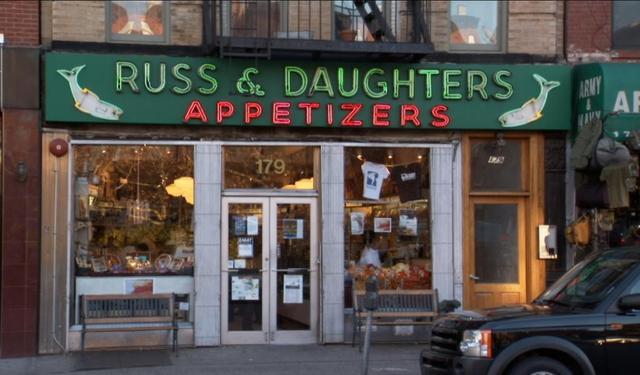
As a DCist food writer, occasional arts contributor, and once-in-a-while Jewish interests writer, publicists invited me to preview Sturgeon Queens, which will be shown this Sunday afternoon at the DCJCC at 16th and Q Streets NW, and Monday night in Rockville. The 50-minute documentary traces the story of New York’s legendary Lower East Side store Russ & Daughters. Famous regular patrons such as Ruth Bader Ginsburg and Morley Safer recall their memories of the store as cameras blur their images to focus on plates of pickled herring and a nova bagel in the foreground. Ginsburg details the significance of a shop recognizing the women involved in it during a day where most dads only brought their sons into the family business. “Even before I heard the word feminist, it made me happy to see that this was an enterprise where the daughters counted just like sons did,” recounts Ginsburg. “That was most uncommon in those days.”
Those daughters—once unexpectedly exotic herring slingers behind a fish counter—are now retirees with walkers in Florida but fondly remember the days when they sold lox at eight cents a quarter and salmon alongside their dad. The film interestingly traces the evolution of the herring store, while so many similar businesses went bankrupt or at least moved up town. The film also traces the rise of a boychik Dominican onion peeler who learned Yiddish and how to “cut lox so thin you could read the New York Times through it,” as well as the fourth generation grandkids who left their post-college jobs to get back into the world of smoked fish, in a day and age where it’s sexy to work with artisanal food. In the time of their grandmothers and their great grandfather, Joel Russ, selling schmaltz herring was no more than work. The original Russ could never have known that professions and shops such as his could grow to be emporiums or palaces; they’re like some sort of food rock stars that people want to make documentary films about.
Check it out on Sunday. A bagels and lox reception (hopefully with the good stuff shipped down from Russ & Daughters in paper thin slices) will follow the 1 p.m. showing. Tickets for all film screenings are $12, including the lox one. Multi or all-access passes are also available.