 Photo by Kevin H.
The Washington Area Metropolitan Transit Authority’s board met yesterday to discuss the proposed fiscal year 2015 budget and possible changes to fares on Metro bus and rail, as well as MetroAccess.
While a vote was scheduled to take place yesterday, questions, concerns and the need for more information — especially regarding a change to MetroAccess’ fare formula and a parking surcharge in Prince George’s County — delayed the decision, perhaps until the end of this month. But it was clear from the discussion that a fare hike should be expected for bus and rail riders. The question is: How much?
Under the proposed plan, Metrorail fares would increase by $3 percent and bus fares would increase to $1.75 when the rider uses a SmarTrip. A cash surcharge on buses would remain, bringing the base price to $2. While this theoretically pushes riders to use SmarTrip instead, Councilmember Muriel Bowser, a mayoral candidate and Metro board member, seemed to take issue with the difference.
DCist took a look at Metro’s fare history from 1975 to 2012 and put together some charts to show just how gradually or quickly fares have risen. These charts do not include the proposed 2014 fares.
Here’s a chart that shows the rise in off-peak, base bus fare prices in D.C. (Yes, there used to be a different charge for bus riders during “peak hours,” but this stopped in the 1980s.)

And here’s that same chart with the cash surcharge, which is now $.20 added in.
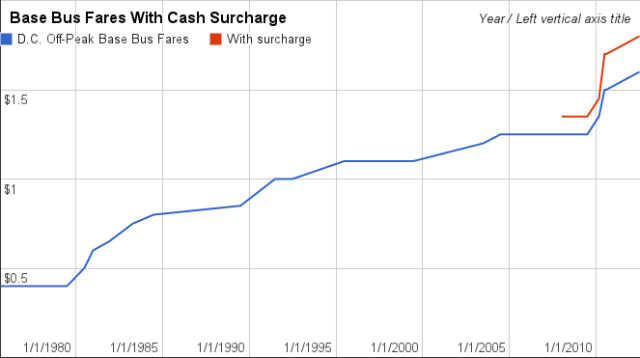
But here’s the first chart adjusted for 2014 inflation, according to the Consumer Price Index Inflation Calculator.

This one shows the rise in peak rail boarding charges.
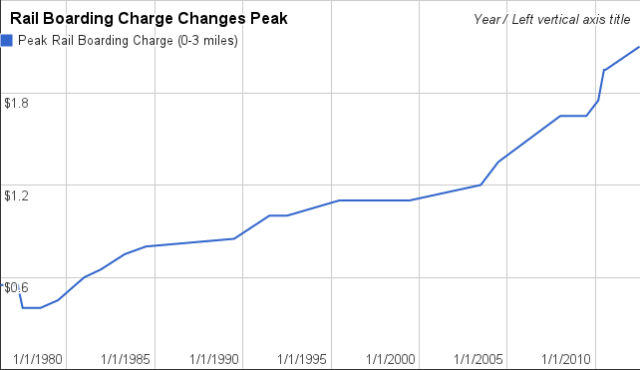
And with inflation
The change to maximum fares.

And with inflation.
Update: Now that we’ve added some charts to include inflation, the fare hikes don’t look as severe. But wages for many American workers aren’t rising with inflation. In fact, according to a D.C. Fiscal Policy report, median hourly wages fell between 2008 and 2012 for the poorest D.C. residents.