 Photo by Alex Wong/Getty Images.
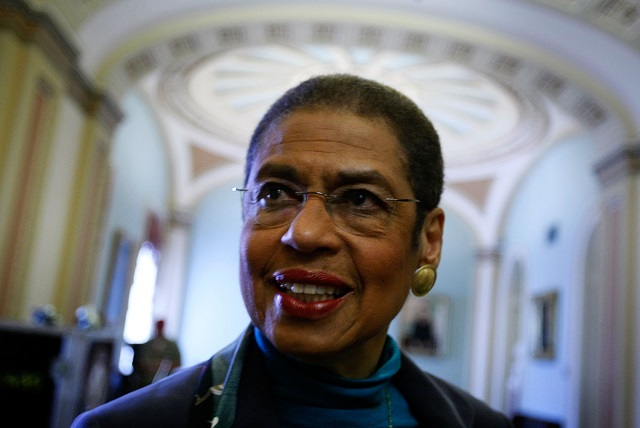
In her never-ending quest to send not-so-subtle hints to the rest of Congress about granting D.C. statehood rights, Del. Eleanor Holmes Norton (D-D.C.) introduced a bill today to permit the District to put its second statue in the U.S. Capitol building.
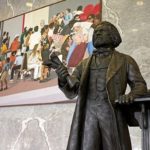
Last June, D.C. finally got some representation in the U.S. Capitol (well, in the lobby, at least) when its statue of civil rights leader Frederick Douglass was moved into the building’s collection of statues, which features two statues honoring noted citizens from each state. For a long time D.C. wasn’t allowed to have a statue included because D.C. isn’t a state and many Republicans thus felt it didn’t deserve to be represented in its collection of state statues.
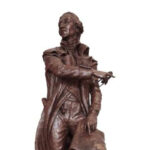
D.C.’s second statue, one of the city’s designer, Pierre L’Enfant, resides at One Judiciary Square, but Norton’s proposed bill would move it to the U.S. Capitol, to keep the Frederick Douglass statue company.
“Every time we allow the District to be excluded from its place among the 50 states, we undermine the nation’s credibility as it seeks to spread full democracy around the world,” Norton said in a release. “Our first statue in the Capitol acknowledged our place among the states as we strive for the same political equality, self-government, voting rights and statehood as the citizens of the states. D.C. residents carry all the responsibilities of the states, including paying all federal taxes and serving in all wars, and therefore our residents deserve the full complement of statues permitted the states to match the full taxes and responsibilities they share as American citizens.”
During the statue unveiling ceremony last June, Vice President Joe Biden, Senate Majority Leader Harry Reid (D-NV), and members of the Douglass family were present. Biden and Reid voiced their support of Norton’s ongoing statehood bill. Since then Senator Charles Schumer (D-NY) has been added as a cosponsor to the statehood bill, chalking up the number of cosponsors from Senate Democratic Party leaders to four.