 Photo by ekelly80.
Two weeks after he lost the election to become D.C.’s Democratic mayoral candidate, Tommy Wells won something: An award from the newly formed Cannabis Coalition.
“I sit on the dais of the city Council next to Marion Barry,” Wells said as he accepted a vanguard award for championing D.C.’s marijuana decriminalization bill. “I had gotten this oversight responsibility about a year-and-a-half ago of public safety and police and all that. So Marion turns to me and says, ‘Tommy, I think it’s time that we did something about marijuana.’ And I said, ‘Oh, like what, Marion?’ [He replied,] ‘We need to legalize it, is what we need to do.’ So I’m thinking to myself, ‘I’m getting ready to run for mayor. Great. Not only do I want to start legalizing marijuana, but I want to legalize drugs with Marion Barry.'”
But Wells and Barry did write a bill, which was introduced around the same time that the ACLU released a report showing the huge racial disparity in marijuana arrests in D.C. After a compromise with Council Chair Phil Mendelson, who introduced an amendment that retained the criminal punishment for smoking in public, the bill passed the Council and was signed by Mayor Vincent Gray. (“I did lose that part,” Wells told the crowd at Busboys and Poets’ K Street NW location, but added that he kept an important provision that says the smell of marijuana is no longer reasonable cause to search someone.) The bill is currently under Congressional review.
“Instead of saying, ‘Hey everybody, this is dumb. Everybody’s smoking pot. Why is it against the law?’ we took a new approach that was very much on social justice,” he said. “Which Maryland picked up on right away.” (The Cannabis Coalition includes groups from Maryland and Virginia, who also handed out awards on Thursday.)
Wells was introduced by Adam Eidinger, the head of the campaign seeking to get a legalization initiative on the November ballot in D.C. “You have no idea is a politician is gonna come through,” he said before praising Wells and his staff for their work on the issue.
“I think Tommy should run again,” Eidinger, who voted for winner Muriel Bowser, said. “Whether it’s mayor, or whether it’s another office.” (Wells is considering an At-Large run, but did not comment on this at the event.)
Eidinger’s D.C. Cannabis Campaign will pick up petitions on Wednesday to begin collecting the 25,000 signatures needed to put the initiative on the ballot. Already, Eidinger said, fifty paid workers and 100 volunteers have been trained to collect the 600 signatures a day needed to reach the goal. (The campaign also still needs to raise $100,000.) On the day of the April 1 primary, 1,000 people signed up to show support, half of whom plan to volunteer, Eidinger said.
“There’s no failure here,” Eidinger said when asked if he’s confident they’ll make it. But, he added, they need under 30 voters to come out and actually vote in November: “They have to show up.”
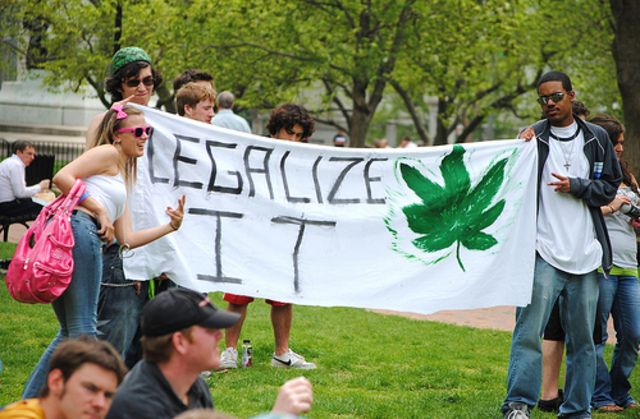
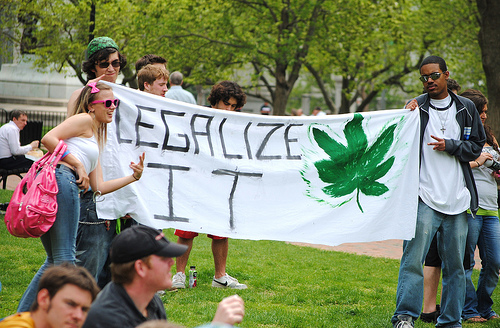
“We’ve got more work to do,” Wells told the crowd, adding that he thinks the decriminalization bill will make it through Congress. “As soon as it gets through, then we can make noise again. We’re going to work on passing the referendum to make marijauan legal in your nation’s capital.”