The first of several public zoning hearings surrounding the proposed redevelopment of the McMillan Sand Filtration site in Ward 5 took place last night, and if one thing could be taken away from it, it’s this: Whatever happens to the site, people will be unhappy.
Before adjourning the three-hour meeting (that easily could have stretched on for another six), D.C. Zoning Commission Chairman Anthony Hood took an informal poll as to how many of the hundreds of people in attendance were there to testify in favor or against the city’s proposed redevelopment plans. It was about an even split, leading Hood to schedule a follow-up meeting on May 12 in order to let everyone testify and share their thoughts on the issue.
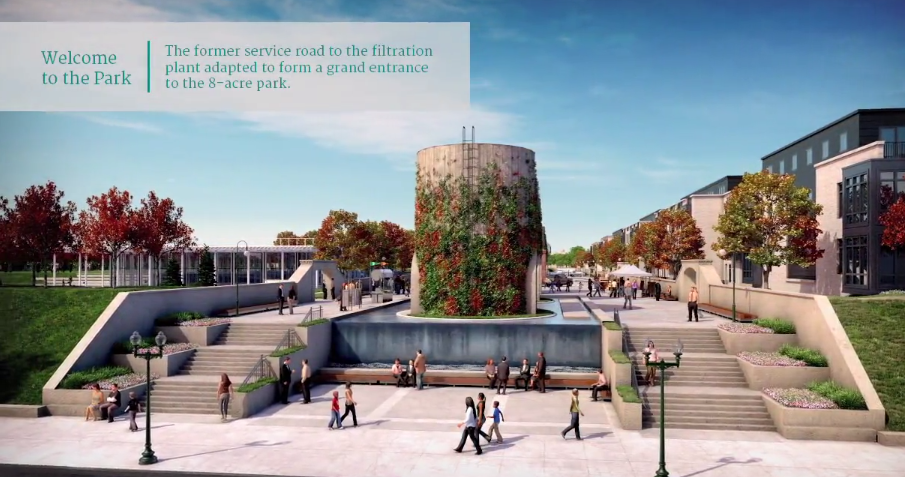
Vision McMillan Partners, the development firm the city tapped to redevelop the historic site, presented their plans for the site to the commission. Under VMP’s redevelopment plan, which was created with the Deputy Mayor for Planning and Economic Development’s office, a portion of the 25-acre piece of land would be developed with housing, as well as space for offices, retail, dining, and more. While working with the DMPED, VMP says their plan will include 130 affordable housing units, as well as units for senior citizens. The group estimates the development will create 3,000 construction jobs and 3,200 permanent jobs.
Friends of McMillan Park—a community group focused on preserving the historic site—opposes VMP’s redevelopment plans. At the beginning of the meeting, the zoning commission voted 4-1 to grant FOMP party status, which puts them on par with VMP in the eyes of the commission. Another group, the McMillan Coalition for Sustainable Agriculture, which wants to build an urban aquaponic farm in the caverns underneath the site, wasn’t granted party status by the commission.
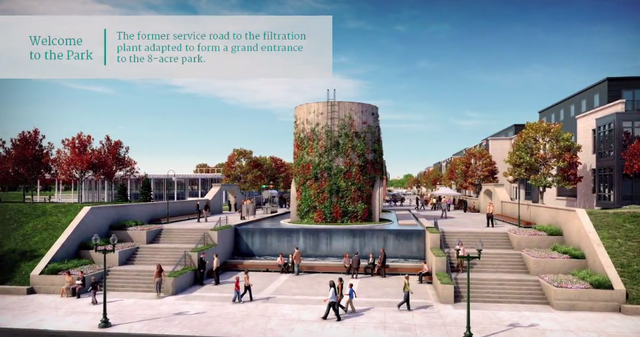
With more than a hundred people in attendance to testify before the commission, Hood ended the hearing after VMP’s testimony, so attendees only got to see the lengthy interactive presentation on the redevelopment plans, which included many high-scale renderings and a glossy two-and-a-half minute 3D video animation (not unlike the Game of Thrones opening credits sequence). According to a FOIA request obtained by FOMP, that video and the renderings cost $34,000 to produce, which was paid for by DMPED.
Envision McMillan Animation from Interface Multimedia on Vimeo.