 Via Capital City Correction report.
A report from two organizations that work with incarcerated youth argues that the overwhelmingly black and male minors sent to adult detention facilities in D.C. face a high risk of victimization over a practice that does not deter future crime.
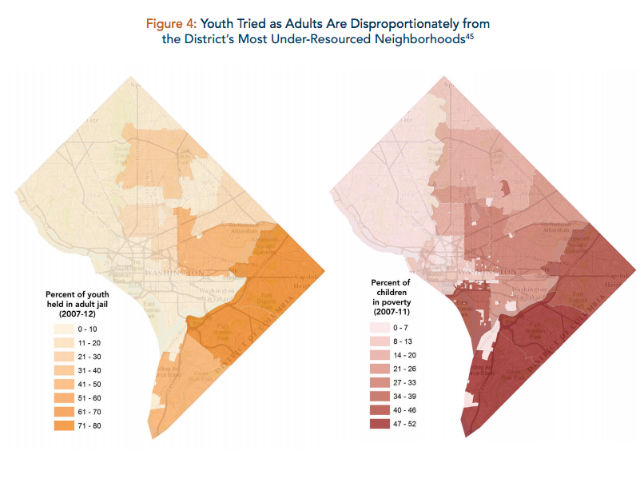
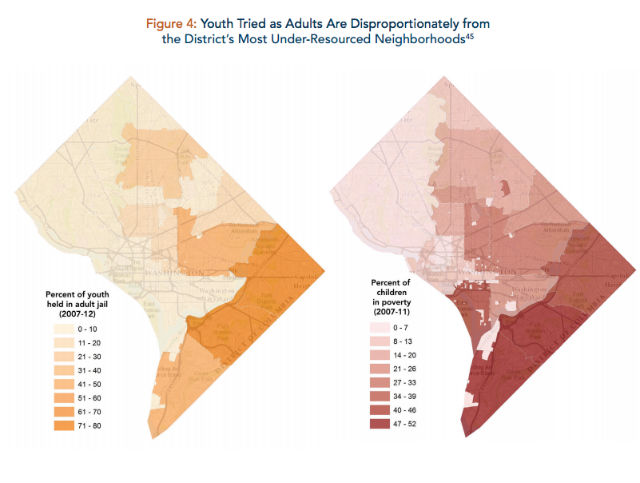
Capital City Correction, released by DC Lawyers for Youth and the Campaign for Youth Justice, says that, between 2007 and 2012, “541 individual youth were held in adult facilities with one unit designated for juveniles.” “Prior to incarceration, nearly all youth held in Department of Corrections facilities had been living in the economically disadvantaged eastern half of the District, or were listed as homeless,” the report states. All 541 minors — who were 98 percent male and 97 percent black — were held this way as a result of direct file, meaning federal prosecutors charge the case in the adult system without judicial review.
Part of what the advocates behind the report want is a change to this policy.
The District should enact policy changes that allow the youth – in cases in which he or she is under age 21, was under age 18 at the time of the alleged offense, and is being tried in adult criminal court – to file a motion asking the judge to transfer the case to Family Court. Such a motion is often referred to as a “reverse waiver” or “reverse transfer” motion, mirroring the transfer motions that can be filed in juvenile court to move a case into the adult system.
In 2012, 59 percent of the 10,016 days spent by youths in Department of Corrections facilities were before a trial. The report calls for an end to this practice: “D.C. law should prohibit holding youth awaiting trial in adult facilities and allow more youth access to programs that have consistently shown an impact in reducing recidivism.” The report also argues that, even if a minor has been previously charged as an adult, they shouldn’t automatically be charged that way again.
This procedure improperly presumes that any youth who was once charged as an adult does not belong in the juvenile system. If a youth has been released from the custody of the adult system, a minor charge may be handled more appropriately.
The report also highlights the physical violence, as well as anxiety, depression, and suicide risks faced by youths in adult jail.
“The adult system is no place for kids. Youth who are incarcerated in adult facilities are 36 times more likely to commit suicide than their peers in juvenile facilities and are at a greater risk of victimization,” Carmen Daugherty, Policy Director at Campaign for Youth Justice, said in a release. “Trying youth as adults also jeopardizes public safety as there is no evidence that adult court deters youth crime in general and compelling evidence that it actually increases recidivism among those who are processed through it.”
Read the report below.