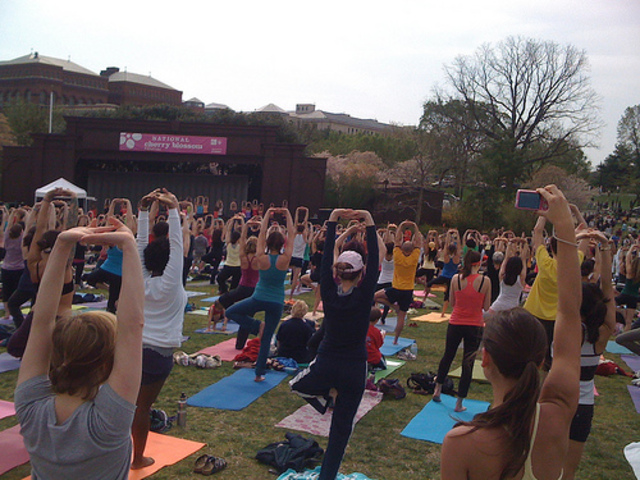
 Photo by Elvert Barnes
Of all the decisions made during this budget season, the Council’s adoption of a Tax Revision Commission recommendation for a so-called “fitness” or “yoga tax” has created the biggest — or, at least, the loudest — backlash.
If adopted during next week’s vote, a 5.75 percent sales tax would be applied to health clubs and tanning studios, as well as carpet and upholstery cleaning, car washes, bowling alleys and billiard parlors. Council Chair Phil Mendelson has defended this tax as part of a larger package that will see middle class and business taxes decline in the coming years. This one tax is expected to raise $5 million per year.
Where do you stand on this issue? Where should you? Below is a sampling of ideas from both sides of the issue.
Against
In addition, the Council has proposed two new taxes that I find objectionable: an expansion of the sales tax to gyms and yoga studios and a tax on premium tobacco products.
Taxes are not simply to raise revenue, but also express our policy preferences. With that in mind, why would we want to create disincentives for our residents who want to make healthy choices by joining health clubs, especially when it is clear that we do not need the extra money?
The Ward 1 Councilmember is planning on offering an amendment to the budget to exclude both of those taxes, according to Fox5. A spokesperson for Evans declined to comment to DCist.
While we agree some of the changes are good, the council chair has taken the business community’s voice out of any discussion by waiting until the last possible minute to release the budget and has given small businesses no chance to review the tax changes and express any concern over them. These actions do not build confidence in an already fragile relationship between the District government and small business leaders.
In Favor
While it is not surprising to hear concern from those who will pay sales tax on something that has been exempt until now, there are some important things to keep in mind.
-The sales tax expansion is part of a comprehensive tax package that provides significant tax cuts for most District residents and businesses. Residents with incomes between $50,000 and $75,000, for example, will receive a tax cut of about $400. That will more than offset the roughly $50 in sales taxes on annual gym membership costs. Gyms and yoga studio owners will also benefit from significant business income tax cuts.
-Taxing health clubs isn’t anti-fitness. The Council’s tax package doesn’t create a special tax on health clubs but instead includes them in the basic sales tax. Some 22 states across the country already include health clubs in their sales tax, and DC residents already pay sales tax on exercise equipment, running shoes, and yoga mats — it is hard to argue that this deters people from exercising.
-The sales tax would not work well if it exempted everything that is good for us. The DC sales tax also applies to things like books or seeds and tools to start a vegetable garden. If the sales tax were applied only to “bad” things, it would leave the city with fewer resources to pay for things that promote public health, like bike lanes, parks, and nutrition programs.
-Is it fair to target just a few kinds of purchases? Health clubs feel targeted only because they are among the small group of consumer purchases not taxed now. Adding gyms to the sales tax makes sense not only for base broadening but also as a matter of fairness. If a resident pays sales tax to buy weight-lifting equipment, someone who buys a gym membership should pay sales tax, too.
-Why tax something that is good for people? The sales tax generally is not intended to favor one behavior over another. (Cigarette taxes are a rare exception.) The sales tax applies to most purchases, including many things considered good for us, like books, educational toys, and garden supplies. Expanding the sales tax to gym memberships is about sound tax policy, not about discouraging residents from working out.
If you exempt a large and growing share of economic activity from taxation, then you need to tax the rest at a very high rate to make up the lost revenue. Gym owners and yoga instructors are getting a sweetheart deal from the current tax code, but the inverse of their good deal is that other business owners are being penalized.