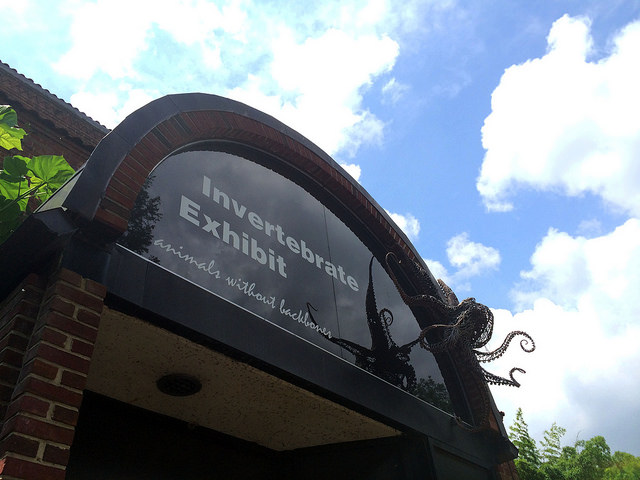
The National Zoo’s Invertebrate Exhibit—a wondrous collection of some of planet Earth’s most strange and beautiful vertebral column-less creatures—will close its doors for good tomorrow. It was 27 years old.
The Invertebrate Exhibit first opened to the public in 1987, when it was merely just a collection of spineless (but certainly not spineless) animals on display in the basement of the Zoo’s Reptile Discovery Center, meant to “showcase and educate visitors about invertebrates as nature’s unsung heroes. Since then, the exhibit has grown in size and scope, eventually moving out of the basement and into its own home, where it housed everything from cuttlefish and crabs, to ants and butterflies.
In today’s evolving, spine-favoring world, it may seem like there’s just no room for those without a backbone. The difficult decision to close the exhibit was a completely financial one, and in no way reflects a prejudice against animals with a lack of a back. “Closing the Invertebrate Exhibit permits the Zoo to reallocate funding, staff, and resources to other areas of the Zoo that need attention,” the Zoo said in a release. “With overall costs escalating, the Zoo must adapt its activities and programs to live within its existing budget while continuing excellent animal care and planning for the future.”
Though the invertebrates are losing their permanent home—with some moving to other places, while others (with shorter lifespans) will remain in the exhibit to live out the rest of their lives—the future of backbone-absent creatures at the National Zoo isn’t completely bleak. The Zoo says they have a long-term vision to open a Hall of Biodiversity, which would include invertebrate species. But that could take 20 years.
Tomorrow is the last day the Invertebrate Exhibit will be open to the public. Supporters have been sharing their condolences — and frustration — on the Zoo’s Facebook.
The National Zoo should be leading by example and should showcase these important species, not the same old species people can see at many other Zoos. Invertebrates represent a significant component of our biodiversity and important parts of the food chain yet are still poorly understood by the public. By closing this exhibit (and on such short notice), you really are doing a disservice to public education.
This is a terrible loss to not only the Zoo, but the entire metro DC area. This leaves a single public marine exhibit in the immediate DC metropolitan area, not to mention the loss of an exhibit that bred cuttlefish for countless other aquariums and was attempting to breed nautilus. The loss of all of the unique invertebrates is a huge loss for all zoo-goers and anyone interested in invertebrate life around the world. The studies done on coral reproduction there and the staff participation in SECORE, the most recognizable captive Catalaphyllia (elegance coral) probably in the world, all lost.
WHAT CAN WE DO TO KEEP THIS FROM HAPPENING???
Let us not mourn our spineless friends, but instead celebrate the time we had together. Let us remember the good times, marveling at the oddness of the common cuttlefish. Let us savor the sweet moments in which we were convinced that that octopus was waving at us. Let us reflect on walking by the insect displays, thinking quietly to ourselves “really, grasshoppers? Didn’t think I’d have to go to the Zoo to see those, but whatever.”
Life, as they say, finds a way—whether you were born as a species with or without a backbone.
The Invertebrate Exhibit is survived by the Reptile Discovery Center, Lemur Island, and a baby panda.