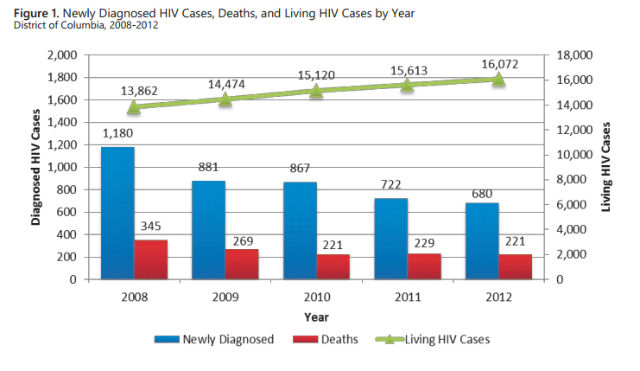
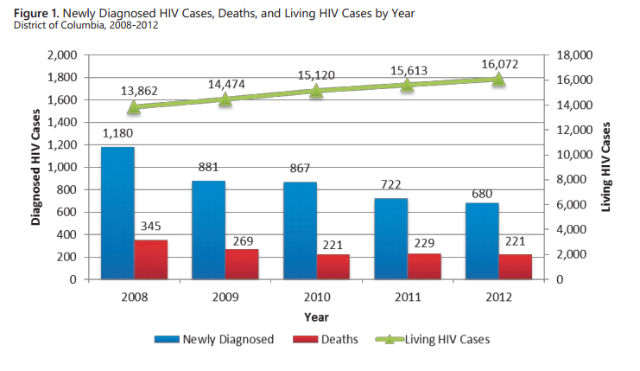
The number of newly diagnosed HIV cases fell in D.C. between 2008 and 2012, as the number of people living with the virus increased.
That’s just one takeaway from the newly released Epidemiology and Surveillance Report on HIV, sexually transmitted diseases, hepatitis and tuberculosis.
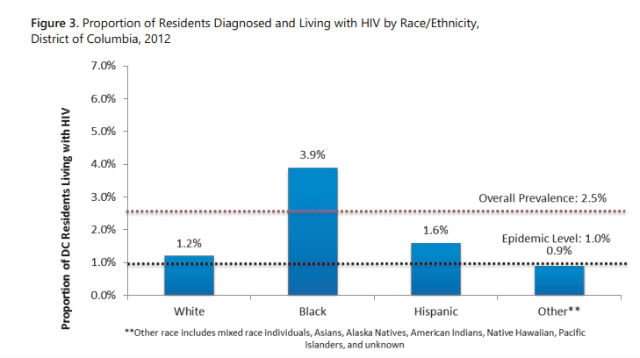
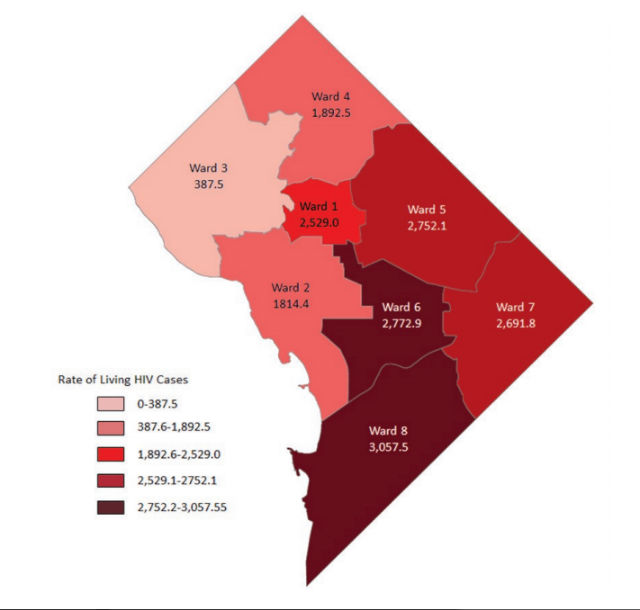
At the end of 2012, 16,072 people were living with HIV in D.C. That represents 2.5 percent of D.C.’s population, a level still well above the World Health Organization’s 1 percent definition of an epidemic. Of the over 16,000 people living with HIV, the majority are men (72.7 percent) and black (75 percent total, 68.5 percent men). The age groups most affected are people in their 40s (31.1 percent) and 50s (29.4 percent).
“While we are still experiencing an HIV epidemic, our innovative programs and partnerships have allowed us to make significant progress in reducing new HIV infections and improving treatment for those with HIV,” Mayor Vince Gray said in a release.
There are promising developments: 680 new cases of HIV were reported in 2012, down 42 percent from 2008, and no baby was confirmed to be born with the virus that year. There was also a deep reduction in new cases of HIV transmitted by injection drug use: “In 2008, the first year of the scale up of the Districts needle exchange program there were 109 cases compared to 21 in 2012.” According to the city, 550,000 needles were taken off the street in 2012.
In newly diagnosed cases, the leading cause continues to be sex between two men (38.8 percent) followed by heterosexual sex (31.6 percent). In 2012, there were 370 new cases of AIDS, down from 564 in 2008 but up from 363 in 2012.
“The report released today shows without a shadow of a doubt that efforts to combat HIV in the District have borne fruit,” Dr. Raymond Martins, Chief Medical Officer of Whitman-Walker Health, said in a statement. “And it reflects what my colleagues and I have seen change in the last several years at Whitman-Walker Health – that more and more people are taking control of their health by making it a priority to take preventative measures, know their status, and get regular checkups.
“Going forward, HIV viral load suppression will be paramount to improve the health of both individual HIV-positive patients and the community. Achieving this will require addressing factors that sometimes co-occur with HIV infection, such as mental health issues and substance misuse.”
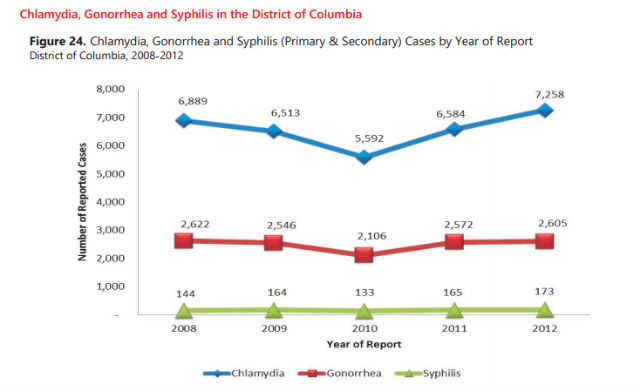
The report also looks at the prevalence of sexually transmitted diseases. “Due to the availability of more sensitive testing technologies, an increase in youth-focused screening programs, and an increase in the non-genital (throat and rectum) screening of men who have sex with men, the number of reported chlamydia and gonorrhea cases gradually increased between 2008 and 2012,” according to the report.