 Photo by Sarah Anne Hughes.
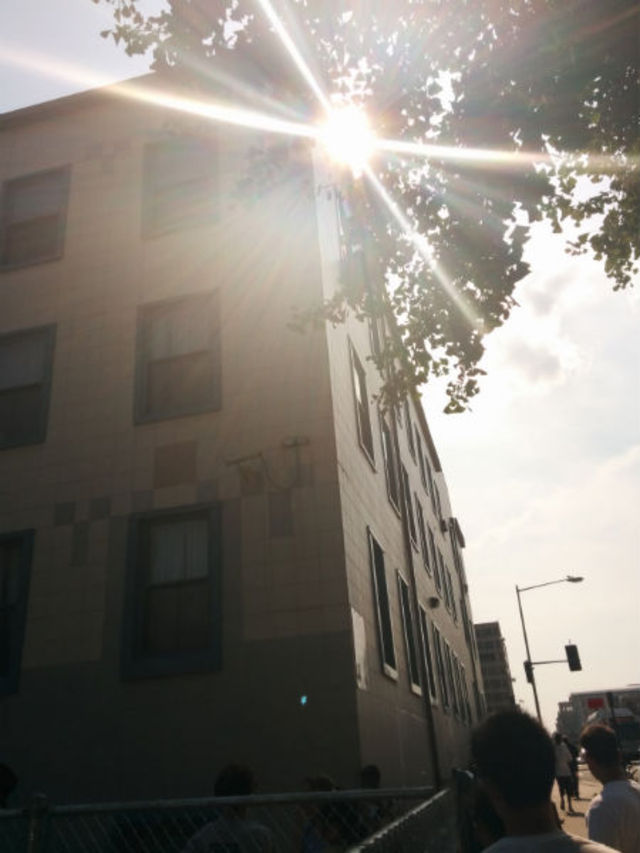
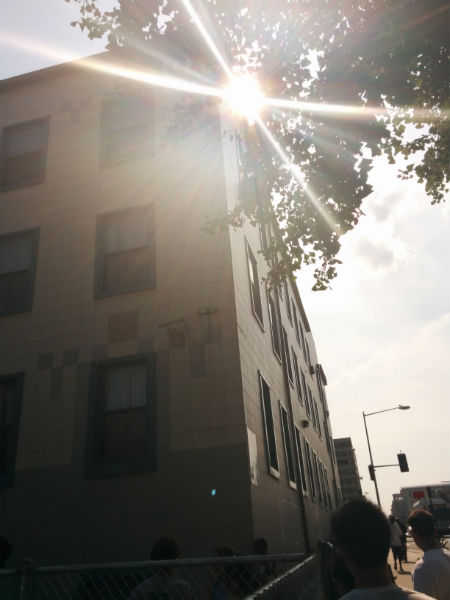
About half a mile from Union Station and the Capitol is the Federal City Shelter, an over 70-year-old building that houses up to 1,350 homeless people and five service providers. This includes the Community for Creative Non-Violence, the John L. Young Center for Women, DC Central Kitchen and Unity Health Care.
With a federal requirement to use the space and an adjacent parking lot owned by CCNV for homeless services expiring soon, a task force was convened last year to look at redevelopment options. They came up with a 17-point Statement of Principles that recommends in part:
At a roundtable held at that shelter Tuesday, Councilmember Jim Graham pledged that the city would not demolish the current building until there’s another space for the residents to go.
Indeed, keeping shelter space and services on the desirable site was emphasized by witnesses during the hearing.
Graham asked Brian Hanlon, the head of the Department of General Services, if his agency would support building new shelter space on the parking lot before the current building is razed. Hanlon said build first is the most “prudent” way to move forward.
Both men conceded that conditions at the shelter is not ideal. Graham said he was shocked to visit John L. Young, a low barrier shelter for women, a windowless space filled with bunk beds.
“It’s the worst kind of shelter,” he said. “Buildings of this vintage of very difficult to keep going,” Hanlon added.
When asked about a recent fire inspection report that found several issues, Hanlon said most if not all were remedied within 24 hours.
With agreement that the building should be demolished, the question turned to what should replace it.
Patty Mullahy Fugere, executive director of the Washington Legal Clinic for the Homeless and a member of a task force, pointed to a survey where the majority of respondents said they wanted the replacement housing to be affordable, above all else. They also want employment services on site.
To know what should replace the building, Fugere said there needs to be more data on who currently uses the shelter. She shared the following stat: At CCNV, 50 percent of residents are chronically homeless; 56 percent have a disability or disabilities; the average age is 53; 10 percent have an income; the average stay is 33 months.
The stats were similar for the John L. Young women’s shelter.
Richard H. Bradley, executive director of the DowntownDC BID and another member of the task force, said the vast majority of residents need permanent supportive housing. To replace Federal City, the task force has proposed building 600 units of PSH, 250 affordable units, 100 temporary shelter units, 50 units for youths and 250 hypothermia shelter units.
Bradley said there are “significant limitations to all options” for replacing the building, so instead of making recommendations, the task force developed the Statement of Principles to guide ongoing conversations.
While local stakeholders are committed to keeping the shelter and services in the current location, Bradley said that won’t be possible without an additional commitment from the city.
There’s also a question as to whether everything wanted — affordable housing, temporary shelter, space for non-profits — can fit on the site.
Graham said that, even if some of the affordable housing units are located on a different site, he believes that will benefit the residents.
“We’re not going to tear down this building and scatter people,” he said.