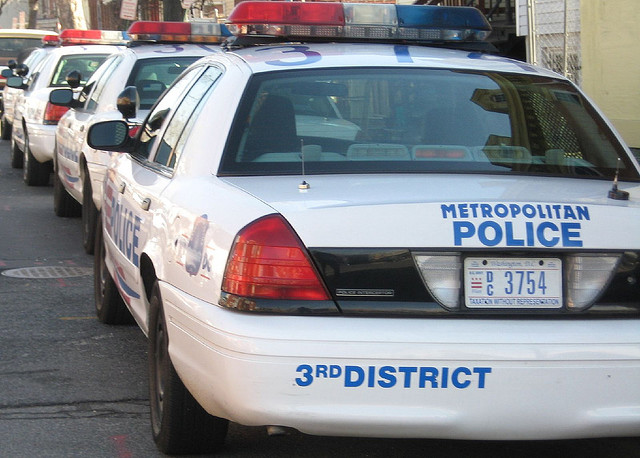
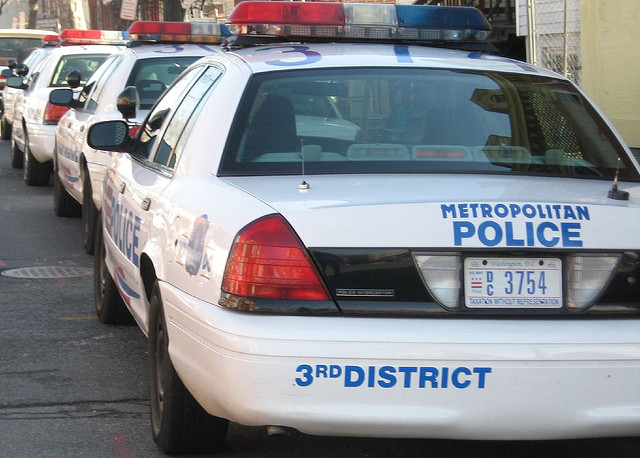
 Photo by rjs 1322
Rapes reported to D.C. police increased by 67 percent in 2013, a spike expected as the definition used changed.
The city began using the FBI-Uniform Crime Reporting program’s new definition on January 1, 2013. The old definition: “The carnal knowledge of a female forcibly and against her will.” And the new: “Penetration, no matter how slight, of the vagina or anus with any body part or object, or oral penetration by a sex organ of another person, without the consent of the victim.
Last year, 393 rapes were reported to the Metropolitan Police Department, according to crime data released by the Metropolitan Washington Council of Governments this week. That’s up from 236 in 2012.
MPD spokesperson Gwen Crump said 27 percent of the 393 rapes reported in D.C. last year fell under the new definition used by Uniform Crime Reporting. That means 287 rapes fell under the old definition, which is an increase of 22 percent from 2012 to 2013.
Accounting for that 22 percent increase is more difficult. Sherelle Hessell Gordon, executive director of the DC Rape Crisis Center, said it’s not clear if more rapes are happening in the city.
“I think it could be more about a culture shift happening in D.C. with the community and agencies that serve survivors,” Gordon said via email. “We are building capacity and responding to the need. I think the community is responding and challenging us to be better. And they are trusting us to respond better. I think the numbers however little are representing this change in our culture.”
But to make the picture even cloudier, there’s a discrepancy between the number of victims who go to the hospital to report a rape and the number of victims who report directly to MPD.
Bridgette Harwood, who directs legal criminal and civil legal services programs for the Network for Victim Recovery of DC, there’s been a yearly decrease in the number of rape victims who report their case after presenting at a hospital.
“It doesn’t mean the number of cases overall hasn’t gone up,” she said. “But in our view, the confidence that survivors have in the system, at least the survivors who seek out an exam, has actually gone done.”
In fiscal year 2012 (October 2011 to September 2012), 81 percent of people who went to the hospital for an exam from DC SANE reported to law enforcement. During the last fiscal year, 69 percent of victims reported to law enforcement, and so far this fiscal year only 64 percent have reported. That breaks down to 161 people who reported to police and 92 who didn’t.
Numbers on victims who go directly to MPD compared to victims who go to the hospital first were not available through NVRDC.
Harwood said she thinks D.C. will see a shift in confidence over the next few years with the passage of the Sexual Assault Victims’ Rights Amendment Act, which guarantees the right to an advocate during hospital exams and police interviews, and gives survivors access to their rape kit results.