D.C. residents are highly engaged in politics, volunteering and online commenting, but we’re not great at interacting with our neighbors.
A report conducted by the National Conference on Citizenship and Serve DC attempts to measure the city’s civic health through five measures: Service and volunteering; group membership and leadership; connecting to information; social connectedness; and political action. The estimates are based on data from the Census Current Population Survey. These percentages are more useful than the rankings, as D.C. is compared to states.
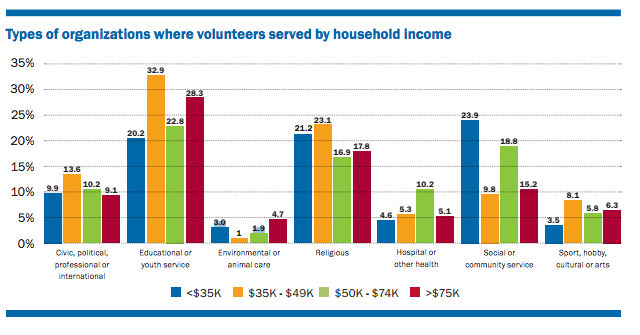
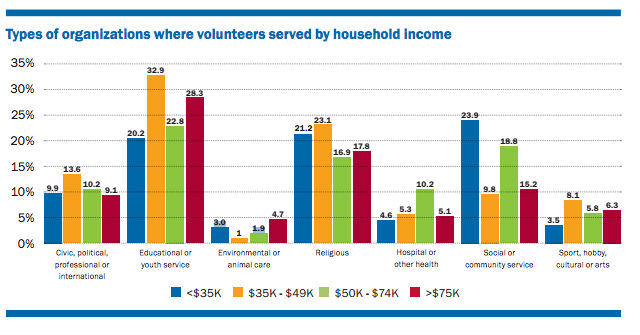
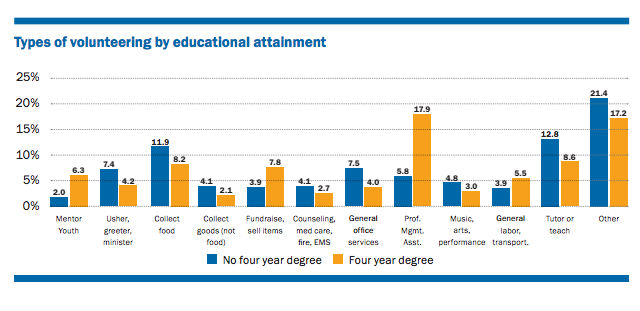
According to the 2011-2012 estimates, 32.2 percent of D.C. residents said they volunteer. As the next two charts show, the type of volunteering depends on income level and educational attainment.
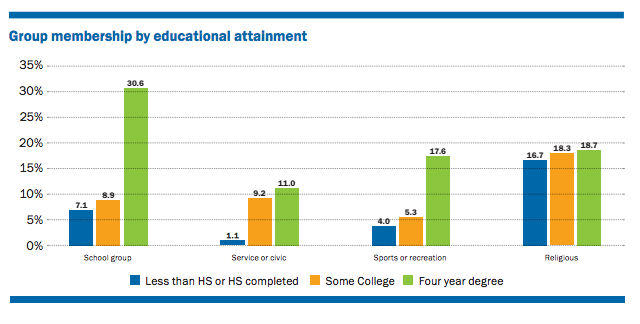
Educational attainment also influenced membership in certain groups, unless the group was religious in nature.
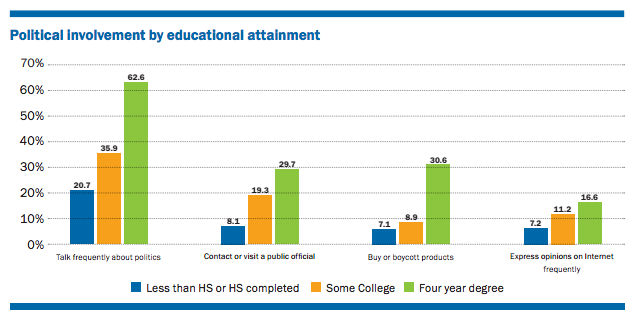
While it did not show during the Democratic mayoral primary, 70 percent of D.C. residents said they vote in local elections all or most of the time. A person’s willingness to boycott or buy a product for social causes, visit a public official or talk about politics depended greatly on education level.
D.C. residents of all incomes report frequently eating dinner with friends and family.
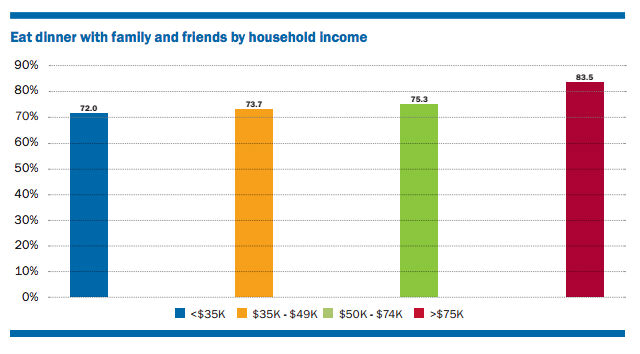
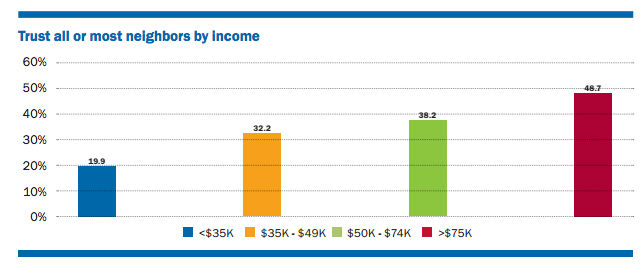
But income does influence trust in neighbors, with just 35 percent of residents saying they do so.