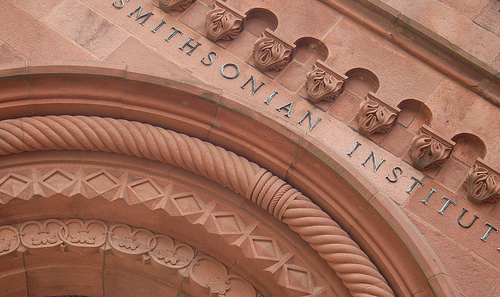
 Photo by FishFeathers.
The Smithsonian, as you surely know, is home to millions of historically significant objects, specimens, and documents. Since the necessary technology has developed, Smithsonian staff has been working diligently to digitize part of their collection—at least 10 million of their objects—so as to make it easier for researchers, scientist, and curious minds to look up important information. But the truth is, there’s so much stuff that Smithsonian staff can’t keep up with digitizing it all in a timely manner.
As such, they’ve launched the “Transcription Center” website to the public today, which is “designed to leverage the power of crowds to help the Smithsonian unlock the content inside thousands of digitized images of documents.” In short, the Smithsonian is so overwhelmed with things that need to be digitized, they’re asking for volunteers to help transcribe for their digital archives.
According to the Smithsonian, their “collection is so vast that transcribing its content using its own staff could take decades.” While they have technology that can automatically decipher and transcribe texts, often times the documents contain text that isn’t readable to computers, thus they need to be transcribed and digitized by hand. “Transcription by humans is the only way to make the text of these items searchable,” a release states, “which will open them up for endless opportunities for research and discovery.”
But just how much will the Smithsonian’s new “Transcription Center” website help them out? They’ve been beta testing it for the past year and report that nearly 1,000 volunteers finished more than 13,000 pages of transcription, including “personal correspondence of members of the Monuments Men.”
Another key project the Smithsonian says they need help with is transcribing and digitizing their bumble bee collection, which contains information on more than 45,000 specimens written on tiny labels. The information written for each specimen can help scientists studying the worldwide decline of bees, the Smithsonian says.
The site is now live for volunteers to sign up and help out with transcriptions. History nerds, this is for you.