 Via
Via
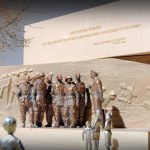
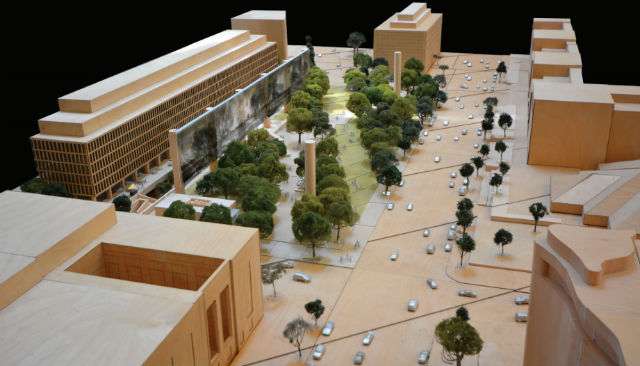
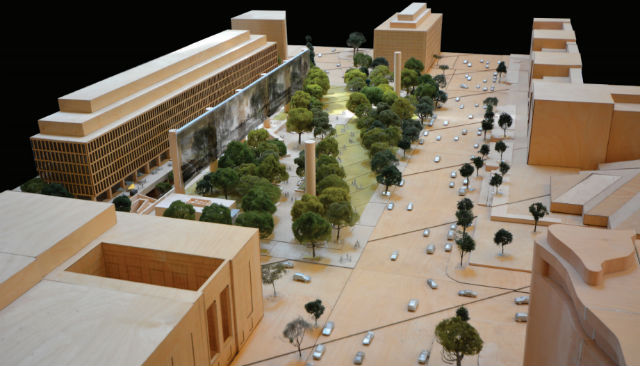
Famed architect Frank Gehry has once again revised his design for a long-delayed memorial to President Dwight D. Eisenhower, removing two controversial metal tapestries that would have flanked the installation and two columns.
The revised design was shown today to the National Capital Planning Commission, whose members for the most part seemed receptive to moving forward with the plan. But discussion over remaining 80-foot columns — from placement to height to necessity — hinted at possible issues.
“I know [Gehry] supports this design, and I do think he believes it has integrity,” Craig Webb of Gehry Partners told the commissioners. “We may feel that the previous design would have created a better solution, but this is a process we entered into … and we want to move forward.”
Ellen McCarthy, director of D.C.’s Office of Planning, questioned why the two free-standing, front columns needed to remain after the side tapestries were removed. She compared the look to a late scenes from Planet of the Apes. “They seem vestigial,” she said. Rep. Darrell Issa, an ex officio member of the NCPC, compared the columns to ones used in viaducts along Eisenhower’s Interstate Highway System. “Maybe we could just write that below on a little plaque,” he said to laughs.
Webb defended the columns, saying they create a balance when framing surrounding elements: “We think that they should stay at that height.”
NCPC member Robert E. Miller said, slightly in jest, that the columns should go up last to “see if we can live without them.”
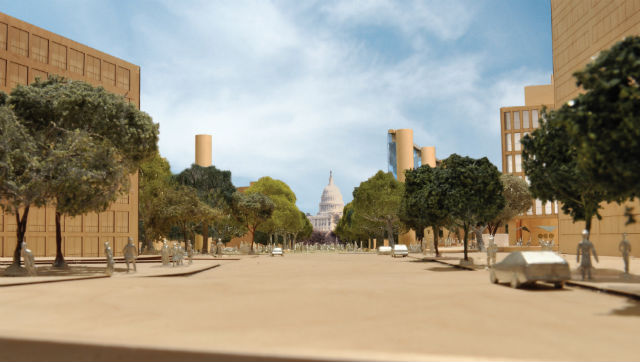
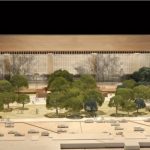
If built, the memorial would be located in a plaza along Maryland Avenue SW between 4th and 6th streets SW. Its proximity to the Capitol, and influence on the views from Maryland Avenue, has been a sticking point.
A previous design was rejected at an April NCPC meeting. Intact after the revision is a large, steel tapestry that depicts a Kansas landscape, as well as eight limestone columns. A vote is scheduled for the federal panel’s next session.
Issa said he met with Gehry in Los Angeles after the last design was rejected.
“He’s willing to give up the tapestries all together and take his name off of it,” Issa said. “I don’t believe that’s the best choice.” The California Republican also noted that, no matter what changes are made, there will always be someone to object to an aspect of the design.
“We lose something if we continue to say, ‘Change it, change it,'” Issa said, adding that he recognizes they could produce a design without tapestries that would please the public.
“I think the design is as close to as good as it’s going to get, unless we decide we never liked the design in the first place.”