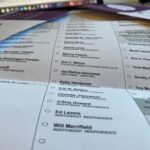
Tomorrow, D.C. voters will join the 25,300 residents who have already cast their ballot in this year’s general election for a new mayor, Councilmembers and attorney general.
While local reporters have done their best to probe and publicize the candidates’ positions, it’s impossible to hit every topic. Enter questionnaires from local groups including the D.C. Alliance for Youth Advocates, D.C. Vote and more. Below are answers extracted from several of these questionnaires from the candidates for mayor — Councilmembers Muriel Bowser (Democrat) and David Catania (Independent), and former Councilmember Carol Schwartz (Independent) — in alphabetical order by last name. (Here’s one for the At-Large candidates.) Vote tomorrow, if you haven’t already.
Muriel Bowser
D.C. Alliance for Youth Advocates [PDF]: “My commitment to LGBTQ youth is clear in my co-introduction of the LGBTQ Homeless Youth Reform Act, and co-sponsorship of Conversion Therapy for Minors Prohibition. I have several ideas for youth-specific programs to institute in my first 100 days as Mayor that will not require legislation.”
All Walks D.C.: Three “check pluses,” including on making data on crashes publicly available online. One negative mark for not committing to replacing contributory negligence.
The Planned Parenthood of Metropolitan Washington Action Fund: 100
DC Preservation League [PDF]: “The pop-up issue is a challenging issue, especially in neighborhoods experiencing rapid redevelopment. Neighbors are concerned about converting single households into multi-family units, changing the look and feel of blocks and neighborhoods, so much that some pop-ups have permanently prevented neighbors’ solar panels from being able to function. While some changes are needed, it is up to the Zoning Commission and the community to find the right balance. We need additional housing units to keep up with our growth and to fulfill our affordable housing needs. Responsible development can achieve these goals, while also protecting the existing character of the neighborhoods.
I will follow the Zoning Commission deliberation process to better understand all stakeholder concerns. The Zoning Commission has the power to both include predictability in the process, as well as preserve neighborhood character and standards.”
The Committee of 100 on the Federal City [PDF]: On public-private land deals: “As Mayor, I will require careful consideration of what, if any, public needs can be met on public land before it is disposed of. This requires greater community outreach and more flexible solicitations so that economic development is not unreasonably prioritized over other needs.”
Metro Washington Council AFL-CIO: “Yes, [support raising the tipped minimum wage to 70% of the minimum wage by 2018].”
Gay and Lesbian Activists Alliance of Washington, DC [PDF]: 9
DC Advocacy Partners [PDF]: “For decades laws have existed to put in place protections for people with disabilities, including the Americans With Disabilities Act (ADA), Section 504 of the Rehabilitation Act of 1973 and the D.C. Human Rights Act. That said, for the past few decades governments have been playing catch up to ensure the proper resources and programs are in place to provide for people with disabilities who live, work and travel to the District of Columbia.
Throughout this campaign, I have made it a priority to talk about my vision for the future of the District of Columbia – one that is inclusive – extending our prosperity to all DC residents across all eight wards, including the approximately 72,000 residents with disabilities in our communities. As Mayor, I am committed to making sure all of our residents are able to live, travel, work, and access services and programs to preserve and improve their quality of life.”
D.C. Vote [PDF]: “As we all live in the Nation’s Capitol, the seat of the U.S. government, it is critical for the DC Mayor to establish a solid working relationship with the White House. As Mayor, my top issues to discuss with the White House would include: (1) pursuing DC statehood and budget autonomy, (2) closing the income gap and partnering with groups such as My Brother’s Keeper Partnerships (3) partnering on improved under-utilized federal land upkeep and usage and determining whether surplus federal property might be deployed for job creation and economic development opportunities in under-served areas.”
David Catania
D.C. Alliance for Youth Advocates [PDF]: “I am extremely proud of my record, and I will continue this work during my first 100 days as Mayor and beyond. First, I will fully implement critical special education reform legislation that I authored, which was unanimously approved by the Committee. I will also introduce new measures to increase funding for “at-risk” students, enhance workforce development opportunities, and create intervention programs to reduce youth homelessness.”
All Walks D.C.: All checks with one “check minus” on traffic camera enforcement for questioning whether some cameras are in place to improve safety or raise revenue.
The Planned Parenthood of Metropolitan Washington Action Fund: 100
DC Preservation League [PDF]: “I am concerned about the proliferation of pop-ups, as well as the conversion of single-family structures to multi-unit structures based on my personal observations in my neighborhood. It is appropriate to find a balance between the desire for increased housing density and maintaining the historical character and fabric of residential neighborhoods. The proposed zoning amendments put forth by the Office of Planning include elements that may help provide such a balance by imposing new height and multi-family conversion restrictions. Theses regulations could also help protect the availability of affordable housing options with three or more bedrooms, something in high demand given the District’s current affordability crisis. I look forward to the continued public conversation on this issue and as Mayor will work with stakeholders to implement changes that are in the best interest of our residents.”
The Committee of 100 on the Federal City [PDF]: On public-private land deals: “I believe it is important that the District prioritize needed city services when undertaking the process to surplus and dispose of public lands and buildings. I recently authored and secured enactment of legislation, the Comprehensive Planning and Utilization of School Facilities Act, that strengthened this process with respect to the disposition of excess school facilities. As a result of this Act, the Mayor may now formally take into account the needs of other public agencies and the residents they serve before making decisions regarding whether or not to release a former DCPS building to either charter schools or private development. This will help the District maintain sufficient public space to best meet the needs of District residents.”
Metro Washington Council AFL-CIO: “No, [I do not support raising the tipped minimum wage to 70% of the minimum wage by 2018]. I do, however, support increasing the tipped minimum wage to a level significantly higher than the current $2.77 per hour wage. My preference would be to bring the various interested parties together to find a negotiated compromise. At a minimum, I will support a tipped minimum wage increase of 50 percent of the overall minimum wage by 2018.”
Gay and Lesbian Activists Alliance of Washington, DC [PDF]: 10
DC Advocacy Partners [PDF]: “It is estimated that over 11% of District residents live with a disability. I am proud of the strides the District has made in becoming a more disability-friendly city but more must be done. As Mayor, I will work to provide residents with disabilities with the supports they need to achieve greater independence, empowerment, and inclusion. I will focus on infrastructure, construction, and transportation issues so that we can eliminate mobility barriers. I will prioritize the development of a spectrum of affordable supportive housing that best meet the needs of individuals living with disabilities. I will also place a greater emphasis on education and employment programs so that residents with disabilities can pursue a post- secondary path of their choosing.”
D.C. Vote [PDF]: “Upon taking office, I will immediately reach out to the White House and request a meeting with the President. The top 3 issues I will discuss related to Democracy for the District are:
1) Presidential Support and Advocacy for Immediate Congressional Voting Representation and Legislation to Secure It. While some Presidents say they support Congressional voting representation and statehood for the District, we have yet to have a President serve as a daily advocate for our cause. As Mayor, I will ask the President to introduce legislation to accomplish these goals, work to secure their passage, and speak out regularly on the injustice of Taxation Without Representation in a fashion that goes beyond political symbolism.
2) Press for Full Budget and Legislative Autonomy. Budget and legislative autonomy is a critical component of any jurisdiction’s ability to self-govern. Without this authority, a government cannot truly address the needs of its residents. Unfortunately, the District knows this all to well. Despite the highest HIV/AIDS rate in the nation, we were prohibited from implementing evidence- based practices that would help prevent the transmission of HIV as the result of a Congressionally imposed budget rider.
Congressional oversight and approval of the District’s budget means that we are at the whim of individuals pandering to voters back home. It also means that District residents acutely feel the impact of their failure to act. If the federal government shuts down, the District could be barred from paying for local government functions, such as motor vehicle services and trash collection. As Mayor, I will put the full weight of the government behind the cause of budget autonomy and express to the President that the District deserves to have the same rights as any other jurisdiction in the country, to spend our own money and craft the laws and policies that reflect the values of our local residents.
3) Request that the President Register to Vote in the District. In my first meeting with the President, I will bring a voter registration form and ask that she or he register to vote in the District in light of the fact that it will be her or his home for the next 4 to 8 years. It would send a powerful signal and generate more national attention to the issue to have the President of the United States stand in solidarity with the residents of our city as we fight for full Democracy for the District.
Carol Schwartz
D.C. Alliance for Youth Advocates [PDF]: “The following programs would not necessarily require legislation in order to be enacted. It is possible that as mayor I could take executive steps instead. I would be open to either avenue to accomplish these important goals. Priorities would include: Expand the number of emergency and long-term beds to address the crisis of youth homelessness; Expand wrap around services at shelters so that the varied and urgent needs of the residents, including youth, can be addressed; Broaden the Mayor’s Summer Youth Employment Program to afterschool and weekend opportunities and reserve most of those spots for youth from lower-income families and our homeless youth; Bring together all the various public institutions related to housing that directly interface with the homeless population so that we can better coordinate, be more time and cost-efficient, and lower barriers to entry for temporary and permanent housing.”
All Walks D.C.: Not scored, but also questioned placement of some cameras: “However, I would consider removing those cameras that don’t function as safety but are traps solely used to drive up revenue” and says contributory negligence needs more review.
The Planned Parenthood of Metropolitan Washington Action Fund: 82
DC Preservation League [PDF]: “The issue of pop-up additions that supersede the spirit of zoning and historic preservation restrictions is very concerning. Not only does this potentially impinge upon the rights of fellow property owners, it frays the fabric of DC‘s historic architectural makeup. Preserving the District’s unique legacy and residential streetscape will be an important priority of my administration. I feel the recommended zoning text amendments seem to strike a good balance, but would await the testimony presented at the hearings this fall before making a final determination.”
The Committee of 100 on the Federal City [PDF]: On public-private land deals: “Throughout my career in public service I have always taken seriously my responsibility to protect the public’s trust, whether it be fighting against sole source contracts and earmarks, warning about potential abuses with Constituent Services Funds, or bringing forward the strongest Whistleblower Protection Law in the country – one that the federal government replicated – that protects District employees who identify examples of waste, fraud and abuse. As Mayor, I will work to ensure transparency when considering public-private land deals, assuming that all viable public options for the land have been ruled out.”
Metro Washington Council AFL-CIO: ” I would consider [raising the tipped minimum wage to 70% of the minimum wage by 2018], especially given the time-frame of achieving the goal. I would, though, like to have a distinction between low-food-cost establishments and higher cost ones.”
Gay and Lesbian Activists Alliance of Washington, DC [PDF]: 8.5
DC Advocacy Partners [PDF]: “People living with disabilities is a concern that is very close to my heart as my brother, Johnny, was born with an intellectual disability. He was my older brother and only sibling and I was an advocate for him during his entire life. Making DC a more disability-friendly city is an issue I would take seriously as my record reflects.
One way to DC a more disability-friendly city is to improve the quality of our streets and sidewalks, which is crucial for those who use wheelchairs and motorized devices. When I was on the DC Council and the Chair of the Department of Public Works, I instituted a perpetual fund for road, pothole, and sidewalk repair. There were substantial improvements while this fund was under my purview because it guaranteed there were resources to keep our roads and sidewalks in top shape. Sadly, this fund was eliminated when I left the Council, and we are now seeing the results. If elected, I would immediately reestablish this perpetual fund as taking care of our roads and sidewalks should be a basic function of government and is greatly needed to aid the mobility of those with disabilities.
Clearly, all government buildings must be in compliance with the Americans with Disability Act. Many years ago when I was on the Council, I worked with the disability community and the Office of Property Management to make the Wilson Building more accessible to the disabled population. We must also require that our inspectors do their best to ensure that all businesses are in compliance. I will work with varying stakeholders deeply involved in the disability community to guarantee that we are doing all we can to make DC friendly for those with disabilities.”
D.C. Vote [PDF]: “The top three issues are full voting rights, legislative autonomy, and budget autonomy. I will ask for a meeting right away and if I get it, I would also like to ask for help with my other three priorities: education, affordable housing, and aiding our vulnerable populations, including the homeless and drug/alcohol-addicted.”

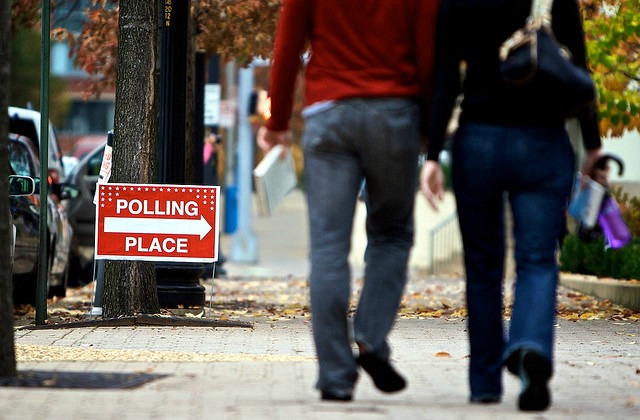
 Photo by Samer Farha