By DCist Contributor Nathan Wilkinson
Until recently, hard cider lovers found it difficult to find a decent selection of their favorite beverage. And unless you lived near a cidery, it was nearly impossible to try locally produced ciders. That’s all changing as cider-loving restaurateurs are leading a craft cider trend, and encouraging beer and wine drinkers to switch to a different fermented beverage.
It’s cider season this fall at Thally (1316 9th Street NW), where every cider on the menu is 25 percent off to entice people to try something new. Thally is a small restaurant with twelve taps, but owner Sherman Outhuok says, “I guarantee we have at least one or two taps devoted to cider.” Beyond those ciders on tap, Thally’s menu boasts more than a dozen bottled ciders from around the world. A long-time cider lover, Outhuok says he got into cider because he never liked the taste of beer. “I grew up in Vermont where everybody knew Woodchuck,” referring to the Vermont-produced cider commonly found in bottles. “I eventually started looking for drier ciders with less sugar and funkier flavors to them, not the sweet cloying flavors of the mass marketed ciders.”
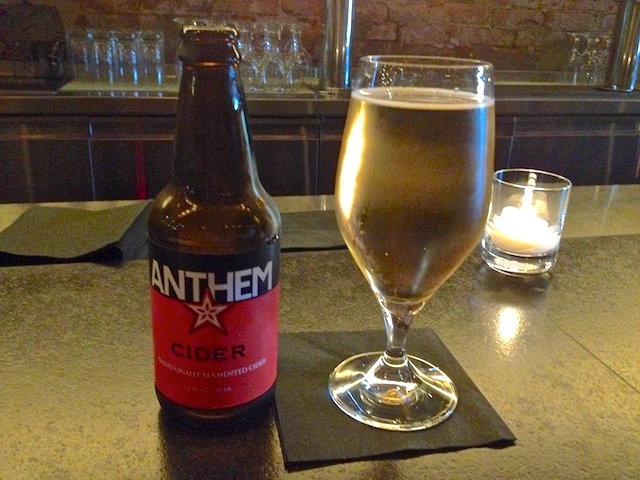
There’s a lot to try at Thally, from Oregon’s Wandering Aengus’ Anthem cider and its cherry and pear varieties, to the drier yet complex Jack’s Original cider produced in Pennsylvania. Millstone’s Hopvine from nearby Monkton, Md., is an unusual hopped and honeyed cider with a dry and floral character that’s sure to please IPA drinkers. Drier still are the bruts like California’s Crispin and France’s Cave de la Loterie, which are closer to the dry bitterness of brut champagnes from which they take their designation.
ChurchKey (1337 14th Street NW) has the widest range of ciders in D.C., and local cider is the main feature. Here you can get Virginia’s Bold Rock, New York’s Original Sin, and Pennsylvania’s Jack’s Hard Cider on draft for six dollars. But don’t turn your nose up at the 25 oz. bottles of Potter’s Farmhouse Dry or Old Virginia Winesap. Both are from Virginia cideries and go for $25 and $35 a bottle, respectively. ChurchKey is also the best place to try English cider, with two smaller 16 oz. bottles of Burrow Hill Somerset, and Ross-On Wye Carbonated Cider.
Another great cider option is the popular pizza restaurant Pizzeria Paradiso (2003 P Street NW) in Dupont Circle. The restaurant offers a surprising number of cider options thanks to the efforts of outgoing beverage manager Sam Fitz. A beer expert who formerly worked at Meridian Pint, Fitz started selling cider as a gluten-free alternative to beer. “Many drinkers are resorting to cider, which is gluten free, and finding that they really love them,” says Fitz, noting the dearth of quality gluten-free beer. He always keeps several ciders flowing on tap at Pizzeria Paradiso to encourage cider newbies to venture into undiscovered territory. “Someone who isn’t sure they like cider won’t go in for a $25 bottle without trying it first. With a tap you can sell by the pint and you can offer flights of 4 oz. pours,” he says.
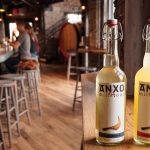
Fitz’s affinity for cider goes beyond his profession. He recently returned from a trip to Spain’s Basque country where the craft cider tradition has been in vogue for centuries. He stocks Isastagi and Sarasola Sagardoa as two example of what he calls “some of the best cider in the world.” Fitz — who is leaving Pizzeria Paradiso to open his own place — even has a tap that combines Sarasola and a tart and acidic Weiss beer that complements the cider. The concoction is called Solera and is available at both Dupont Circle and Georgetown pizzerias.