Four Corners explores local markets selling hard-to-find ingredients from around the globe. Got an idea for a place we should check out? Tell us in the comments.
By DCist contributor Jenny Holm
Hana Japanese Market (2004 17th St NW), an understated, overstuffed treasure trove of (mostly) Japanese provisions, has been quietly minding its own business on the corner of 17th and U since 2009, when husband and wife Yoshio and Ikuyo Tanabe decided to augment the travel agency they were running out of the space with a grocery.
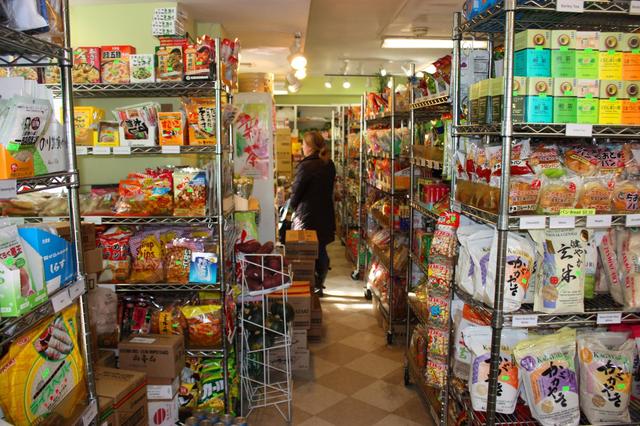
Today the travel side of their business is conducted mostly from a cluttered desk wedged into the back of the store among sundry green-tea flavored snack foods. The sheer number of products the Tanabes have managed to pack into a space not much larger than an average living room (not to mention the mesmerizing, cutesy packaging) could keep the curious shopper occupied for hours. Hana is the only store in the District that carries many of the items in stock, so it’s the place to go if you have a hankering for sea vegetables or are looking for anything in a flavor known as “sweet potato-kelp.”
Those who want to make their own sushi at home can pick up Japanese sushi rice, sheets of nori, frozen sashimi-grade fish, fresh wasabi, and an array of soy sauces extending far beyond Kikkoman. Fresh sushi made by a local chef is delivered to the shop Tuesday through Sunday.
Hana’s collection of fresh produce includes super-sweet kabocha squash, purple yams, Thai basil, persimmons, enoki and shiitake mushrooms, and skinny Asian eggplants, among others. (Selection may change seasonally.) You can find all the fixings for restaurant-style ramen, from frozen tonkotsu broth and pork belly to miso (fermented soybean) paste, bonito flakes, and an assortment of noodles. They also carry some common condiments used in other Asian cuisines, like Korean barbecue marinade, Chinese five-spice powder, and Indonesian sambal oelek chili sauce.
Green tea is the traditional accompaniment to many of the delicate snacks Hana carries, like mochi (glutinous rice cake), youkan (sweetened bean paste gelled with agar, making it fit for vegetarians), and senbei (baked rice crackers, often flavored with soy sauce and/or sugar). More substantial snack-on-the-go options include nori-wrapped onigiri (rice ball stuffed with meat or vegetables) and a green tea and walnut muffin baked by a local Japanese woman.
The store has only a placeholder website, a Facebook page that hasn’t been updated in over a year, and no advertising. Refreshingly, this isn’t a ploy designed to entice customers by remaining coyly aloof. “People just find us by word of mouth,” says Ikuyo as she rings up my purchase of wasabi peas and sweet ‘n’ salty rice crackers. She waves her hand toward a six-year-old laminated cover story about the market’s opening that is tacked on a bulletin board near the door. “Sometimes they write about us,” she adds, not intending to be droll.
Despite the lack of publicity, business appears to be buzzing. Yelp reviewers are crazy about the place. Wending your way around other customers as you shop is part of the experience, as if you were in a tiny convenience store in Japan.