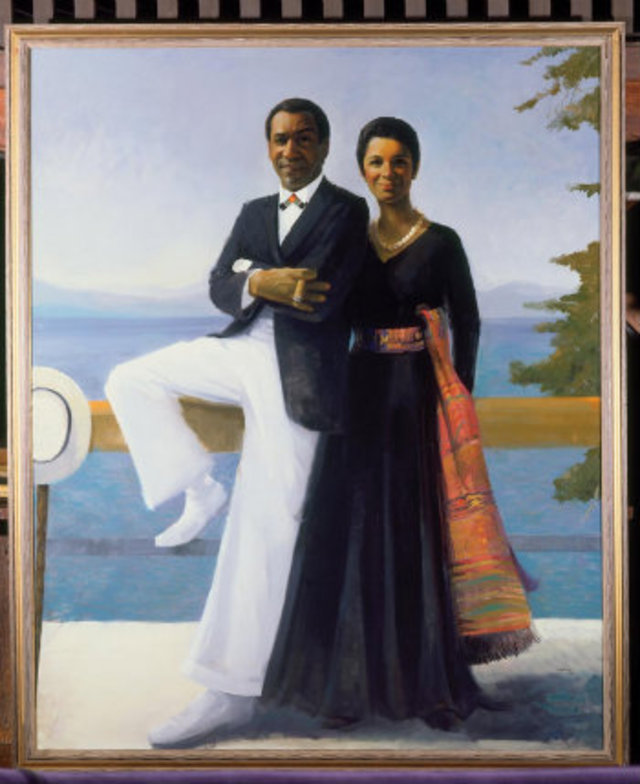
 Via The Collection of Camille O. and William H. Cosby Jr. Photograph by David Stansbury, permission courtesy of the artist
With the decades-old allegations of sexual assault against Bill Cosby front-and-center in the mainstream media, the Smithsonian’s exhibit of the comedian’s art collection has taken on unexpected controversy.
The National Museum of African Art began exhibiting Cosby’s private collection earlier this month, shortly after Hannibal Buress’s standup routine on the disturbing allegations against Cosby brought them new attention.
Initially, the museum declined to directly address the allegations. But today, a statement released by the National Museum of African Art spells out its position: “Exhibiting this important collection does not imply any position on the serious allegations that have been made against Mr. Cosby.”
The National Museum of African Art’s mission is to inspire conversations about the beauty, power and diversity of African arts and cultures. We began planning for the “Conversations” exhibition two years ago to help showcase the history of American art created by persons of African descent. It brings the public’s attention to artists whose works have long been omitted from the study of American art history. We are aware of the controversy surrounding Bill Cosby, who, along with his wife Camille, owns many of the works in the “Conversations” exhibition. Exhibiting this important collection does not imply any position on the serious allegations that have been made against Mr. Cosby. The exhibition is centrally about the artworks and the artists who created them.
The statement appears to be a direct response to recent pieces critical of the exhibit, including one by CityLab’s Kriston Capps:
In a two-sentence statement, the Smithsonian made clear that it is standing behind Cosby, without saying as much. “Conversations” will remain on view through the start of 2016. That’s the end of the conversation from the museum’s perspective. But it should be the start of one. The National Museum of African Art had no business hanging Cosby’s art collection in the first place. But now, with serious questions about Cosby’s past finally coming to light, the Smithsonian must reconsider its own role in framing the one conversation that matters most right now.
“When you choose to launch a show about a collector, rather than a show about art, you’re putting the collector on the pedestal, rather than artists and art and its history,” says art critic Tyler Green, host of the popular Modern Art Notes podcast and blog. Green, an art-world watchdog, has been a vociferous critic of exhibitions like “Conversations,” collector-driven shows in which the focus is the pursuit of artworks, rather than an artist or a theme. “That can go south really fast, and here, it has.”
Cosby has either denied or declined to discuss the allegations, while his lawyer described the latest crop of stories as “media vilification.”