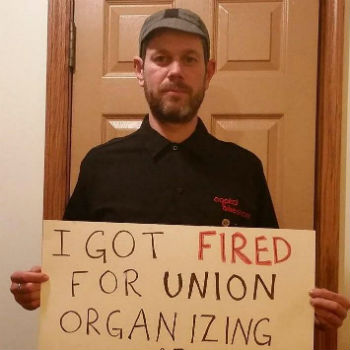
 Via Fhar Miess Facebook.
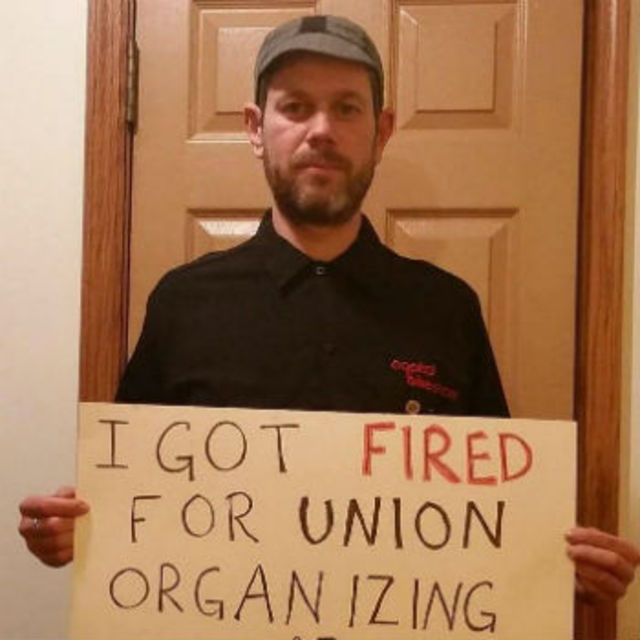
A Capital Bikeshare employee involved with the movement to organize a union was fired last week. The company that operates bikeshares across the country says the employee was a supervisor “not legally permitted to engage in union organizing,” while Fhar Miess disputes that.
“My employer spent tens of thousands of dollars on union-busting lawyers to keep me out of the bargaining unit and then fired me for union organizing,” Fhar Miess, who worked as a bike checker since 2011, wrote on Facebook. While Alta Bicycle Share, which was recently sold to investment group Bikeshare Holdings, claims Miess was a supervisor, he told the Post he never viewed himself that way. “Ultimately, in my department, we operate in a completely horizontal fashion,” he said.
Alta disputes this, saying in a statement Miess was “given a second chance” to stop organizing after he was told it was illegal.
On Monday, November 24th Alta Bicycle Share terminated a supervisor at Capital Bikeshare for illegal activity under the National Labor Relations Act.
Our company supports the right of its employees to consider whether or not they want to join a union and we are committed to facilitating a fair election process that is consistent with legal framework established by the NLRA.
There is no question that the employee who was terminated was a supervisor and member of management. He managed a team of 10 employees, was responsible for hiring, scheduling, disciplining and performance reviews, and served as the point person for his department at senior staff and safety committee meetings.
In order to protect the rights of employees, the NLRA states that supervisors are not legally permitted to engage in union organizing.
The employee was notified that his actions were not legal due to his status as a supervisor. He was given a second chance. But he continued his union organizing activity and was subsequently terminated due to his illegal activities.
The company took this action, consistent with the law, to protect our employees’ rights to a fair and unbiased secret ballot election to determine whether or not to unionize.
A majority of Capital Bikeshare’s eligible workforce, 87 percent, have signed union cards. Miess’s card was contested, and he was fired after attending a convention put on by Transit Workers Union Local 100, which is supporting Capital Bikeshare’s unionizing.
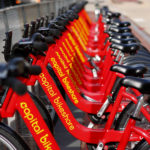
D.C. owns the bikes, docks and other equipment used by Capital Bikeshare, while it is operated by an outside company.
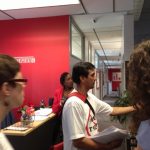
“We’re private workers, even though everything I touch all day long is public,” Elliott Caldwell, a Bikeshare employee who is helping organizing the union, said outside Union Station on a recent night while handing out fliers. “As far as we’re concerned, we work for the system and we think the system is owned by the people.”
“The Bikeshare workers are committed to unionizing,” he said.