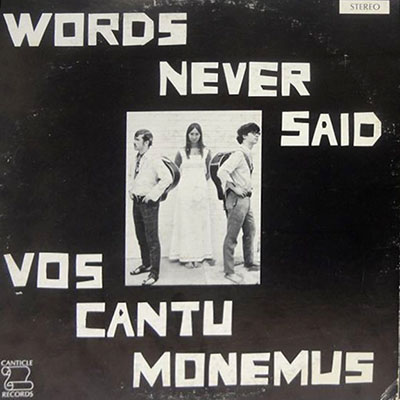
 (Discogs)
Welcome to the first of what I hope to be a regular series of columns exploring the history of Washington-area music through its private press LPs.
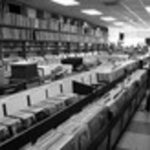
What are private press LPs, you may ask? Before the Internet gave amateur musicians an easy way to share their music with the world, regional songsmiths would go their own route, releasing their records in very limited editions and distributing them among friends and family. Many of these records are long forgotten, but some have become valuable collectibles.
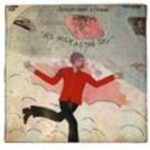
Last year, Sinecure Books released the dense coffee table book Enjoy the Experience, which documents hundreds of such albums. They’re not all gold, but these very personal documents can take you places where no major label would tread, from the Love Boat lounge music of Michael Farneti’s Good Morning Kisses to the homegrown teen pop of Donnie and Joe Emerson’s Dreamin’ Wild.
The Washington area has generated its own share of private press magic, and in the coming weeks, I’ll share some of these recordings, some of which are collectors’ items in high demand, others of which may still be awaiting rediscovery. If you or someone you know released a private press album, talk to me.
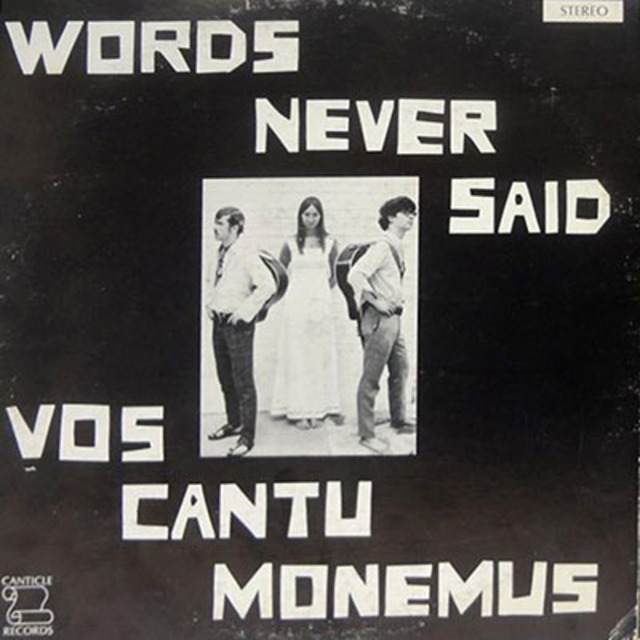
Our first installment is the 1969 folk album Words Never Said by Vos Cantu Monemus. Released in an edition of only 200 copies, the album is one of the more desirable among collectors in private press circles. In 2008, an eBay auction for the album attracted 21 bids, the winner paying a hefty $1,125 for this rare album.
Who were Vos Cantu Monemus? I contacted former member Glenn Meade, who was kind enough to answer a few questions about the group and their album.
Can you tell me a little bit about the group? How did you meet your fellow band members? Are you still in touch with any of them?
Mark Blankner was a friend from high school and we played in rock bands together for years. I was on keyboards and Mark was a drummer. I met Lynne Hulse at a music camp in 1968, and we started writing music together (essentially folk music) and we pulled Mark in as a third. All three of us were good at acoustic guitar, and Lynne and Mark did most of the singing with me on back-up vocals. We played many coffee house concerts in the Baltimore/D.C. area for years and made our only recording in 1969. Most of our music was original, with all three members contributing songs. The group broke up in 1971 when members went off to different colleges. Mark was unfortunately into drugs and was killed in a bad drug deal in 1973. I am still in touch with Lynne, and she still lives in the D.C. area and continues to play and perform music.
How did the album come about? I’ve read that the pressing was limited to 200 copies; does that sound right?
We recorded the album with a recording engineer who recorded in his expansive living room — just a few mikes and natural reverb. All takes were start to finish without any cuts or splices. I think you’re correct about the 200 copies. We sold most at concerts, but there must have been a number left over and I have no idea what happened to them. I only have one and it’s not in great shape.
To what do you attribute the album’s reputation/price point?
I have no idea why this album caught the fancy of LP collectors. The music is pretty good but not enough to explain the demand. I think with collectors it has more to do with the rarity and actual physical condition of the LP.
Would you like to tell me something about your long musical career since then? Have you moved on as a musician from this album, or is there still something in this music that is part of your artistic DNA?
I continued my musical career as a sideline and composed many musicals, operas, symphonies, chamber music, etc. in the Chicago area where I moved in 1972. In 1985, I started writing for electronic instruments and computer based synthesizers and have made many CDs of electronic music with and without acoustic/vocal additions. My business website is synthestra.com, where all the music (including tracks from Voc Cantu Monemus’ only album) can be heard as mp3s.
Listen to side one of Vos Cantu Monemus’ Words Never Said: