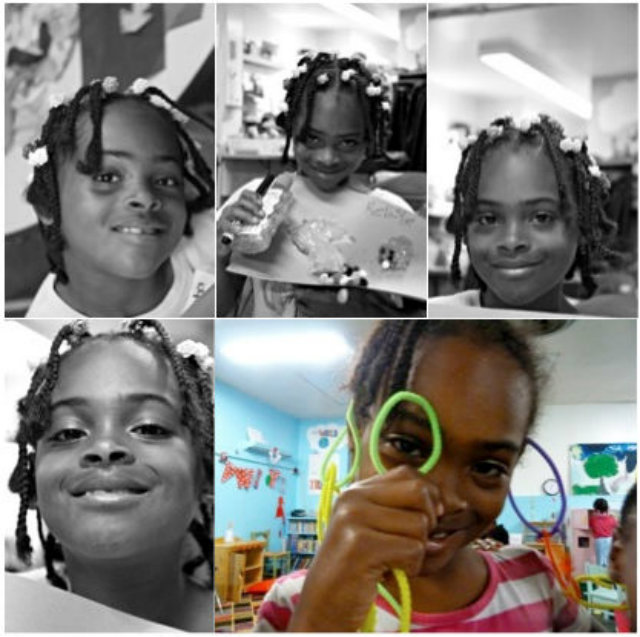
 Via MPD.
Let’s talk about Serial, because—hell—everyone else is.
The final episode of the hit podcast, which has been prime water cooler conversation fodder since whatever the last highly buzzed finale was, hit the Internet last Thursday. Among the plethora of lingering questions “What We Know” raised is this one: What is host Sarah Koenig and her crew going to cover for season two?
Here’s an idea, Sarah: Find out what happened to Relisha Rudd.
In case you aren’t hip to Serial, which has become a pop culture leviathan in the past several months, here’s the gist: The podcast, which is a spinoff of This American Life, tells a single story in a week-by-week serialized format. . Its first season centers on Adnan Syed, a 35-year-old man from the Baltimore suburbs sentenced to life in prison for the the murder of his ex-girlfriend, Hae Min Lee, in 1999, when he was 17 years old. Of course, Adnan maintains his innocence.
In the past year, Koenig has been obsessively poring over all the details of Adnan’s case. Throughout the season’s 12 episodes, she puts everything under a microscope, from the state’s seemingly flawed case against him to his defense attorney’s unusual tactics to an analysis of Adnan’s character (is he really capable of committing such a horrible crime, as many of his friends and family wonder?). She analyzes the inconsistencies in both his testimonies and those of the witnesses, reaching into the depths of his high-school relationships y and—most compellingly to figure out what actually happened to Lee.
Serial is a smash because it melds a relentless, hard-nosed look into a dramatic case with tightly edited, cultured storytelling. Each week, Koenig explores every possible angle of which she can conceive, fact-checks every single detail of the case available to her, and interviews as many people as possible—both those personally connected to Adnan and professionals who deal with cases like this. Koenig also tries to operate as objectively as she can: When she feels like she’s harboring any kind of bias about Adnan, she discusses it on the podcast with a stream-of-consciousness candor.
And so, Relisha Rudd.
Things have been amiss since the first reports of the eight-year-old girl’s disappearance surfaced last Marchs: The Metropolitan Police Department’s Amber Alert didn’t come until March 20, but it was later confirmed that Rudd was last seen by her family on February 26 in the D.C. General homeless shelter, notorious for its poor living conditions and corrupted oversight, where they lived. After that, her mother said she’d been under the care of Kahlil Tatum, one of the shelter’s janitors. Nearly two weeks after her disappearance was reported, Tatum’s body was discovered in Kenilworth Park. To this day, no trace of Relisha has been found and the investigation into her disappearance in ongoing.
An ongoing investigation could be tricky for Koenig and her crew to pursue, especially in Serial’s infancy. Because Lee’s case is closed, Koenig was allowed to pore over all of the state’s and court’s documents. But officials are still actively investigating Rudd’s disappearance, and a substantial chunk of what Koenig leaned on to produce a gripping narrative about Lee’s murder would likely be off-limits.
But that challenge makes Relisha Rudd the perfect subject for Serial, the second season. Koenig and her team have proven to be relentless in their pursuit of minute details; they’ll find ways to conduct their own investigation without interfering with police. Perhaps they might even work with local media outlets that have spent countless hours covering Relisha’s disappearance, much as she did with a Baltimore Sun crime reporter throughout Serial’s first season. Through interviews, analysis of information available, and other resources Koenig and her team employed for the first season, she could still make a compelling and nuanced investigation into Relisha’s disappearance—and maybe even work with authorities to find out what happened to her.
Next month, Adnan will have an appeal hearing, which will be his “last best chance” at freedom. It’s been in the works for five years, but, as Adnan’s lawyer, C. Justin Brown, put it, the timing of the Court of Appeals decision to set a date is “an unusual phenomenon.” From the Associated Press:
“It’s an unusual phenomenon,” Brown said. “The Court of Special Appeals has shown some interest in the case and asked the state to respond to our application, which is more than they usually do in this procedural posture. But I truly think the appellate courts make their decisions based on the merits of the case, and not the popularity of a podcast.”
If anything, given the wild popularity of the podcast, focusing Serial’s second season on Relisha’s disappearance could reenergize the attention of Relisha’s disappearance on a national level.
Serial has caused the masses to become deeply invested in the precise location of a pay phone in a Best Buy parking lot 15 years ago. Rudd’s disappearance is worthy of the same kind of national attention.