It’s Friday night, I’m in Charm City, and I’m sitting in a very small cage in the middle of a bull riding ring.
A few feet away from me, a rodeo clown squirts lighter fluid into the dirt. Another one sneaks around the other side of the cage and rattles the bars next to my ear, then laughs as I jump out of my seat. As the house lights dim, I’m more than a little panicky. This is, without a doubt, my first rodeo.
Then, fireworks. The lighter fluid ignites, spelling out PBR — short for “Professional Bull Riders, not the beer” — on the arena floor. One after another, a line of cowboys emerge, walking through the flames and up a ramp before greeting the crowd while standing on top of the very cage I’m sitting in. The fans — some 8,000 or so made the trip to Royal Farms Arena on Friday — are going apeshit.
The event in Baltimore is PBR’s 2015 season opener. Bull riding — once a fringe event reserved for county fairs in flyover states — went mainstream long ago. Founded in 1992, the 20 or so bull riders who ponied up $1,000 to start the organization are all millionaires now, with the league generating over $70 million in revenue last year alone. Speaking to riders, you get the feeling the event in Baltimore is a bit smaller than they’re used to; this is a sport that regularly sells out NBA arenas.
In spite of all of this, professional bull riding still has a stripped-down, organic feel to it. It lacks the clutter of other American sports—the penalties and complexities of football, the snail-slow pace of baseball, and the sometimes over-the-top hype of basketball. Bull riding seems primordial in comparison: One brave man, one very angry bull, and eight agonizingly long seconds.
That’s not to say that it doesn’t have it’s flaws. To say the sport is violent is a gross understatement, and I didn’t have to wait long for proof of that. Just a few minutes into the competition, Australian rider Ben Jones takes a seat atop “Wreck-it-Ralph” and is in trouble as soon as the gate opens. Jones gets flung off after just a couple of seconds, and within the blink of an eye the bull’s rear hooves come smashing down on his face. I let out a gasp. The TV cameraman next to me, who’d obviously seen many rides, doesn’t even flinch.
Jones was fortunate to escape with his life:
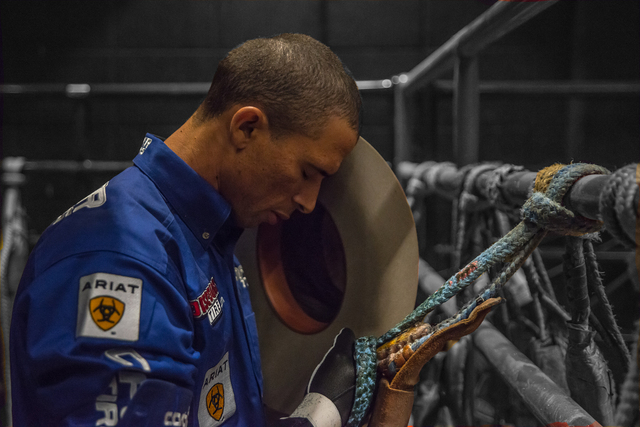
Wandering through the locker room before the event, it was clear just how dangerous this all really is. In other sports, athletes often sit in quiet contemplation before a match, slowly drowning out everything else around them while reflecting on the game that lies ahead. In bull riding, the pre-game meditation has a very different tone. Some cowboys were sitting silently, reading prayers they’d scrawled on the bottom of their hats. Others stared blankly into the distance. This is a sport, yes, but it feels more like life and death at times.
And then there are the bulls themselves, whom many of the riders told me they had an immense amount of respect for. And that makes sense—near-misses like Jones’ likely teach you very quickly to respect your opponent. And while they seem to be treated very well in general —they are, after all, cash cows for their owners and the men who ride them — you still can’t help but wonder “why are we even doing this.” To a newcomer like myself, it was tough to watch the animals antagonized for sport.
Still, the competition was undeniably exhilarating, and a refreshing change of pace. I’d probably go again. But I’ll likely pass on the shark cage experience. 20 minutes in there was more than enough for me.
Professional Bull Riding Competitions happen in cities all around the country. Check their website to see when they’ll be coming back to this area.