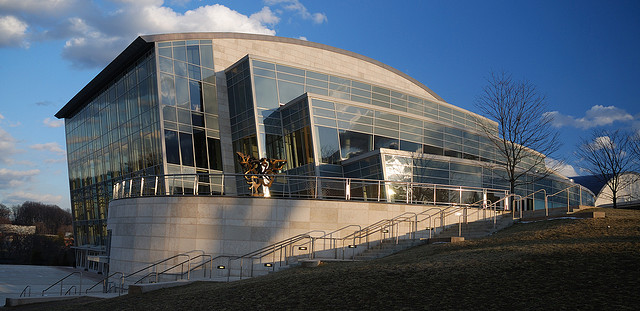
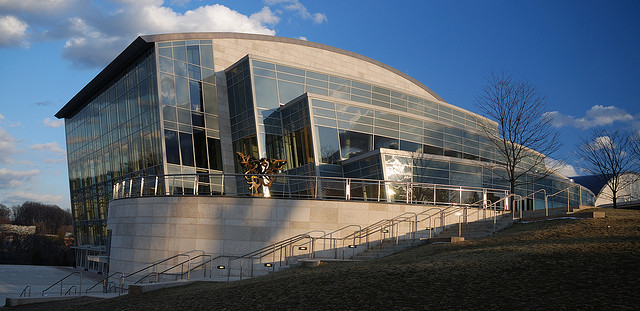
 Photo by Brad MCDermott
By DCist Contributor Caroline Baxter
What: Johann Sebastian Bach, “The Complete Sonatas and Partitas” Presented by the Washington Performing Arts Society
Where: The Strathmore January 16, 2015. Tickets $30 and up.
Listen: Partita No. 3, performed by Gil Shaham
Quick Facts
Bach dates: 1685-1750
Composition date: Completed in 1720 (begun 1703)
Bach nationality: German
Other works: Brandenburg concertos, piano concerto in D minor, BWV 1052
If you’re a regular reader of The Good Part, you’ll remember that the last column covered music from the Renaissance. This column covers the music of Johann Sebastian Bach, which was written during the following period: The Baroque. The Baroque period ran from about 1600 to 1750 and included such composers as Bach, George Friedrich Handel, Antonio Vivaldi, Henry Purcell, and Johan Pachelbel. While the Renaissance pushed the boundaries of harmony, polyphony, and rhythm, the Baroque period picked up where the Renaissance left off and earned its moniker by generating music that’s more complex and more ornate. Major compositional styles created in the Baroque period included the opera, the concerto, and—yes—the sonata.
Bach’s sonatas and partitas for solo violin span six separate pieces of music: Three sonatas alternating with three partitas. The style of the sonatas is called “sonata de chiesa,” which means “church sonata,” and is characterized by four movements of alternating slow and fast tempos. The partitas are, by and large, much more dance-like (see the above video), and have a looser structure. For example, there is no set number of movements per partita, nor are there regulations about their speeds.
It might sound incredibly claustrophobic to go to a performance of a single person playing a single instrument for about an hour and a half. But there are two things to recommend this particular example of such a concert. The first is, of course, the music. Bach is rightly considered a musical titan—of any genre. He is a master of the epic (see: The B Minor Mass) and the complex (see: Any fugue he ever wrote). But listening to a solo instrument gives you a glimpse into the inner workings of his mind. Some of the slower movements sound like he is experimenting with the melody and seeing what happens. It’s thrilling. What can someone, who was so gifted at making a dozen disparate lines of music join in beautiful harmony, do with a single instrument? As it turns out, quite a lot.
The beginning of the third sonata, “No. 2 in A Minor,” is a slow, gentle heartbreak of a melody. It is a piece that someone would play alone, out of earshot of anyone, to achieve some sort of catharsis. This body of work is both a private musical exploration, and a showpiece to demonstrate serious musical talent.
Which brings us to the second recommendation for this concert: The incredible gift of total vulnerability that comes from a solo performance. There is absolutely nowhere for the performer to hide. They can’t fake talent, and they can’t hide whatever emotions the music elicits. If they achieve that catharsis while they’re playing, it is impossible for the performer to hide—and for the audience to miss. A performance like this is akin to watching an actor playing Hamlet recite the famous “To be or not to be” monologue. What do they bring to that performance, from themselves, that will color the words and make it their own? In what way will the audience get to know them better? And, in so doing, in what way will you know yourself? It is very easy for a lone person to hear himself or herself in the music of a lone instrument.
Gil Shaham is perfectly suited to this task. He is a beautifully emotive performer who achieves a kind of clarity of sound on his instrument that is incredibly rare. You can hear every single note and his talent is such that sometimes, if you close your eyes, it sounds like there are two violins playing at once. This concert marks the first time he has played the complete sonatas and partitas in D.C. Don’t miss this opportunity.