 Photo by Glyn Lowe Photos.
A new report from the D.C. Fiscal Policy Institute on the District’s economic recovery since the recession has found that the wage gap between the city’s rich and poor is at a 35-year high.
According to a summary of the report, which was conducted by DCFPI’s Ed Lazere and Marco Guzman, D.C. has “recovered from recession-related job losses,” but at the expense of a widening wage gab, which has seen low-wage workers’ wages decline while higher-wage workers’ salaries grow.
Additionally, the report found that workers who don’t own a college degree are continuing to have difficulty in finding permanent employment. The result has led to many workers being forced to take part-time jobs or give up looking for employment.
 Via DCFPI.
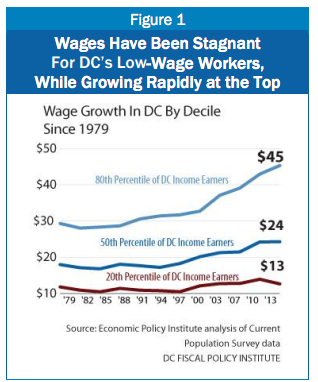
Among the highlights the report reveals is that low-wage workers are earning less than they did in 2007. In 2013, low-wage District workers earned $12.62 an hour, which is one percent less than in 2007. An increase in earnings from high and middle-wage workers helped widen the wage gap: Middle-wage workers’ earnings rose $3 an hour, to $24.25, and high-wage workers’ earnings rose $6 an hour, to $45.30, between 2007 and 2013.
While the District’s unemployment rate has been steadily declining since the recession, it’s still not where it was pre-recession. The report found that, with a 7.6 percent unemployment rate in 2014—the lowest it’s been in years—it doesn’t compare to the 5.5 percent unemployment rate in 2007. And that rate is even higher in certain groups, like D.C.’s black residents, where the unemployment rate was 16 percent in 2014, compared to 10 percent in 2007.
One reason for the widening wage gap in D.C. is because of the trouble residents without college degrees are experiencing in finding work. The report found that one-third of District residents with a high school diploma are underemployed. According to the report the “typical wage for residents with a high school diploma fell $1.50 between 2007 and 2013,” while residents with only some college education (associate’s degree or less) saw a $2-per-hour drop in wages.
You can read the full summary of the report’s findings below: