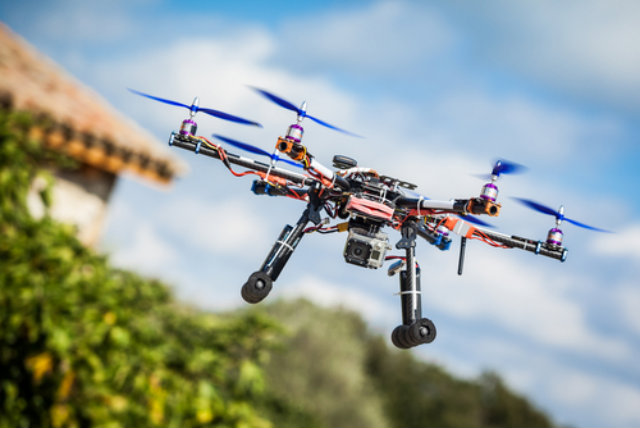
 Photo via Shutterstock.
Good news, drone hobbyists: the Federal Aviation Administration has proposed new “flexible” rules for commercial drone use.
Under the rules proposed by the FAA, which was released yesterday, the commercial use of small unmanned aircraft systems would be limited to “daylight and visual-line-of-sight operations.” In addition, the proposed rules also addresses flying drones within restricted airspace, altitude limits, and more.
“We have tried to be flexible in writing these rules,” FAA Administrator Michael Huerta said in a statement. “We want to maintain today’s outstanding level of aviation safety without placing an undue regulatory burden on an emerging industry.”
Under the proposed rules, an operator at least 17-years-old is required to maintain a visual line-of-sight of the drone when operating it. The rule also allows an operator to work with a “visual observer” who would maintain constant visual contact with the drone. Additionally, he are the other rules proposed by the FAA:
- A small UAS operator must always see and avoid manned aircraft. If there is a risk of collision, the UAS operator must be the first to maneuver away.
- The operator must discontinue the flight when continuing would pose a hazard to other aircraft, people or property.
- A small UAS operator must assess weather conditions, airspace restrictions and the location of people to lessen risks if he or she loses control of the UAS.
- A small UAS may not fly over people, except those directly involved with the flight.
- Flights should be limited to 500 feet altitude and no faster than 100 mph.
- Operators must stay out of airport flight paths and restricted airspace areas, and obey any FAA Temporary Flight Restrictions (TFRs).
Recently, a federal employee crashed his hobby drone on White House grounds, which prompted a reevaluation of rules and guidelines for flying drones for both commercial and hobby use. Just, you know, keep it away from the White House.