 Twenty-five years ago, D.C. was in the thick of its crack-cocaine epidemic. “No U.S. metropolis was getting hit harder” than D.C., writes Ruben Castaneda, and with “bodies…dropping nightly in violence propelled by crack turf wars,” the murder rate was over 400 a year.
In January 1990, then-mayor Marion Barry was notoriously found with the substance in a hotel room during an FBI sting. Castaneda, a Washington Post crime reporter, watched the news coverage from his own nearby hotel room — while smoking from his own crack pipe.
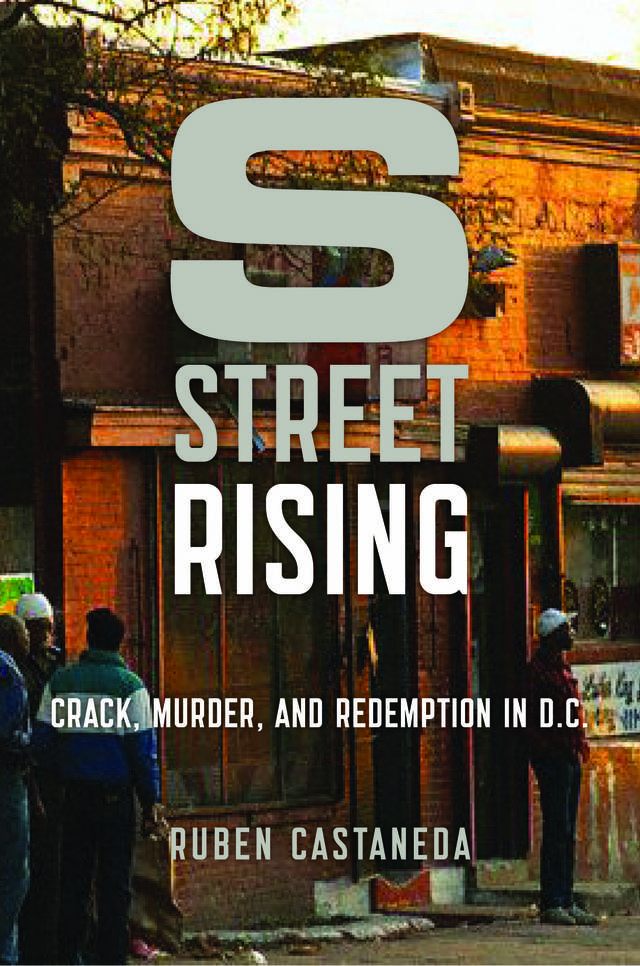
Castaneda’s recent book, S Street Rising: Crack, Murder, and Redemption in D.C. (Bloomsbury, $26) recounts D.C.’s crack addiction as it dovetails with his own. He’ll be discussing the book at Busboys & Poets’ Brookland location tomorrow, March 11th from 6:30-8:30 p.m.
Due to Castaneda’s double life at the time, he knew the “Barry era” from the inside out. As a reporter, he saw the top-down problems with corrupt city officials, de facto segregation, and crack dealers’ control over their neighborhoods. As an addict, he experienced the descent of his own psyche, which failed to see the irony of monitoring the mayor for the same thing. Castaneda was “prowling S Street, a 24/7 open-air crack market,” in search of both a story and a fix.
But as much as S Street Rising paints a sordid picture of early ’90s D.C., Castaneda skillfully weaves in the people who didn’t give up on the city. Bright spots include a homicide cop who brought in a successful new approach, and a pastor whose church’s outreach programs slowly changed its surroundings for the better.
It’s obvious that Castaneda was a passionate young reporter and that he must have felt the same way while writing this book. He is a captivating storyteller that makes you feel like you’re along for the ride. The vivid depiction of many streets we now see quite differently is especially appreciated—neighborhoods filled with rotting buildings, used needles, and “strawberries” (women who traded sex for drugs), where shootings took place day and night.
Castaneda was born and raised in Los Angeles, Calif., and was the first member of his family to graduate from college. After covering D.C.’s crack epidemic, he reported on court room stories in Maryland’s Prince George’s County and helped expose local police brutality. He left the Washington Post in 2011 and has been clean since 1992.
This event is free and open to the public.