Photo credit: West End Cinema
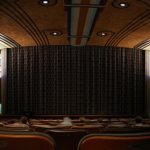
Cinephiles throughout the District warbled a plaintive melody earlier this month when the independent arthouse West End Cinema announced it would be closing up at the end of March.
I was one of those people. West End is a rickety operation: the mishmash of strangely arranged seats that were always coming apart, the DVD-style digital projection on a tiny screen with budget sound quality. But I treasured the fact that it was there, programming the niche stuff that the E Street Cinema either didn’t have or wouldn’t make the space for.
D.C. no longer has the gorgeous, cozy movie palaces nestled into every neighborhood like it did a generation ago, though their visages still haunt the streets like a cruel joke: the Tivoli Theater in Columbia Heights advertises Z Burger on its marquee. Sure, the fanciest theater chains in existence—including Arclight, iPic and the Alamo Drafthouse—are a short drive away in the suburbs, but when they all show the same first-run blockbusters, what’s the point?
Great movie towns need spaces willing to show the latest Spike Lee joint, even if it gets mediocre reviews; they need somewhere that’ll program the Oscar Documentary Short nominees, for that small percentage of people who want to seek them out. Even as niche films move to the Internet in greater numbers, they need a physical space to establish a community and a sense of importance. And great movie towns also need film spaces with character, that aren’t just finding new ways to upcharge customers for leather seats and gourmet popcorn.
West End Cinema was all of these things. But its imminent demise is not cause for alarm. Even without the venue, D.C. is still a great movie town, and will soon become an even better one.
Last year the Angelika Pop-Up Cinema made its debut just north of Union Market. It’s currently the District’s only commercial movie house outside of Northwest, and if you’re a movie fan, you should be making regular treks to its beckoning big-eye mural. The Angelika was the only game in town for the first run of some of last year’s
best films, including the Irish animated adventure Song Of The Sea and the feminist vampire flick A Girl Walks Home Alone At Night.
Plans are underway for a permanent Angelika location above Union Market—though personally, I’d be fine with keeping the Pop-Up as is, since it reminds me of the West End more than anything. Two more art theaters will soon join it, both courtesy of the Landmark chain: a ten-screen multiplex in NoMa in 2016, and a six-screen cinematheque in the Atlantic Plumbing development across from the 9:30 Club (scheduled to open by the end of the year).
Indeed, the increased competition is one of the reasons West End Cinema owner Josh Levin cited for his theater’s closing. While it’s unfortunate that these are all chain shops, and that they will all likely have digital projection rather than the classic 35mm, a net increase in arthouse screens can only lead to a net increase in arthouse films.
The crucial point is not that there will be so many theaters, but that they’ll all be playing different things for the most part. As Landmark CEO Ted Mundorff told the City Paper last year, the NoMa location will likely show more mainstream prestige selections, while the Atlantic Plumbing location will be more specialized. It’s worth noting that the area’s two current Landmark locations, E Street and the Bethesda Row Cinema, have a track record of complementary programming.
With so many available screens, D.C. is fast on its way to rivaling New York and L.A. as a premiere destination for independent and foreign films, which seems only right given how many national media outlets are headquartered here. No more waiting weeks for the good stuff.
The announcement of the planned Suns Cinema, a new independent repertory theater in Mt. Pleasant with an even more esoteric vibe than the West End, has arrived with fortuitous timing. By showing classics and deep cuts rather than first-run films, the tiny cinematheque is hoping that District cinephilia is deep enough to sustain a venture even more specialized than an arthouse. There’s something to be said for a business plan this weird: it changes the makeup of the city’s film landscape, the same way that used bookstores create a different kind of literary scene from what places like Kramerbooks and Politics & Prose offer.
But the metro area already plays home to several quirky film centers and repertory houses. The AFI Silver Theater & Cultural Center in Silver Spring has a dedicated programming slate of classics and world cinema selections, including its own mini-festivals. And the Avalon Theater in Chevy Chase—in addition to showing a huge variety of films on only two screens—is also one of those fabled gorgeous movie palaces, one we need to cherish the very survival of.
But most importantly, D.C. is home to arguably the greatest variety of free film screenings in the country. The dedicated can keep a steady diet of classic and contemporary selections from all over the world, at more venues than it’s possible to name.
They’re at our tax-supported federal institutions, including the National Gallery of Art’s theater (though that’s currently under constructio), the Freer-Sackler Gallery, and other Smithsonian-owned museum theaters. They’re cultural diplomacy, with the Korean Cultural Center, the Embassy of Japan, and the Goethe-Institut all showing regular films. And they’re a part of local outreach: Bloombars in Columbia Heights hosts weekly “BloomScreens” selections; Busboys & Poets regularly shows notable documentaries as part of its Community Cinema partnership; the Washington Psychotronic Film Society is still chugging along after nearly 30 years, keeping D.C.’s film scene weird.
Over the last few months, if you knew where to look, you could have seen dozens of films on a big screen for free, including:
- Under The Dome, a documentary about smog in China that provoked the ire of the country’s censors last week after racking up more than 200 million views online.
- Tangerines, an Estonian drama nominated for the Best Foreign Language Film Oscar this year.
- Black Orpheus, a Brazilian classic, and one of the films Suns Cinema included in its sample calendar of movies it would program for a cost.
With every setback the local film community encounters—be it the shuttering of West End, the slow demise of every local video store, or the transformation of the Silverdocs festival into AFI Docs—there comes a bright spot. Population and mean income is growing, and with that comes a growing appetite for culture.
Of all the towns in all the world, be grateful this burgeoning film scene walked into ours.