On Thursday, February 26, marijuana officially became legal in the District of Columbia. Under the new law, which was overwhelmingly passed by a voter initiative in the November election, D.C. residents over the age of 21 are legally allowed to possess, consume, and—yes—grow their own pot in the comfort of their home. As such, DCist is going to fully take advantage of the new law and start growing our own marijuana. Welcome to The Green Rush, a new monthly column in which DCist editor-in-chief Matt Cohen will document his progress growing marijuana in his home and share tips, tricks, and other things learned along the way.
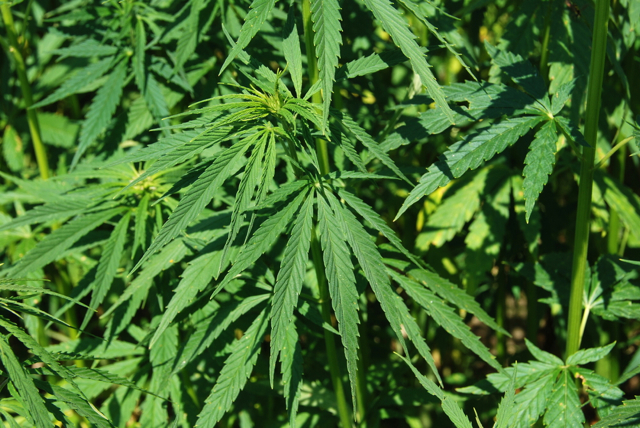 Via Shutterstock
Growing marijuana is not easy. I know and I haven’t even started. In fact, I started researching for this column over a month ago and I’m still not even close to planting my seeds yet (the big problem, of course, is getting seeds. More on that later).
It’s pretty easy to simply plant a seed in dirt, water it, and watch it grow, but cultivating marijuana the right way takes a lot of work and a lot of money. Changing the conditions—even slightly—at any point in the process can ruin your entire harvest, a process that takes at least six months as is. As someone who has never grown marijuana before (and, to be completely honest, doesn’t smoke marijuana that much anyway), I knew this was going to be a complicated process, and one that I’d need some expert advice on.
Alan Amsterdam has been growing marijuana since 1980. Amsterdam, along with Cannabis Campaign chairman Adam Eidinger, used to own Capitol Hemp before it was shut down by D.C. Police in 2012. Amsterdam currently owns The Noon in Silver Spring, Md., but he and Eidinger are working on reopening Capitol Hemp in light of the new laws. I recently met up with Amsterdam so he could give me some advice on growing before I get started.
Much like brewing your own beer, growing your own pot is a tricky process that requires meticulous planning and careful cultivation. And everyone has their own way of doing it. “Someone can say ‘oh, that’s not how I do it,'” Amsterdam says. “It doesn’t mean it’s wrong, it’s just their way, and changing something could affect the whole process.”
Find Your Grow Space
This is the first thing you should do before you buy any equipment. “First you need to find what space you’re going to use,” Amsterdam says. “You have to make sure the space is going to work. Then from the space, you go into a budget, purchase your equipment and build out.”
*Growing outside is the easier way to go, but it can be hard—especially in D.C.—to find the appropriate place to do it. Growing inside, however, is much more difficult “What you’re trying to do is replicating what happens outdoors indoors,” Amsterdam says. “It’s not easy. You have to maintain a temperature [at about] 72 degrees. If you go too much one way or the other, it’ll ruin the whole crop.”
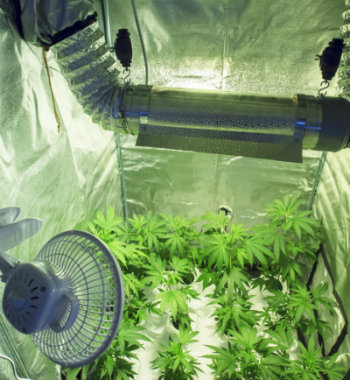
For amateur growers (like myself) who are most likely starting out with one plant, a simple grow tent is an essential purchase. It’s small, not too conspicuous, and easiest for controlling your grow conditions. But before you buy anything, you need to figure out your finances.
Set a Budget For Yourself
“You need to start with a basic grow operation, you have to set yourself a budget—what can you afford to spend on this garden?—and then you have to go with that, you have to go within your budget,” Amsterdam tells me.
Amsterdam’s been growing for decades, so his budget and operation is obviously a lot heftier than any amateur grower’s should be. For someone like me, he thinks a budget of $1,000 or a little less (definitely going to try and make it less) is realistic. Of course, to get a better understanding of how much you’re going to spend, Amsterdam says you need to decide how you’re going to grow and talk to a grow shop who can set you up with equipment within your budget.
Decide How You’re Going To Grow
Hydroponic growing is not for beginners. Repeat: Hydroponic growing is not for beginners. “The hydroponic system is a whole other world, which I would not recommend for a newbie,” Amsterdam tells me. “The whole thing could go to hell in 24 hours.”
With a budget in mind, find a good grow shop, where someone experienced can help you find the right equipment within your budget. Amsterdam recommends Montgomery Hydroponics in Silver Spring, Md. Of course, as the marijuana laws in Maryland are different, you can’t legally buy equipment for growing marijuana there, but, so long as you don’t mention what you’ll be growing (just make a subtle hint, don’t be a narc), they’ll be able to help you out with what you need.
 Via Shutterstock.
What You’ll Need To Grow
There’s not a lot of stuff you need, but what you do need is important. I already mentioned the tent. The next essential thing is a light. The kind of light you need can be tricky (again, consulting your local grow shop will be helpful for this). Then there’s the matter of controlling oxygen intake and outtake. As Amsterdam said, you’re essentially trying to replicate “what happens outdoors indoors,” so you’ll either need to find a way to supply air from the outside to your tent, or get a CO2 tank to oxidize your plant.
You’ll also need the basics for growing anything: a pot, dirt, and nutrients, the latter of which can get more complicated as you become more experienced. “You can get a pH tester if you want to test the pH [of the soil] every day,” Amsterdam says.
Obtain Seeds
This is perhaps the trickiest part of D.C.’s marijuana legalization law. The law prohibits any sort of purchase or sale of pot or marijuana seeds, so you’ll need to find some generous soul who’ll just give them to you. Luckily, the D.C. Cannabis Campaign is hosting two massive seed exchanges—one tonight, one Saturday—where seed seekers can legally obtain seeds. Tonight’s exchange will take place from 5:30 p.m. to 8 p.m. at Libertine in Adams Morgan (2435 18th Street NW). The one on Saturday will take place at the Campaign’s headquarters (2448 Massachusetts Avenue NW) from 4:20 p.m. (of course) to 7 p.m. RSVP here.
Respect Your Neighbors (And Your House)
Amsterdam, who is currently building a closet for his own legal grow operation in Adams Morgan, stresses how important it is to be considerate of your neighbors and your home. “It’s a matter of respecting your neighbors and respecting where you live, because you don’t want to burn down your house.”
He says that the Cannabis Campaign wants to make sure people aren’t taking advantage of the new law and keeping things within the legal limits.
“The D.C. government is not allowed to expand on anything, but they can restrict things,” Amsterdam says. “They’re fully allowed to say ‘OK, we’re taking this away from you,’ as they already have with the cannabis clubs.”
Essential purchase: Ed Rosenthal’s Marijuana Grower’s Handbook, which Amsterdam calls an “essential textbook” for any amateur growers.
Next time on The Green Rush: We plant our seeds and begin the process.
*This has been updated.