 Via Magnolia Pictures.
By DCist Contributor Ryan Little
The most important things to know about the Oscar-nominated, Cannes-winning, Hungarian movie White God are that it features a lot of dogs and it’s not family-friendly. If you’re compelled to see a film purely because of its canine count, and you don’t have young ones to entertain, White God has you covered. Loads of rescued mutts fill the screen, and according to the press release, all of them were treated well on set and adopted by the end of the film. Dogs win!
For those more concerned with the actual narrative, tone, or genre of the film, things are less clear-cut. Writer and director Kornél Mundruczó pursues a sentimental Homeward Bound-esque animal saga while shooting a gritty, handheld, art flick; a rote father-daughter drama; a vaguely political Marxist allegory; Clockwork Orange-style character transformation; and a campy animal revenge-horror. If that sounds like a bit much, it is. The tone wavers from maudlin to humorless, absurd to serious, and heart-rending to blood-spurting. It’s a very confusing blend of crowd-pleasing and niche filmmaking.
Anyone familiar with Benji or Lassie Come Home knows the general setup: a child loves a dog, the dog and the child get separated, and the dog nobly attempts to return to the child despite all sorts of unlikely obstacles. In this case, the dog is Hagen, and he belongs to a child named Lili. Much to Lili’s chagrin, her father kicks Hagen out of the house because of a bizarre “mongrel tax” imposed by the government on mixed breeds. Thus the family drama, political allegory, and dog adventure begin.
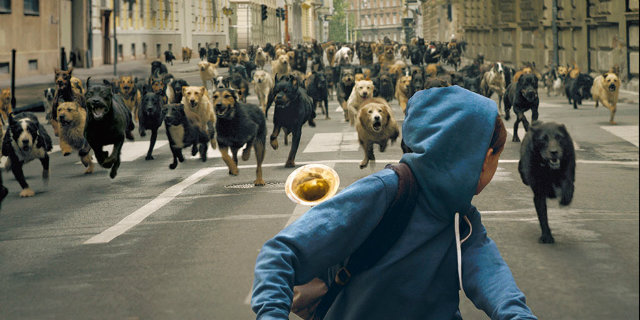
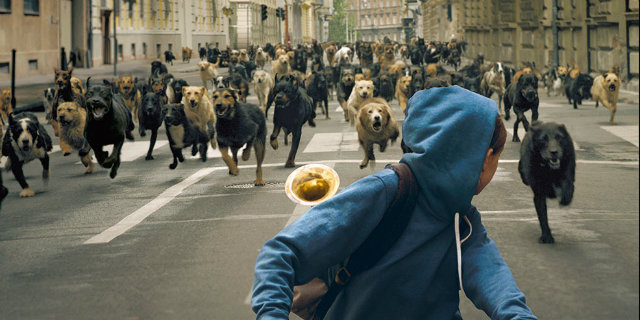
Hagen’s journey starts typically, as he dodges cars and outwits dog-catchers, but eventually he’s sold to a nasty dog-fighting ringleader. Drugged, beaten, and psychologically abused, Hagen becomes ferocious to survive, and he takes down his first opponent with frightening brutality. Shortly afterward, he escapes the ring only to be caught by those damn dog-catchers. What follows his imprisonment can only be described as an insane, bloodthirsty revolution of the underclass, led by a revenge-obsessed Hagen. SWAT teams are called in to defend against a massive dog pack reminiscent of the hordes of running zombies in 28 Days Later. It’s a ridiculous and highly entertaining third act, but any intended allegory is lost amid the chaos.
The film’s title is likely an allusion to Samuel Fuller’s White Dog, a 1982 movie about a violently racist dog and an owner’s attempt to rehabilitate it. While that film’s message was blunt and focused, White God is too scattershot to hold any weight. The tonal inconsistencies make it difficult to watch, let alone interpret, and the frequent shaky camerawork doesn’t do it any favors.
Yet, for all its faults, White God still captures a few magnificent images. The prologue and the climactic scenes showcase an unexpectedly artful vision of endless paws and tails. It’s a spotty two-hour stretch, but it lands in totally uncharted territory. The brilliantly choreographed finale relies on the visual power of mutts en masse, and for true dog-lovers, perhaps that’s enough.
—
White God
Directed by Kornél Mundruczó
Written by Kornél Mundruczó, Viktória Petrányi, Kata Wéber
With Zsófia Psotta, Sándor Zsótér, Lili Horváth
Rated R for violent content including bloody images, and language.
Running time 121 minutes.
Opens today at Landmark’s E Street Cinema.