 Photo by Kerwin Williamson
By DCist Contributor Alex Tebeleff
“The Lives of Hamilton Fish” has been described in a many ways. Already featured in the New York Times and Art In America magazine, with successful premieres in New York City and London, creator Rachel Mason has made what we’ll refer to here as a “multimedia rock opera cinematic experience”.
Now, the Corcoran School is helping to premiere Mason’s operatic film at GWU’s Hammer Auditorium this Thursday night, giving Washingtonians an opportunity to witness this cinematic musical experience.
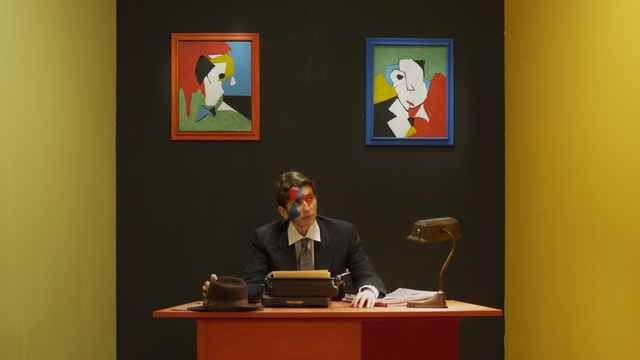
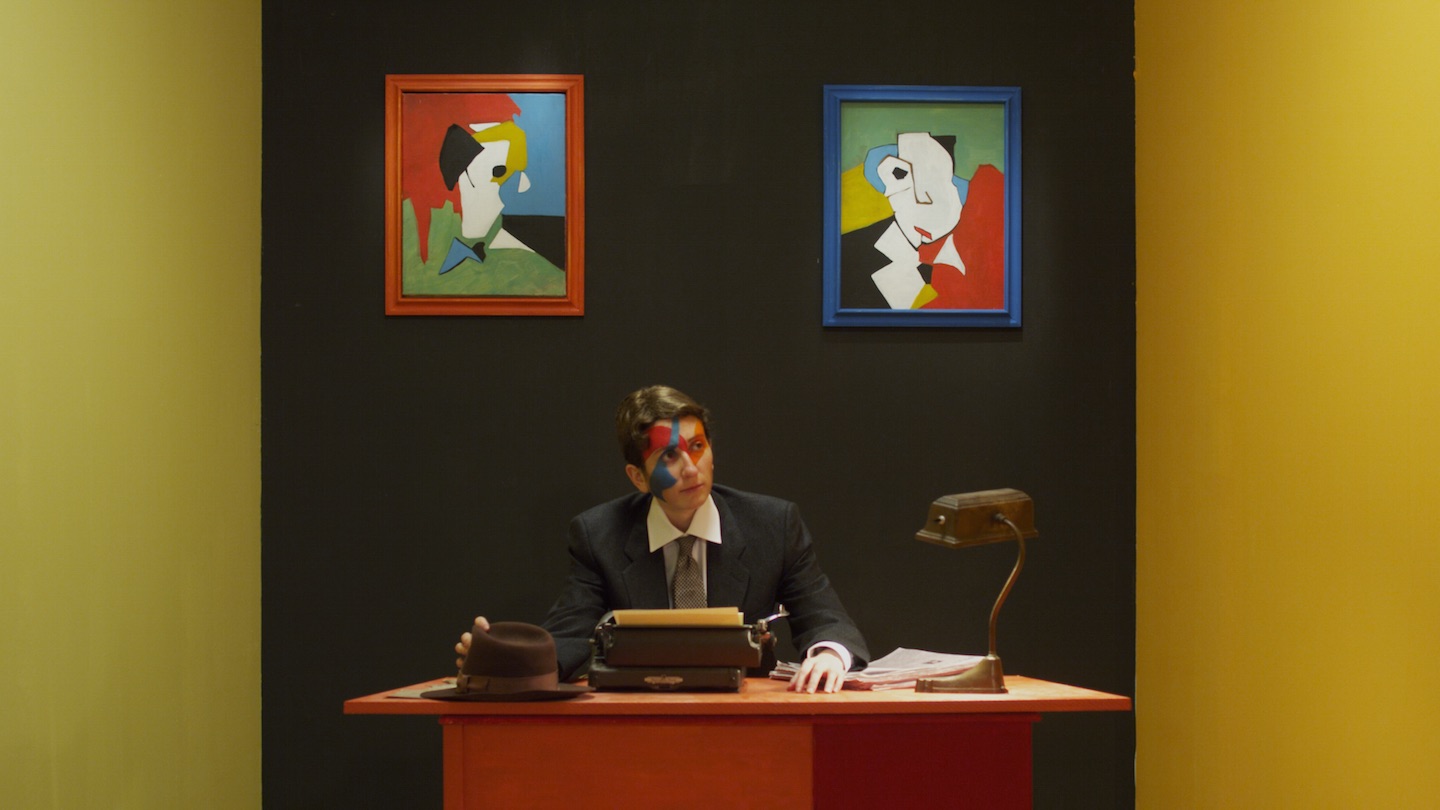
Dressed in drag, Mason plays a newspaper editor who becomes obsessed with a coincidence that Mason herself actually uncovered in real life, inspiring the initial idea behind the project. While doing research in a library on micro-fiche film, Mason was inspired by a discovery from the January 15, 1936 edition of the Peekskill Evening Star. The paper ran an obituary for a statesman by the name of Hamilton Fish right alongside an article on the impending execution of another man of exactly the same name. According to Mason, “The characters are all real people: Hamilton Fish II, the politician [played by Theodore Bouloukos]; Hamilton “Albert” Fish, the killer [played by Bill Weeden]; Emily Mann, the wife of the politician; Sharky, a man wrongfully convicted of the killer’s crimes; and the mother of Grace Budd, the little girl who was killed.” The character of the editor was created as a way to tie all these characters together into a song-based narrative.
Though originally a visual instillation, over time this project turned into a fully fledged feature film. For Mason, “the 1930s are one of the richest and most inspiring time periods in the Western world.” She uses inspiration from abstract art, and the art of Weimer-era Germany in particular, to influence the visual aspect of the opera, including the painted faces of the characters and actual abstract art that adorn the walls of the staged space.
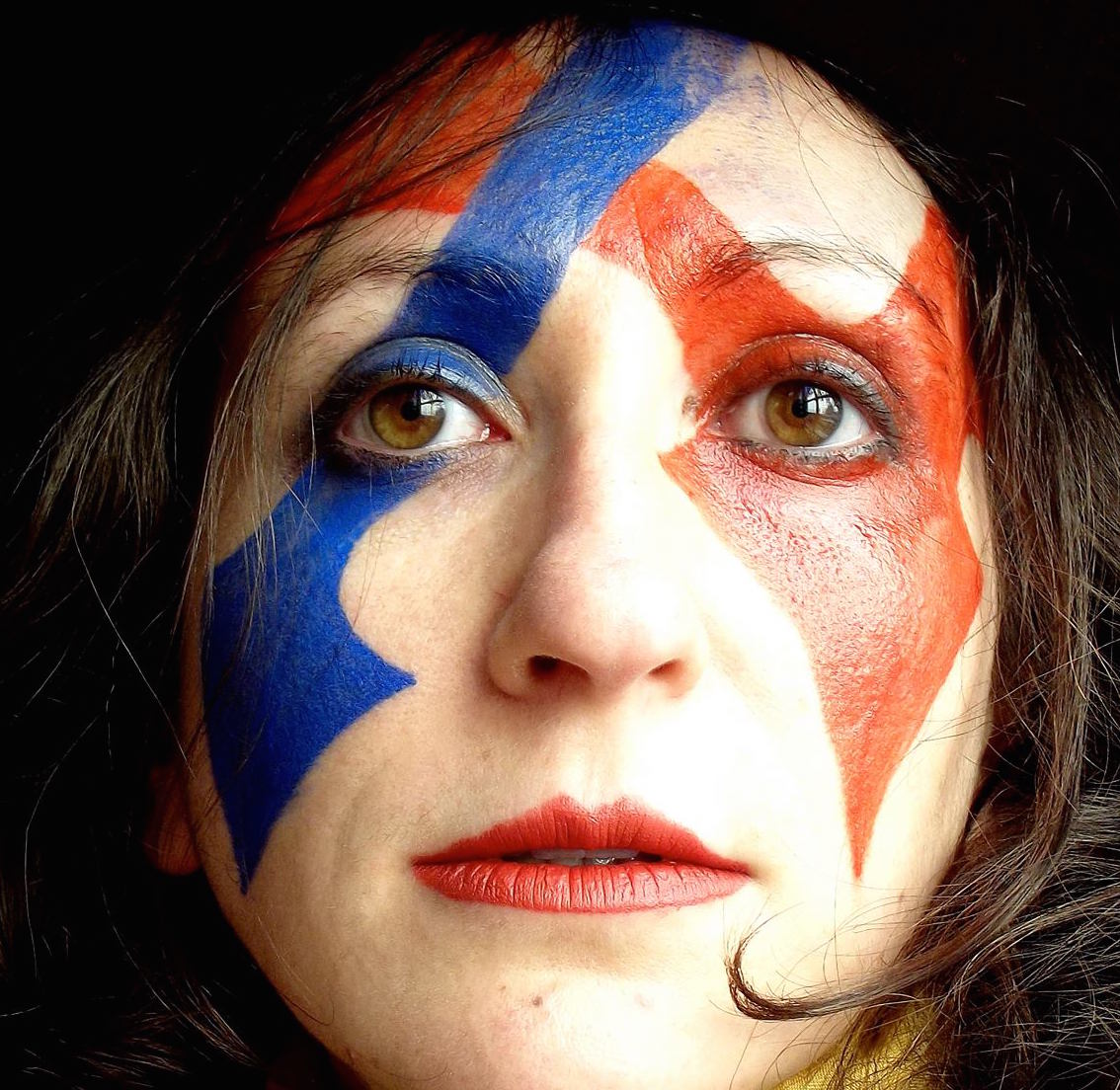 Photo by Kerwin Williamson
With no dialogue, and only music to tell the story, none of this information should get you too excited unless the music was good. Though a visual artist, Mason says “the songs are what first started everything,” serving as functions of the story from the beginning of her work.
“The Duel” is sparse, but supported by production that makes great use of space; the vocal effects give dimension to the voice while still allowing the lyrics to be clear. Lyrical clarity is very important for a project where song lyrics fulfill a narrative role. “Two strangers met on the front page of a day, head shots share a single name” sings Mason in this opening song, setting the scenario for the unlikely coincidence that she explores throughout the film.
Later, arrangement additions like the drum machine and percussion in “Nightmare,” and the more wild, warped, and aggressive effects on “Grace,” all lend variety to the material, while still allowing the stripped-down foundation of acoustic guitar and Mason’s vocals to carry the songs. Mason’s range and vibrato perfectly fulfill the aesthetic of a rock opera without being overwhelming or distracting from the songs themselves.
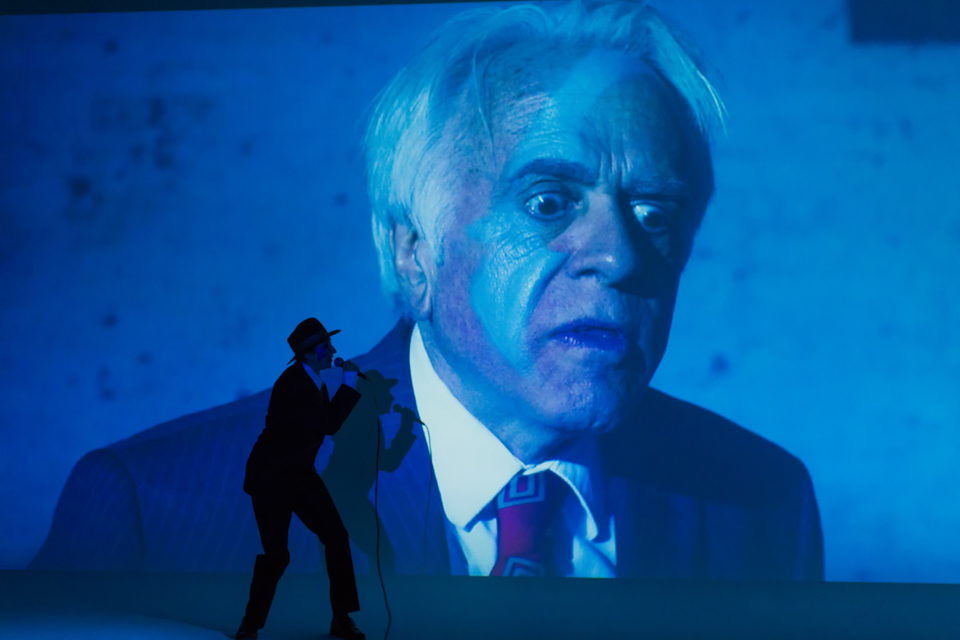 Photo by Raymond Haddad
“Nightmare”, in particular, features an unforgettable vocal performance, along with varying reverb and delay effects on the voice that add an extra layer of atmospheric chaos, befitting of the lyrics’ haunting experiences. Backed by drum machine and electric guitar, “The Werewolf of Wisteria” is another standout, and reminds me of one of my personal favorite albums of the past decade, PJ Harvey’s Let England Shake. Whether approaching this performance from a musical, theatrical, or cinematic perspective, “The Lives Of Hamilton Fish.” is cause for commotion. The good kind.
Catch The Lives of Hamilton Fish this Wednesday at 7 p.m.. The show is presented by the Corcoran School at George Washington University’s Hammer Auditorium and is free and open to the public