By DCist Contributor Dalton Vogler
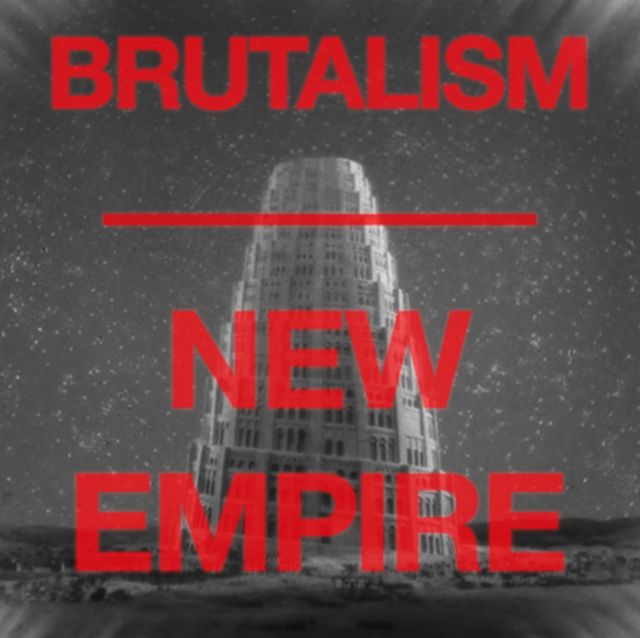
Two tracks, two completely different sounds. With a penchant for mixing energetic beats with unconventional topics, new D.C.-based electronic trio Brutalism are certainly living up to the band name. Named for a style of architecture that is often detested by the public (and well represented in the District), Brutalism was formed by Gavin Holland, Ben Bruno, and Zach Carter—three longtime friends who came from wildly different music backgrounds. After releasing their debut track about a harrowing murder entitled “Friday Night (Home Invasion)” last September, the electronic trio have doubled-down on the macabre imagery with “New Empire,” a punchy ode to imperialism that sounds as if it were born out of a defunct Soviet discotheque.
The track explores the band’s fascination with totalitarian regimes, frequently alluding to ancient Greek chariot racing (“Hippodrome”) and Bosphorus while also providing commentary on Soviet censorship. Brutalism doesn’t do any sugarcoating, with lyrics such as “They gave everybody free white phosphorous / we got high and our skin sloughed off / you said we had to fuck twice or it wasn’t enough.” The hoarse, frenzied vocals are a stark contrast to the song’s chorus, emulating the type of world frequently associated with living under tyranny. It’s reminiscent of The Rapture, but paired with the scathing, often tongue-in-cheek critique from someone like Jack on Fire. No government is spared.
It should come as no surprise that the Soviet influence was intentional, but when accompanied with their official music video, “New Empire” transforms into chaotic visual propaganda that elevates the song’s intensity. The video splices in old footage of industrialized workers along with film of Greek and Roman slavery, covering a massive scope of historical civilizations. Among the clips are images of solemn workers clocking in and human pyres contrasted with multiple depictions of the grim reaper. Is this a reminder of the past? Or a warning for the future, suggesting that the threat of a new empire is always lurking, cyclical, or even already in our midst?
From murders to Manifest Destiny, Brutalism continues to impress with their ability to use distinctly different electronic styles that create vivid depictions, not just of “brutality”—but of the oppressed and the oppressors.