 Photo by Josh Kramer.
By DCist Contributor Josh Kramer
I pull the hot mug of coffee close to my face and inhale. After carefully considering the “nose,” I sip from the mug and move the liquid around my mouth with my tongue making sure that all my taste buds are being activated. Every step has been considered: sealed and refrigerated coffee beans used at peak freshness, measured out on a digital scale, evenly hand-ground in a burr grinder to the perfect size, and then slowly steeped via pour over in a pre-warmed mug.
The moment of truth: I am overwhelmed by the tasting notes of … wait for it … coffee. Pretty much only coffee. Yet the bag says I should be tasting plum, berry, and chocolate. I used to serve pour over coffee professionally, and I’ve been to a few “cuppings.” I secretly have always felt when tasting black coffee, that there might be more than a little “emperor’s new clothes” thing going on here, and I know it’s not just me.
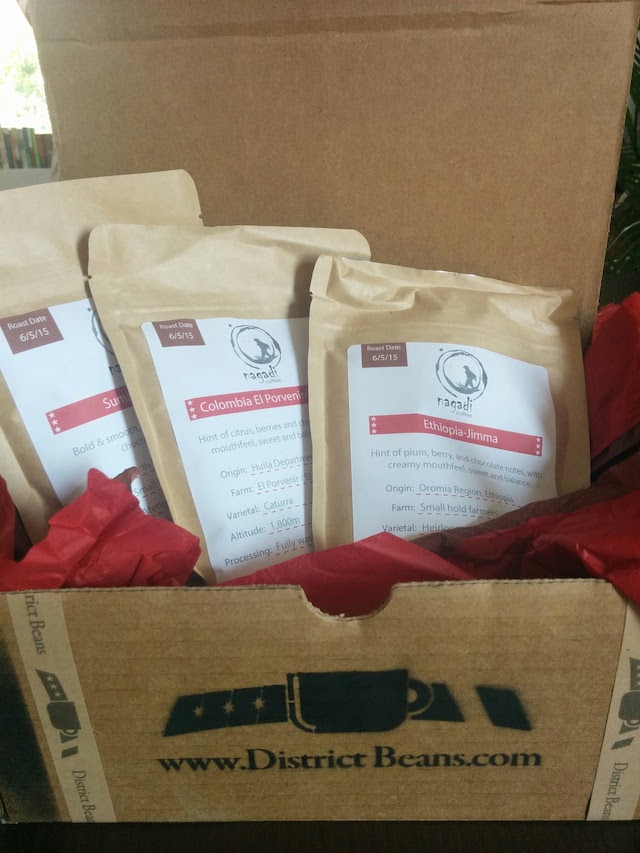
This idea that the quality of freshness and roasting determines a coffee’s value is central to a new service called District Beans. Starting at $16 a month, District Beans will mail you three different four-ounce samples of coffee beans from a local roaster.
According to co-owner Tim Egan, “It’s really this hyper-local approach to empowering not only our roasters that we work with, but also the craft coffee movement in D.C. People’s opinions about coffee are changing.”
As coffee drinkers’ tastes shift from the super stale beans in deli barrels and the roasted-to-hell beans at national chains, District Beans is there to provide a convenient yet artisanal alternative. Their model allows the service to send out beans at “peak freshness,” only a few days after being roasted in the area.
Sure enough, on a Monday I received a box of coffees to review that had been roasted the previous Friday by Nagadi in Silver Spring. To evaluate them, over the next several days I brewed a cup of each using the same pour over method. I also tried another method with each to see what really worked: iced pour over, cold brew iced coffee, and french press.
I was going to list out all of my tasting notes for each. But I’ve come to the jittery, over-caffeinated conclusion that having very freshly roasted coffee seems to offer no discernible advantage over fresh-ish coffee roasted within about a month. I’ll allow that maybe super fresh coffee is a little more fragrant.
Here’s what it comes down to for me: I do my darndest to make a tasty cup of coffee, but without fanatical, near-scientific devotion to the process, the range of flavors seem to be minimal. How many brewing classes and Japanese brewing devices do enthusiastic coffee drinkers really have to buy in order to fully enjoy home brewing? Isn’t it enough for homemade cup o’ joe to be good? Does it have to be sublime?
So, as far as I can tell, the real value of a subscription service like District Beans is in trying a variety of new, local roasters.
“People like being surprised each month with a new box of coffee beans,” says Egan. “It’s really taking the decision-making out of their hands and allowing them to enjoy what we think are really nicely curated beans from the roasters that we work with. So it’s really convenience, a little bit of surprise, and then accessibility.”
Opening in different cities, creating a private label coffee line direct from a single farm, and even selling brewing equipment are all possibilities for the future of District Beans. But for now, Egan says they are perfectly content being the middleman for D.C., Maryland and Virginia roasters.
“Our commitment is to our roasters,” Egan says.