 Rachel Sadon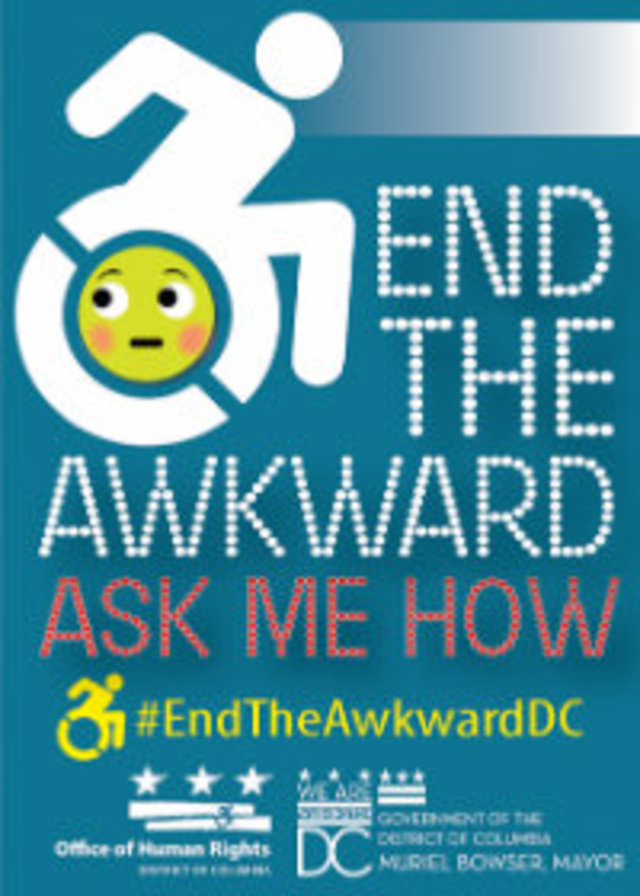
When Elver Ariza-Silva goes to the gym, there isn’t a sign on the door that says people with disabilities aren’t welcome here. But that is the distinct feeling he gets from the body language of employees, from the way that trainers don’t approach him the way they do other patrons, from the glances from other gym-goers, from the paltry amount of equipment that can adjust to his needs.
“I do my workout in a different way,” says Ariza-Silva, who survived polio as a child. “But I want to feel that I am part of the gym.”
As the Americans with Disabilities Act approaches its 25th anniversary on July 26, advocates are celebrating the law’s legacy of accessibility and anti-discrimination. But there are subtle things that the landmark law can’t regulate. And many of them don’t stem from animosity, but uncertainty, advocates say.
“Sometimes people don’t know what to do or how to respect a person who is deaf or blind or in a wheelchair,” says Ariza-Silva, who works as bilingual outreach specialist for the non-profit Quality Trust. Afraid of saying the wrong thing to someone who doesn’t look or act like them, people will simply disengage.
“A lot of times, people with disabilities do not feel a strong sense of social inclusion and much of that comes from social interactions,” says Elliot Imse, the director of policy and communications at D.C.’s Office of Human Rights.
Those kinds of experiences led OHR to partner with 16 different local and national organizations to come up with a educational campaign with the goal of reaching people who don’t normally think about disability issues.
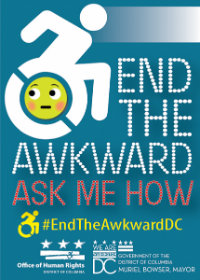 Courtesy of OHR.
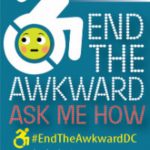
The result is “End the Awkward,” a one-day event taking place on July 15. Businesses and volunteers—who have until July 8 to sign up—will be briefed on a number of talking points and given a pin that reads “End the awkward: Ask me how.”
The five to thirty second talking points are practical tips like: “American Sign Language is fun to watch, but if you’re having a conversation with someone who is deaf or hard of hearing, be sure to watch them and not the interpreter.”
Participants are also asked to only travel on accessible routes for the day and pledge to commit to being more aware of issues affecting people with disabilities. Businesses that are signed up include the Tryst group of restaurants, Cafe Carvy, and the NoMa bid.
In terms of feeling more comfortable in public spaces, “there is a lot of work to do on my side, yes. On their side, absolutely. But most of the time I am the person who does the work to stop feeling awkward,” Ariza-Silva said. The campaign is mean to turn those tables around.
“It would be much better if people communicated. How? By asking questions,” he said. “Do you want some help? How can I assist you? How do you think we could work on this? Different options, welcoming questions, and not turning people away just because of their condition would be so vital” to ending the awkwardness.
Among the families that Ariza-Silva works with, the tendency is to keep relatives who have a physical or mental disability at home rather than dealing with uncertain clerks or staring strangers. “The ultimate goal is to build one community where everyone is expected and respected,” he said.