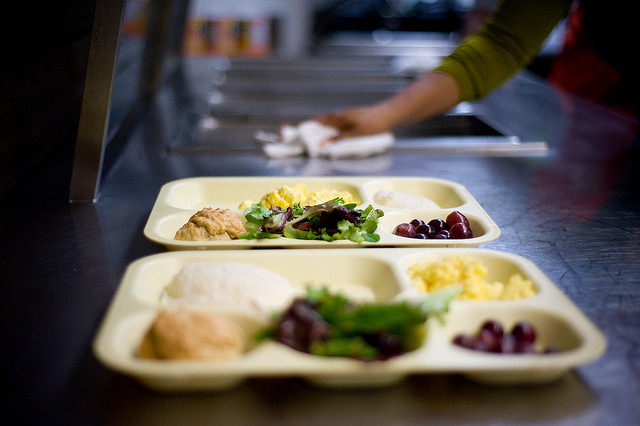
 Serving breakfast at Miriam’s Kitchen. Photo by Geoffrey Dudgeon.
Here at DCist we think a lot about which new restaurant or bar we’d like to try. But many D.C. residents don’t have that luxury. Hunger is on the rise in the District: nearly one in six D.C. households now struggle to afford food that meets their basic nutritional needs. In 2014 alone, requests for emergency food assistance rose a devastating 56 percent. And while the poverty at the root of our hunger problem needs to be addressed systemically, there are ways that you, your friends, and your colleagues can help D.C. residents get the food they need right away. Numerous local organizations are working to grow, package, cook, and distribute healthy food to low-income, disabled, elderly, and homeless people and families every day. Many also offer classes in gardening, shopping, and cooking with health in mind.
Most of the organizations listed below welcome both groups and individuals to volunteer and have additional volunteer opportunities available in addition to their food-related offerings, including administrative tasks and fundraising work, as well as non-food-related service delivery. Many of these organizations also offer internships. Visit their websites at the links below for more details on dates, times, locations, and contact information.
Brainfood: Brainfood uses food as a tool to help youth in D.C. develop life skills like active learning, self-reliance, and the ability to make healthy choices about what they eat. They offer a hands-on food education program for high school students; help those students teach their own healthy cooking workshops after graduating; and run their own summer CSA. You can volunteer as a cooking classroom assistant, as a guest chef/speaker, or as a special event helper. Classroom assistants are required to commit to volunteering once a week throughout the eight-month program (October – May) at locations in Chinatown, Columbia Heights, or Mt. Vernon Square.
Bread for the City: Bread for the City offers free services such as food, clothing, medical care, and legal and social services to homeless and low-income D.C. residents. During the growing season, volunteer groups can help tend fruit and berries at City Orchard in Beltsville, Md. The produce will later be distributed to Bread for the City clients. (Transportation is provided for groups of up to 13 people.) Groups can also help sort and package boxes of fresh food for distribution to clients or set up and distribute food at Free Farmers’ Markets on Fridays. If you’d like to volunteer as an individual, first sign up for a volunteer information session. You’ll need to be available for one daytime shift at least every other week for three months.
Capital Area Food Bank: Capital Area Food Bank serves as a food distribution hub for 500 agencies in the D.C. metro area, together providing approximately 35 million meals a year. Volunteers are needed to pack, sort, and load donated food at warehouses in D.C. and northern Virginia; distribute food to clients in Maryland, D.C., and Virginia out of churches and community centers; plant and weed at their Urban Demonstration Garden; table for the Bank at events; or staff fundraisers. If you’d like to get out of the city, you can sign up for planting, weeding, and harvesting at their partner Claggett Farm in Upper Marlboro, Md.
City Blossoms: City Blossoms creates and maintains organic gardens and green spaces on unused or underused land in D.C., with a focus on engaging kids who might otherwise be unsupervised. To get a solid introduction to urban agriculture and gardening, sign up for Volunteer Corps, which entails a weekly commitment of up to three hours throughout the growing season (late March – November). You can also show up for one-off work shifts doing garden maintenance or helping out with kids’ activities at any of their Community Green Spaces. During harvest season, volunteers often get to take home a small portion of the day’s haul at the end of their shift.
Common Good City Farm: Common Good City Farm provides training in food production, healthy eating, and the principles of environmental sustainability, and grows more than 5,000 pounds of fresh produce each year at their urban garden in LeDroit Park, where one-third of the neighborhood’s residents live in poverty. They distribute their vegetables through a CSA with income-based pricing, as well as through a weekly on-farm market. In addition, they offer school-based programs and community workshops in gardening, farm to table cooking, and culinary and medicinal use of herbs. Individuals are welcome to come work in the garden five days a week and groups once a week during the growing season. You can also drop off your compost there.
DC Central Kitchen: DC Central Kitchen uses donated food from restaurants, grocery stores, wholesalers, and farmers to make 5,000 meals a day to feed people who receive services from approximately 90 homeless shelters, transitional homes, and nonprofit organizations. They welcome volunteers for three-hour shifts of meal preparation or gleaning produce at local farms during the summer. Sign up well in advance for group volunteer slots, or you can sign up as an individual to be on call when they are short on volunteers or a group has to cancel.
DC Greens: DC Greens supports food education, food access and food policy in DC through professional development workshops for teachers interested in introducing gardening and nutrition education in their classrooms and schools, outreach to community members on how to get access to fresh produce, and advocacy for policy change to build a healthier local food system. Volunteers are needed right now to support the 50+ farmers’ markets across the city distribute the city’s Produce Plus vouchers. Attendance at a training session and commitment to volunteer on 5 market days is required. Volunteers can also join us every Sunday from 10-4 on the K Street Farm (K St and New Jersey Ave NW) during the growing season. Volunteers are also welcome to apply for our Cooking Corps where members lead cooking demonstrations in third to eighth grade classrooms across the city, or the School Garden Army works with school gardens throughout the growing season to support outdoor education for kids.
Food and Friends: Food and Friends offers home delivery of groceries and prepared meals as well as professional nutrition counseling and good old company to people living with HIV/AIDS, cancer, and other illnesses in the D.C. metro area. Volunteers are needed to prepare and package meals at the Food and Friends kitchen in northeast D.C. and to deliver them to residents in their homes. Individuals interested in volunteering must first attend a short orientation session and complete a free online criminal background check. Opportunities are also available for groups. Food and Friends is particularly looking for volunteers who are available to work during the day on weekdays.
Food for All DC: Operated entirely by volunteers, Food for All DC provides no-cost home grocery delivery to approximately 200 low-income D.C. residents each week, including the elderly, handicapped, and single mothers with young children. Join other volunteers to pack food on Saturday mornings and/or drive a 1-2 hour route with a partner to deliver it. There’s no need to sign up: just show up at 9 a.m. on Saturday morning at the Universalist National Memorial Church at 1810 16th Street NW (enter through the alley off S Street in the back of the church). You can also volunteer to host a food drive or fundraiser or help seek out funding opportunities and write grant applications for them.
Martha’s Table: Martha’s Table offers food, clothing, education, and service learning programs to children and families living in poverty. Sign up for a volunteer shift yourself through their online scheduling system or put yourself on the waitlist if shifts are not currently available. Opportunities include preparing or serving meals out of a mobile food wagon; assisting grocery shoppers at Martha’s mini-market; distributing meals to seniors at their apartments; or helping out on a mobile grocery store that serves schools and nonprofit organizations. You can also assist in the day care, serve as a tutor or teacher’s assistant, or help out at special events or at Martha’s Outfitters, their thrift clothing store.
Miriam’s Kitchen: Miriam’s Kitchen provides short-term services like healthy meals and social services to homeless individuals in D.C. while connecting their clients to permanent supportive housing and advocating for a long-term solution to homelessness in the District. If you’re interested in volunteering, you’ll need to attend an orientation session and commit to volunteering at least once a month. Volunteers are needed to help prepare or serve breakfast or dinner to clients, as well as to provide services like haircuts and manicures, writing workshops, or just chatting with guests.
Neighborhood Farm Initiative: NFI uses their community garden in Fort Totten to provide fruits and vegetables for low-income residents of D.C. who don’t have regular access to fresh produce (primarily through donation to local nonprofits who distribute it) and to teach anyone interested in organic gardening how it’s done. Come by the garden on Wednesdays from 5:30-8:30 p.m. to volunteer your labor. Gloves and tools are provided, but you might want to bring a water bottle and clothes to get grubby in, including closed-toe shoes. Half-day opportunities for groups of 10-15 people are also available.
So Others Might Eat: So Others Might Eat offers emergency services like food, clothing, and medical treatment to poor and homeless individuals in D.C. and aims to help people escape poverty through job training programs, addiction treatment, and counseling. Volunteer to prepare and serve breakfast or lunch, deliver or cook light meals for senior citizens living below the poverty line, teach cooking classes for SOME clients, or help out at a fundraising gala. You can sign yourself up for a volunteer shift online.
Wide Net Project: Blue catfish are an invasive species that were artificially introduced into the Virginia tributaries of the Chesapeake Bay decades ago and now threaten the health of the Bay’s ecosystem. The Wide Net Project increases market demand for blue catfish, distributes fish to retailers, restaurants, institutions, and others, and uses the proceeds to subsidize donation of additional fish to hunger relief organizations who wouldn’t be able to afford to pay market rates for healthy, lean proteins. Volunteers lead cooking demos using Chesapeake Bay wild blue catfish at farmers’ markets and retail grocers. Teachers and those in the know about Bay issues can help develop educational lessons to teach K-12 students about the connections between food, the Chesapeake Bay, and the environment.