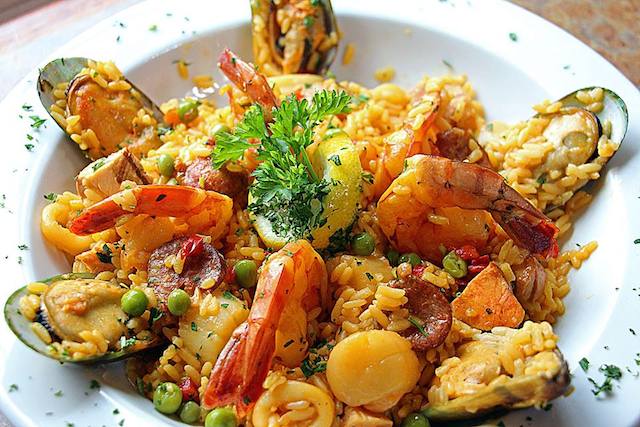
 Photo courtesy of Banana Cafe’s Facebook page.
By DCist Contributor Johanna Mendelson Forman
By now you probably know that after 54 years, the United States and Cuba have re-established diplomatic relations. This dramatic turn of events began last December when President Barack Obama announced the change in U.S. policy. Even as the diplomatic details were still being worked out, the news sent a surge of American tourists to the island to capture a glance at a nation that, visually, has been frozen in time since 1959. I know because I traveled there this past May.
Even with some of the inconveniences of traveling to Cuba —no U.S. credit cards allowed, extremely limited internet, the requirement to join a group whose purpose is usually educational travel to obtain the required license from the U.S. treasury (which will probably not end soon), and very limited hotel space—there’s much to see, and even more to eat at the privately owned restaurants called paladares.
But what if you want to sample a little slice of Cuban food and you’re not willing or able to get to Havana? Well, not to worry. You can get some decent Cuban food in this town, while also learning something about how the foodways of Cuba are expressed by the chefs in D.C. who come from different generations of the diaspora.
The chefs who came in the early 1960s often prepare the most traditional Cuban comfort foods—the foods of their youth, and the old favorites, like ropa vieja (shredded stewed beef) or vaca frita (crispy beef and onions), and the proverbial black beans and rice, moros y cristianos. Note that Cuban cuisine has its roots in Spain, but has also integrated indigenous foods and shares deep roots in the Afro-Cuban community that contributed so much to the preparation of so many dishes.
A word of caution, however, is in order: most Cuban food served in the United States reflects the recipes of the diaspora. (Cubans represent only four percent of the Hispanic population in the United States.) Whether it’s the cafes of Miami or the places mentioned here, the cuisines reflect the memories of family recipes—dishes of the past—rather than the actual food that Cubans eat today on the island.
But what Washington has to offer goes way beyond the perennial menu item of the Cuban sandwich, which is actually an invention of Cuba cigar makers who immigrated to Ybor City, outside of Tampa, Florida in the early 20th century. If you crave some more, this tour de table may whet your appetite for the real thing.
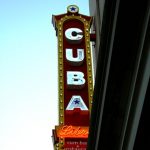
CUBA LIBRE: Cuba Libre is one of a corporate owned, mini-chain of Cuban restaurants started in Philadelphia. Head chef Guillermo Pernot, is Argentinean but his wife is Cuban and has learned Cuban recipes. Chef Pernot has created a menu that fuses the aspects of South American, Spanish, African and Asian cuisines that have influenced Cuban cuisine and add to its deliciousness.
Cuba Libre is located at 801 9th Street NW.
MI CUBA CAFE: Owners Jacqueline Castro-Lopez and Ariel Valladares came to the nation’s capital nine years ago from Havana. Valladares created the menu with recipes from his grandparents. He used these recipes to teach his chefs how to prepare authentic Cuban cuisine. Customer favorites are the lechón asado (roasted pork) and the ropa vieja, (shredded beef), two of Cuba’s most iconic meat dishes.
Mi Cuba Cafe is located at 1424 Park Road NW.
HAVANA CAFE: This cafeteria style restaurant in International Square opened last year. For a small carry out, it offers authentic Cuban cuisine at reasonable prices. They have daily specials.
Havana Cafe is located at 1825 I Street NW.
HABANA VILLAGE: Opened in 1996 to cater to the capital’s rising immigrant population, Habana Village is not only a restaurant, but also a lounge that offers Cuban dance lessons. The owners are Peruvian, but have traveled to Cuba to learn about the cuisine. In addition to Cuban dishes there are other offerings, a fusion of various Caribbean cuisines. Favorite dishes include maduro relleno (stuffed plantains with minced beef), arroz con mariscos (rice and seafood) and chuletas de puerco (pork chops).
Habana Village is located at 1834 Columbia Road NW.
BANANA CAFE AND PIANO BAR: This Cuban restaurant was opened over 20 years ago by Cuban owner Jorge Zamorano. He was born in Puerto Rico, but lived in Cuba and Mexico. His cooking offers a more Caribbean flair. As an artist, he wanted to create a restaurant that depicted the atmosphere of the Caribbean.
Banana Cafe is located at 500 8th Street SE.
SOPHIE’S CUBAN CAFE: Washington native and owner James Lambert moved Sophie’s back to his hometown, and modeled it after his Cuban restaurant in Brooklyn. The menu is authentic, with great tropical fruit shakes, and easy carry-out and delivery. The chefs know their Cuban cuisine; it is fine for a quick meal.
Sophie’s Cuban Cafe is located at 1134 19th Street NW.
And a bit further afield, but worth the trip:
CUBANOS: An easy walk from the Silver Spring metro station will land you in another good option for a taste of Cuban cuisine. Good tapas and mojitos, with the all the standard fare you would expect from a restaurant that plays on nostalgia for a bygone era.
Cubanos is located at 1201 Fidler Lane, Silver Spring, Md.
CUBAN CORNER: This small but authentic place is filled with memorabilia including plaques with the names of famous Cuban Americans. The owner, Joaquin Cabrejas, came to the U.S. on the Peter Pan airlifts as a child fleeing the revolution. Today he and his wife offer traditional authentic Cuban fare at very reasonable prices. Worth a trip if you are in the ‘burbs. Great empanadas, ropa vieja, seafood soup, and daily specials.
Cuban Corner is located at 825 Hungerford Drive, Rockville, Md.
Johanna Mendelson Forman is a scholar-in-resident at American University where she teaches about Conflict Cuisines. Thanks to Sophia Pappalardo for her research and assistance.