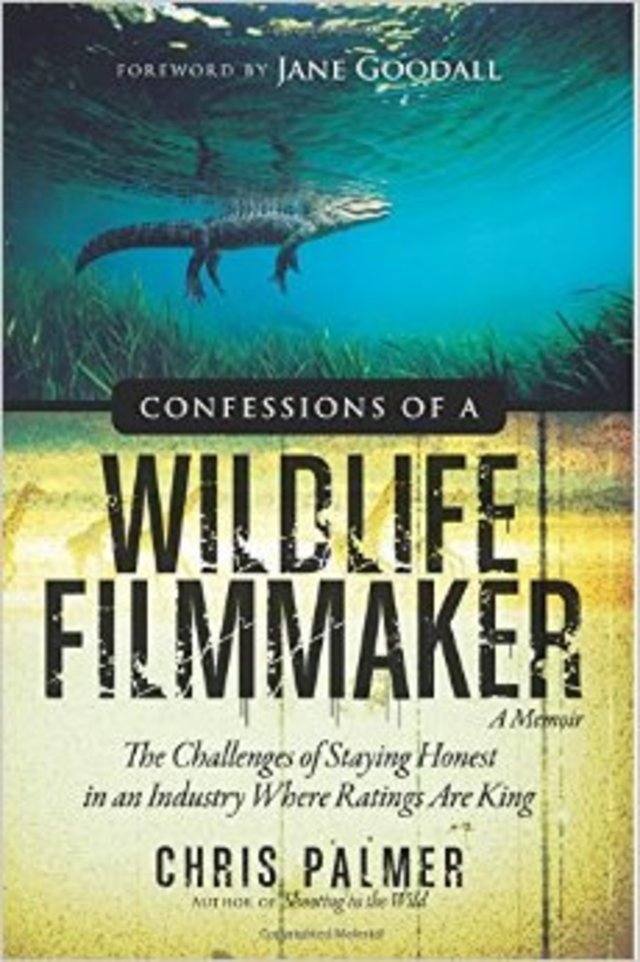
 One thing frightened Chris Palmer more than continuing his career as an environmental lobbyist, testifying at drab, ill-attended Congressional hearings: bears. But he was eager to raise awareness about wildlife protection, so thus begun Palmer’s new job as a wildlife film producer. On Sunday, July 12th at 5 p.m., Palmer will discuss his book Confessions of a Wildlife Filmmaker: The Challenges of Staying Honest in an Industry Where Ratings Are King (Bluefield, $25) at Politics and Prose.
Palmer’s work would soon involve a new kind of icky underbelly. He recalls meetings with TBS executives where he quickly learned that while at non-profits, “people were ready to make personal sacrifices to further a noble cause,” in television, commercial transactions trumped content.
Confessions of a Wildlife Filmmaker is broken down by confessions and their accompanying stories. To name a few, confession #1, “I Knew Almost Nothing About Wildlife (and Even Less About Making Films)”; #2, “I Put Ratings Above Everything Else”; #4, “I Joined an Industry that Accepted Animal Abuse”; #6, “I Didn’t Resign, I Got Fired”; and #9: “My Own Mistakes Pushed Me to a Tipping Point”.
Will this book ruin Shark Week for you? Maybe, but the sharks will likely benefit. Palmer sees their TV portrayals as harmful and irresponsible. He calls out specific shows and networks for transgressions from white lies to full-blown fabrications (ahem, Animal Planet mermaid documentaries). Viewers trust this programming to be science-based, Palmer writes, but opportunities to educate are passed over for misleading ratings fodder.
But while on the job, it didn’t always seem so black and white. During one of Palmer’s conversations on the topic, another filmmaker said these practices are “for the greater good,” because if few people watch the films, “the important role [they] play in advancing conservation would be lost.” Plus, though a common criticism is the use of captive animals from game farms, “using rented captive animals means a film producer doesn’t have to disturb and harass wild, free-roaming animals.”
The author reveals an industry that is full of both wonder and hypocrisy. He strongly advocates for it to change. At the same time, you get to know the personal side of someone in his position as he travels, deals with colleagues and family, and tries to reconcile his intentions with his work. The end result is an exposé-meets-mea culpa, meant to spark environmental action from some of those best equipped to do it.
Palmer produced films for IMAX and prime time on channels like Disney Channel, TBS, Animal Planet, and PBS. He has been a professor of Film and Media Arts at American University since 2004. That year, he also founded the Center for Environmental Filmmaking, which aims to inspire informative, ethical, and entertaining media that contributes to environmental stewardship. His first book was Shooting in the Wild: An Insider’s Account of Making Movies in the Animal Kingdom.
The event is free and open to the public.