It’s a rainy, windswept Saturday afternoon, and I find myself staggering out of a wrecked old house on top of a mountain, as though tossed about in a tornado.
Floorboards are bent and splintered, and things strewn about with abandon. Swinging open the back door, I go down a stairway and come to a path of yellow bricks winding through some strangely colorful woods.
I’m not alone. A girl appears, wearing a blue and white gingham dress with matching blue bows in her hair. There’s a picnic basket on her arm, and inside a scruffy old pup. I look into the woods around us. “You ever seen any animals out here?”
“I have, actually,” she responds. “I’ve seen a mountain lion, and a couple of bears.”
“Lions and tigers and bears.” I chuckle. “Have you seen a tiger yet?”
She’s a ringer for Dorothy, but this isn’t Kansas. We’re on Beech Mountain, in North Carolina. The two of us are standing in what was once a bustling, Wizard of Oz-themed amusement park.

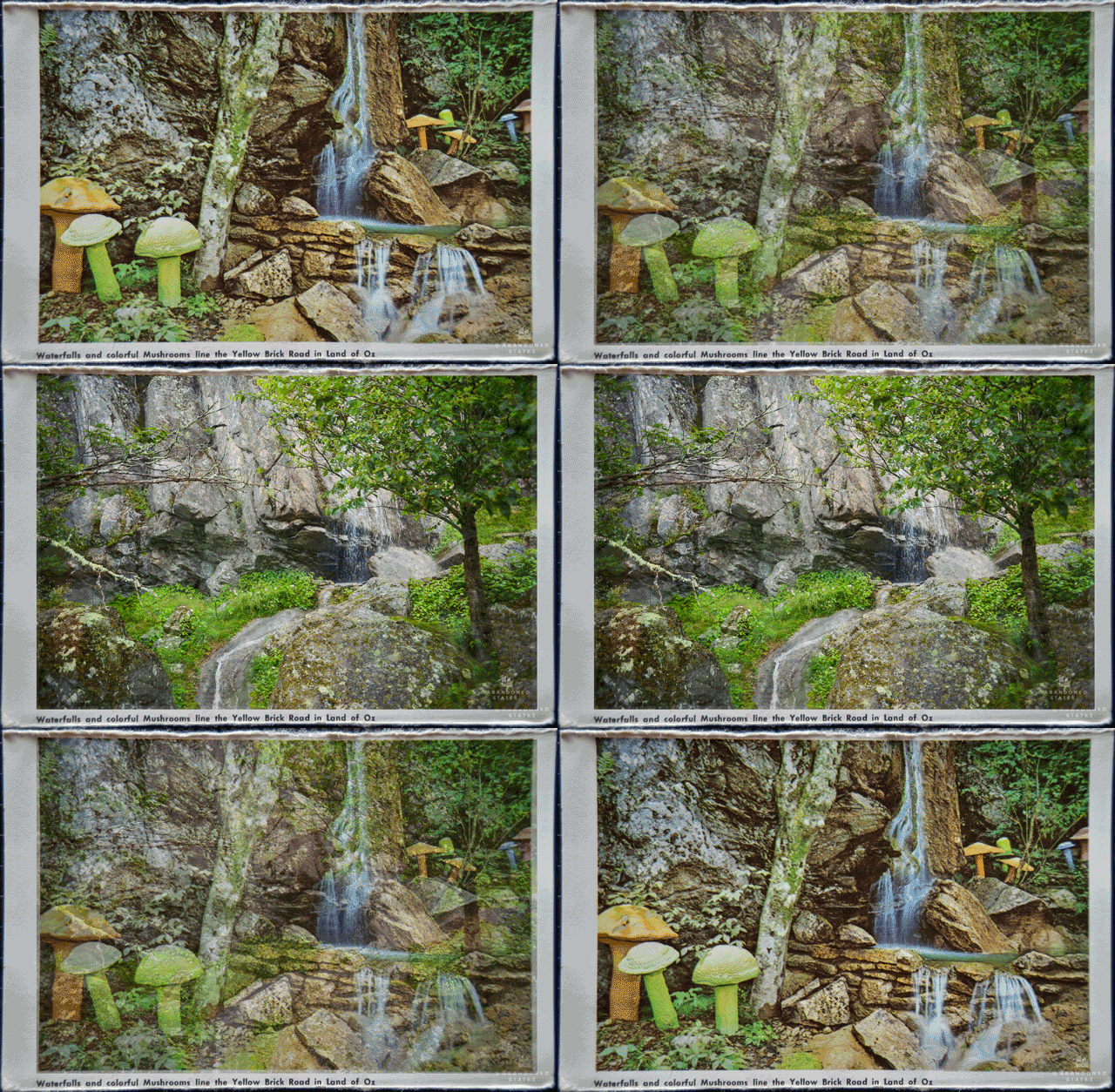
Before and after, the Witch’s castle. Photos by Hugh Morton/Pablo Iglesias Maurer.
I learned about it years ago. In college, long before the days of Reddit and Buzzfeed, a friend showed me a grainy picture of the yellow brick road there disappearing into the mist. The image stuck with me, and over the years I’d see more photos—all of them calling the place “abandoned.” The park never looked it. On either side of the winding trail of yellow bricks, there were perfectly manicured patches of grass. A pair of wooden doors at the end of the road was slathered in fresh green paint. No graffiti, no vagrants, no crumbling walls.
A couple of weeks ago I decided to see for myself. A simple search on Google led me to the park’s caretaker and manager, Cindy Keller, who was worn down by story after story depicting the park as an abandoned, neglected playground for curiosity seekers and vandals. Eventually, she warmed to the idea of having me up to the park for a visit.
The road to the place zig-zags up Beech Mountain through a seemingly endless series of switchbacks. It’s the same route Lance Armstrong took over and over again in 1998 while training for his first Tour de France after beating cancer. At its apex, 5,506 feet above sea level — among the highest points east of the Rocky Mountains — you’ll find the Land of Oz, tucked away in the woods between a ski resort and a modern subdivision.
Keller gives me a brief rundown of the park’s history. Designed by celebrated Charlotte-area artist Jack Pentes and financed by local entrepreneur Grover Robbins, the place opened to much fanfair in 1970, attracting some 20,000 visitors on its opening day. It quickly became one of the most popular tourist attractions in the Southeast. Sadly, Robbins had died of cancer six months earlier. His ashes were scattered about the park and he is remembered with a simple headstone at the summit of the mountain.
The park itself was based more on the imagery of the Frank L. Baum book than the movie that followed. Concerned with copyright infringement, the park employed its own team of musicians and performers who composed an original soundtrack for it. Aside from a few seconds of “Over the Rainbow” and a brief snippet of film, the movie was nowhere to be found.
Not long after opening, Oz suffered a series of setbacks. A fire in 1975 burned down the Emerald City portion and destroyed a museum that contained, among other artifacts, one of the original dresses worn by Judy Garland in the movie. People lost interest and the park closed with a whimper in 1980. Over the decade that followed — when it was actually abandoned — it was vandalized, and displays and props were stolen. The yellow brick road lost more than a few of its bricks.
In 1990, a developer dreamed up a project called “Emerald Mountain” and a number of homes were built in the area around the park; the builders were quite careful to respect its integrity. It was around that time that Keller came to Oz, at first as a real estate broker and property manager tasked with helping with the trespassing and vandalism. “We had to re-establish our turf,” Keller tells me. “Word finally got out that there’s a ‘crazy old lady’ up there. Everything seemed fine until a year or two ago, when pictures started popping up on Facebook and the like.”
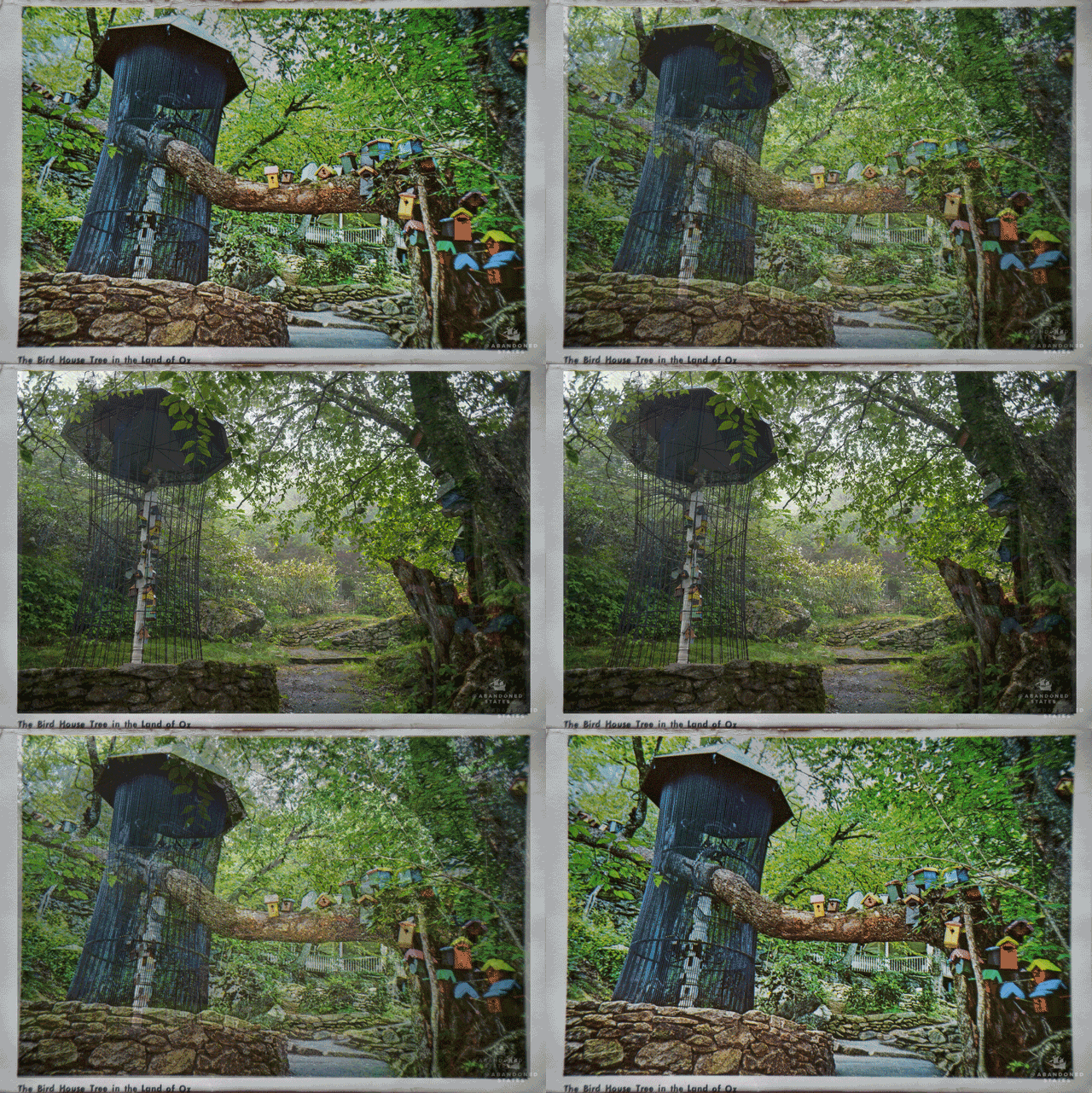
The birdhouse, before and after. Photos by Hugh Morton/Pablo Iglesias Maurer
Nowadays, the Land of Oz is pristine. Dorothy — actual name Jana Greer — is a local schoolteacher who has a long history with the park. “My father visited while it was still open,” she tells me, “and later on, my family vacationed in the chalets up here. By then the park was closed, and we were some of those original trespassers. We were always very respectful, obviously. It’s a place I’ve been visiting since I was three years old.”
Greer met Cindy while at Appalachian State University, and has played some part in the park’s history ever since.
The yellow brick road — which accounts for most of what’s left in Oz — is truly breathtaking. On a clear day, the path dips and bends around the park, offering spectacular views of the surrounding mountain range. On a rainy day like this one, it turns into a mythical, magical stroll through the fog-covered hills.
Along the path, a childhood nightmare comes to life. There are wicked, contorted faces affixed to the beeches that line it, like the angry trees in the movie and book. I’m not about to pick any apples off of them.
Greer points me towards a massive birdhouse, which the park’s owners once filled with exotic birds. “That only lasted one season,” she tells me. “They didn’t take to the weather very well.” Just up the road from the cage, the Witch’s castle still looks imposing.
On the way back we pass a peaceful waterfall and what’s left of the lion’s den, and head back up to Dorothy’s House, a three-bedroom residence that Keller rents out during the summer and fall months. Aside from the annual “Autumn at Oz” festival — the one weekend a year when the public is invited up to the mountain — it’s your only ticket to this place.
“One weekend a year, in October, is enough to make you realize that this place couldn’t handle the traffic it once did,” says Keller. “There are a number of folks who work to keep this place enchanting – I’d call this, honestly, more of an ‘Oz Garden’ than anything else, but it’s not the way it used to be, and we’re kind of thankful it’s not.”
Stories of the place being abandoned have led to a few headaches for Keller. She lives on the property, and has had to chase curiosity seekers away. The local police have started doing rounds of the park, and during my visit with Greer, she stops to pick up a plastic bottle and an old sweatshirt, litter left behind by trespassers.
Among the chief targets of the vandals: the 44,000 bricks which make up the Yellow Brick Road. The originals are a work of art, their distinctive yellow color baked right into the brick, protected by a custom glaze. The replacements just aren’t the same – they’re painted yellow, and fade quickly in the sun. A few of the originals seem to disappear every year.
Keller is eager to share the park with the public. Weddings, birthday parties, photo shoots: “We love to share the park,” she says. “It just has to be on our terms.”
To this day, I see photos and stories that paint the park out as some sort of haunted, abandoned wasteland. The Land of Oz is a misty, mysterious place, but it’s anything but abandoned. Is it haunted?
“Not yet,” Keller says to me, laughing while she closes the door to her farmhouse. “Just wait until I die.”