The latest chapter in the Urban Institute’s Our Changing City is perhaps more relevant than ever: how violent crime has changed in D.C. over the past 20 years.
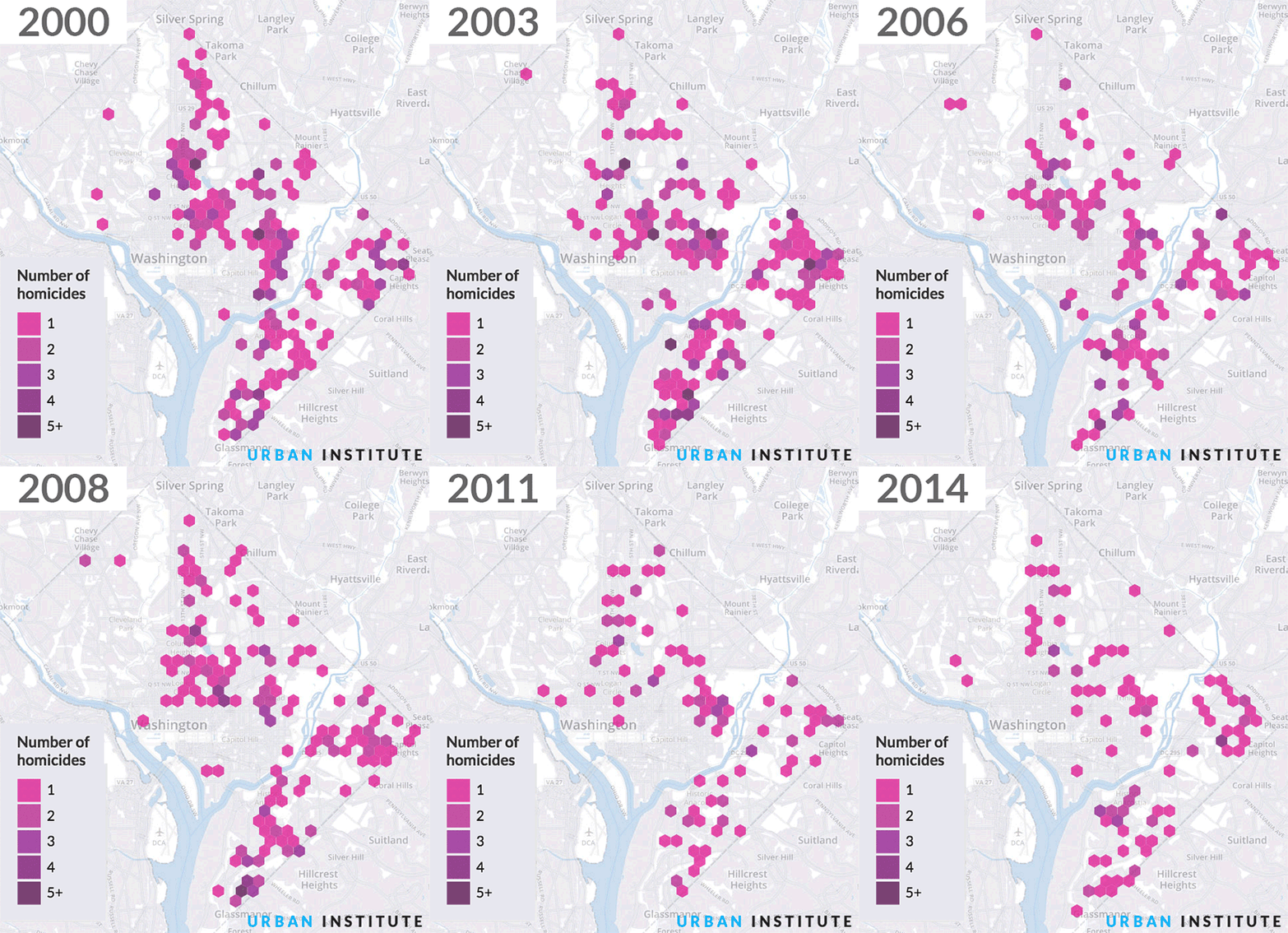
Despite a unusually violent summer so far this year, violent crime in the District has actually fallen dramatically over the past two decades. Where D.C. was once called the “Murder Capital,” nowadays, it’s a much different place. Sam Bieler, the author of the report, says that “researchers are still figuring out what caused the nationwide drop in violent crime in the mid-to-late ’90s,” noting that D.C. “stands out as particularly successful at extending that crime decline over time.”
 Via Urban Institute.
The reason, Bieler writes, can be attributed to the Metropolitan Police Department’s commitment to “community-oriented policing,” coupled with “evidence-based tactics” and “changing demographics and economic growth.” AKA gentrification.
By looking at the charts, you can see how dramatically violent crime has fallen, particularly in former problem areas like Chinatown, Penn Quarter, Navy Yard, and North Capitol Street. But the biggest drop in crime was in the Southeast-Navy Yard area, where, between 2000 and 2014, the rate of violent crime for every 1,000 residents drastically dropped from 59 crimes to only six.
But violent crime is still a huge problem in certain neighborhoods in the city. The report shows that in the Eastland Gardens-Kenilworth area, there were 13 more violent crimes in 2014 per 1,000 residents than in 2000. And though the District hit a record low of 88 homicides in 2012, the numbers have been slowly rising since then. So far this year, there have been 87 homicides, which is 26.1 percent more than the number at this time last year.
It’s not just homicides that have dropped dramatically over the past two decades. Bieler’s research shows that aggravated assaults declined citywide (though they remain high in some neighborhoods east of the Anacostia River). Meanwhile, domestic violence still accounts for a growing number of homicides; 17 in 2014 compared to just nine in 2012.
You can read the full report here.
 Via Urban Institute.