 Rachel Sadon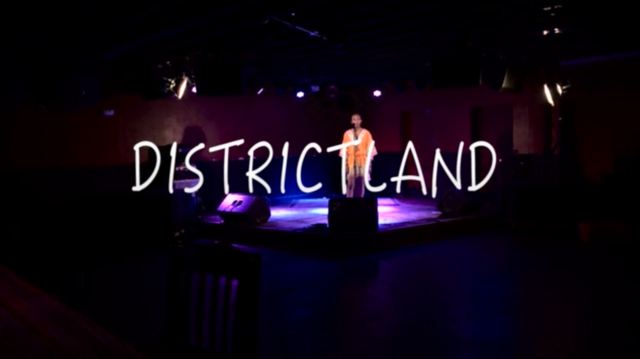
D.C. millennials have had a dedicated week, a novel’s worth of ink in the Washington Post, and their very own policy agenda. But they haven’t had their dating lives explored in web series … er, no, that’s been done in “docuseries” form. Or their housing lives lampooned. Actually, that’s got a Web series, too. So what’s left for a humble TV series about the lives of District millennials to explore?
Well, all of it. But particularly how young people move to D.C. in a bid to change the world, only to find their idealism come crashing down.
“You come here with a lot of ambition of how you’re going to change things, or heights you’re going to reach, and then you run up against the anthropological phenomenon of D.C.,” says Russell Max Simon, who is producing a TV series called Districtland based on the 2014 Fringe show of the same name.
After hitting their goal of raising $4,600 through an IndieGoGo campaign, they began filming the pilot around town over the past couple of days. The plan is to screen the first episode at the DC Independent Film Festival in February in the hopes it will pique the interest of backers who could fund the production of an entire season, perhaps for an outlet like Amazon Prime or Hulu.
The play, written by Cristina Bejan, hit some timeworn tropes for anyone who has lived here more than a few weeks: group house residents, former Peace Corps volunteers, naive interns, unemployed law school graduates. But Simon points out that those parts of District life aren’t necessarily familiar to those outside of D.C. Shows like The West Wing and House of Cards dramatize what happens in the federal government’s halls of power, not the halls of group houses filled with Congressional aides and nonprofit workers.
The Post deemed the play “short on plot and long on cliches, but still hilariously, painfully true.” In a more crotchety review, City Paper called it an “international incident waiting to happen” between the “horndog Afghan cab driver with the clumsiest South Asian accent this side of a Kwik-E-Mart and a theoretically French character with an accent borrowed from Rocky and Bullwinkle’s Natasha Fatale.”
Simon doesn’t disagree, at least not with the part about the taxi driver’s accent. “I was that Afghani character,” he says. He filled in for another actor at the last minute and just couldn’t get it right. “My accent was total crap,” he admits, and the character doesn’t appear in the snow.
But worse than the butchered accents was the play’s choice to drastically underwrite the one African-American character, the “lone D.C. native” as they unfortunately put it, and gloss over issues of gentrification that have come alongside this rapid influx of newcomers.
“The D.C. native, A’isha, was sort of tangential [in the play]. She was a love interest of one of the characters and she didn’t have much to do,” Simon says. But in the show that began filming last week, she plays a much more central part. And with a more robust plot, he says, “all the characters grapple with and interact with the divisions in this city.”
For a show whose entire premise is the lives of millennials—which in D.C. has become shorthand for young, white, privileged newcomers that really like small plates—the 33-year-old Simon takes an agnostic view of the phenomena he has watched over the past nine years living in the area.
“‘[Millennial] is shorthand for things that are mostly negative or have become mostly negative, but I think there’s also another side of that what you’re seeing more of. Maybe these people are also well prepared to deal with a changing world,” he says.
“I don’t think we should immediately judge them harshly or positively. I’m fascinated by why they come to this city and what they’re trying to accomplish.”