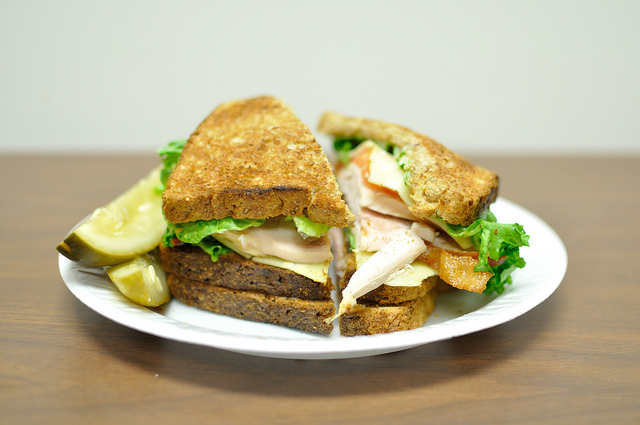
 Photo by Darwyn.
By DCist Contributor Victoria Finkle
D.C. is an expensive place to live, and feeding yourself is no exception. Follow Capital Cheapskate each month for a look at the cost side of the ledger, and for tips to enjoy the city’s burgeoning dining scene without breaking the bank.
Quick question: what did you have for lunch today?
Whether it was soggy pb&j, leftover pizza, or an expensive takeout salad, you’re probably like me in that you wish you could do better—that lunch was somehow easier.
This is a problem that I’ve struggled with since being assigned to my first cubicle nearly a decade ago. Packing a lunch—and washing out the ensuing Tupperware—can feel like a Sisyphean task, drudgery day in and day out. But ordering out adds up quickly, hitting your bank account, not to mention the scale.
Visa found a couple of years ago that Americans buy lunch nearly twice a week on average, spending about $10 each trip or $936 per year. (Meanwhile, a full 30 percent of spendthrifts surveyed said they never go out to buy lunch. Impressive, if true.)
Many of us also lament the loss of the proper “lunch hour”—especially as we sit hunched over our keyboards trying to bang out that latest TPS report, whilst juggling a sandwich. Just one in five people takes a real lunch break, one that involves getting away from the desk for any significant amount of time.
Cue sad desk lunch, a Tumblr for our lives.
It seems that the modern lunch has never strayed too far from its origins during the Industrial Revolution—an era known for worker’s rights (haha).
The streets of New York in the 1800s were marked by “floods of men rushing from their offices, gobbling this meal at top speed, and rushing back to work,” culinary historian Laura Shapiro told Time a couple of years ago.
Sounds familiar. But at the same time, I have to believe there are ways to make lunch a little more awesome.
Here are a few suggestions:
Keep it simple. I admit that I’m kind of a D.C. cliché—I’ve got a penchant to overanalyze, well, everything. Decision fatigue is a real problem for me, and I do what I can to reduce small decisions wherever possible. Which is why I take what I call a “uniform” approach to lunch. I eat a hummus and cheese sandwich (whole wheat bread! usually with some fruit on the side!) almost every day. It’s my trademark black turtleneck of dining.
Fun fact: The word “lunch” may harken back to an English phrase meaning “a hunk of bread or cheese,” so I figure I’m on the right track.
Efforts at making my own hummus have largely fallen flat, so I tend to keep the whole process as brainless as possible: I buy everything at the beginning of the week (maybe even sub in some wraps for the bread if I’m feeling feisty!) and bring the whole batch of supplies to work if I’m going to be at the office most days.
It’s a similar strategy to batch cooking, in that you get all the effort out of the way early. Even better, I avoid the cooking part… though that’s also always an option, especially if you’re into leftovers.
Soylent. Okay, I mostly jest. But, seriously, if crowdfunded nutritional shakes are your bag, tell us about it in the comments. I prefer the sensation of chewing too much to abandon it altogether at lunch, but to each his/her own.
Budget first. While I mostly subscribe to an “Obama’s suits” approach to dining, there are days when even I can’t look at another chickpea. And I firmly believe that lunch doesn’t have to be all drudgery and penny pinching.
Try to set a limit on how many times you’ll eat out each week or fix a monthly budget for eating out at work. I have a more general tracker in Mint for all “fast food,” by which I mean stuff I grab on the run—a sandwich here, coffee there. I don’t feel guilty when I eat out because I’ve made a place for those expenses in my broader financial plan. You can’t manage what you don’t measure.
Mix it up. There seem to be, in my estimation, two optimal strategies when you’re electing to eat out. The first is to make a game of finding the cheapest tolerable option. (Hat tip to Ian, a co-worker at my day job who discovered six-inch subs at the Harris Teeter deli for $3.50—a Jared-free experience.)
The second would be to splurge on something you’re actually going to enjoy, rather than the usual pre-packaged fare from the chain down the street. And if you’re getting a fancy sandwich, make sure it comes with a side, per this amazing Gawker takedown, inspired by The Billfold.
The food truck scene is also a promising option, depending on where you work. The industry has exploded in the last five years, cropping up from nothing to several hundred trucks offering an array of different choices.
“In terms of what diners are looking for, I don’t think it’s any great secret that folks want variety, quality and value,” said Doug Povich, owner of Red Hook Lobster Pound D.C.
While food trucks may offer more exotic specialties, like lobster rolls, that can run for slightly more than your typical lunch ($15.95 at Red Hook), Povich says demand remains high. He’s also developed additional side dishes and other offerings, like an $8.95 shrimp roll, to appease those looking for more budget-friendly delights.
Boutique deliveries. D.C. is now home to a couple of new startups looking to cure perennial lunch ennui.
Galley Foods sprang up last year as a dinner-delivery service for those wanting healthier options than the usual Chinese takeout. Alan Clifford, co-founder at Galley and a former Living Social executive, told me the business began expanding into lunch last month, in response to customer requests.
“It was a lot of people saying there aren’t any lunch options in town and that it’s so hard to get something at price point that’s reasonable and that’s really high quality,” he said.
For lunch, Galley offers a salad and sandwich option everyday, along with a heartier meal, for a flat fee of $10 to $12, including tax, tip and delivery. (Full disclosure: I was given samples of the three meals on offer one day earlier this month—a tomato peach salad, the “favorite” chicken sandwich and a grilled chicken and roasted cauliflower dish. All the meals were healthy and filling, in addition to being delivered promptly.)
Sarah Van Dell, meanwhile, launched Cozy Feast in July. The lunch-delivery business focuses on catered lunches and other groups, though they plan to expand into the individual market as well.
“What I set out to do was make a better lunch—improve the whole lunch experience itself,” she told me, after spending far too many days slouched over her own keyboard at the Advisory Board Company. She says meals go for about $12 per person for the group lunches, which include a dessert bite and bread. (Individual meals will probably be closer to $10 each.)
Meanwhile, Uber launched a new food delivery service this week that promises orders will be delivered in 10 minutes or less (they manage this feat by sticking generally to downtown D.C., and offering just a few preset options for a few hours around lunch).
Move that body. It should come as no surprise these days that modest breaks throughout the day—including at lunch—help us do our best work. (That’s besides the fact that sitting is going to kill us.)
Kimberly Elsbach, a professor of organizational behavior at UC Davis, pointed to two related factors that have changed the culture of lunch over time. The first is the rise of technology that allows—nay, requires—us to be on-call at all hours.
“When you know you could be interrupted at any time, what’s the point of going out for lunch?” she said.
The second is the evolution of a work culture that rewards intense, self-sacrificing effort as a sort of “badge of honor.” (Amazon, anybody?)
“Lunch is a nice opportunity, because you need to feed yourself at some point. So it’s a necessary activity and yet it can fulfill this kind of restorative, less mindful engagement,” said Elsbach.
That’s the hope, anyway. So grab some food and enjoy a sunny picnic—even a brief one—before it’s too late. I hear winter is coming.