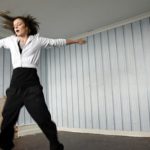
Brandon López, Karen Martínez and Rodolfo Domínguez (Double Exposure)
One of the most powerful images in the early days of cinema was the locomotive. The first motion picture audiences were reportedly so frightened by the sight of a black and white train coming towards them that they fled screenings in terror. Over a hundred years of developing technology later, the train still resonates as a symbol of cinematic dreams, and it plays a major role in the immigrant aspirations of Guatemalan teens in La Jaula de Oro. Director Diego Quemada-Díez’s first feature is an impressive blend of gritty realism and atmosphere—dreamlike sequences that only make its characters’ real lives that much harder.
Juan (Brandon López) and Sara (Karen Martinez) live in a poor shanty town in Guatemala’s Zone 3. When we first see Sara, she walks through a worn-out wooden gate into a women’s room where she cuts her hair and tapes down her breasts to pass as a boy. The pair is joined by Samuel (Carlos Chajon) and pick up a straggler in Chauk (Rodolfo Domínguez)—a shy Indian who doesn’t speak Spanish. The group heads for railroad tracks where they hop a passing train heading north in the hopes of eventually reaching California. It’s not quite a spoiler to tell you they don’t all make it.
The film’s episodic narrative would seem to be a straightforward, if difficult, journey; a harrowing road movie. But Quemada-Díez and cinematographer María Secco make something like poetry out of this dangerous journey. The lush Guatemalan landscape doesn’t make a romantic poetry; rather this is the harsh poetry of a Herzogian landscape, the journey not of a megalomaniacal visionary climbing a mountain but of ordinary teens simply looking for a better life. Still, this landscape instills in viewers a sense of the dreams that the teens are chasing. While the film’s subject is certainly political, its approach is not, endorsing not policy but humanity, simply observing the (mostly) bad and (some) good that happens along the way.
It would be a hard enough journey under any circumstances, but youthful energy can lead to volatile, hormone-driven complications. When the teens aren’t at odds with authorities (or worse, bandits), the somewhat reluctant companions are at odds with each other. Sara takes an immediate liking to Chauk despite the language barrier, and this fuels the jealousy of Juan, who knows that she‘s disguised her identity to protect herself on the road.
The young leads are presumably non-professionals—this film is their only acting credit—but you never feel like you’re watching awkward actors, just awkward teenagers. Dominguez is a convincing alien among the travelers, and López ably navigates his more complicated character arc, but it’s Martinez who you’ll remember.
The film’s title has been alternately translated as The Golden Dream and The Golden Cage, both appropriate for this mesmerizing film whose dreams fulfilled don’t make for an exactly happy ending. Like so many immigrants, these are people who make great sacrifices and risk their lives for a chance to lead what for us would still seem like an impossibly hard life; for these teens, even the drudgery of a day job would be a dream come true.
—
La Juala de Oro
Directed by Diego Quemada-Díez
Written by Diego Quemada-Díez, Gibrán Portela and Lucía Carreras
With Brandon López, Rodolfo Domínguez, Karen Martínez
Not rated
108 minutes
Opens today at Angelika Pop-up.