 When over half of public school students in Newark, N.J. were performing below grade level, and almost half of them dropping out, a dream team stepped in. In 2010, then-mayor of Newark Cory Booker, New Jersey Governor Chris Christie, and Mark Zuckerberg of Facebook announced their partnership in fixing Newark’s school system and setting a model for the nation.
They were confident in their abilities. Zuckerberg would negotiate a union contract to raise salaries for the top teachers. Booker would set up a foundation to manage Zuckerberg’s $100 million donation. Christie would hire an expertly new superintendent.
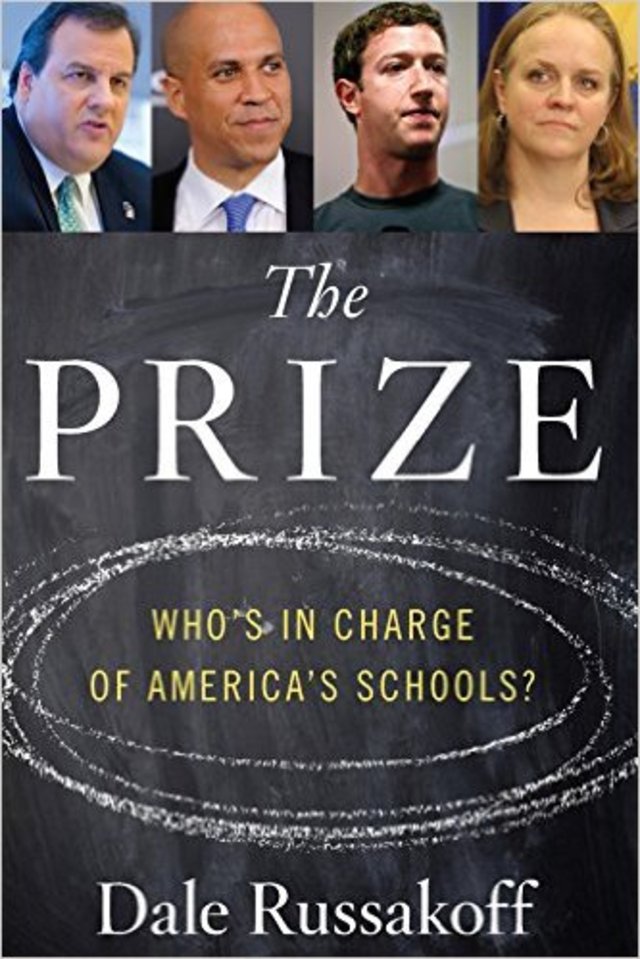
Yet their efforts fell flat. In her new book, The Prize: Who’s in Charge of America’s Schools?, Dale Russakoff chronicles what happened in Newark, as well as individual stories to show what went wrong. Her discussion of the book will take place at Politics and Prose on Wednesday, September 16th at 7 p.m.
“The prize” was to the Newark schools, who faced “fiscal ruin, massive overcapacity, and urgent need for improvement.” It refers to Zuckerberg’s donation, matched by another $100 million from private entities, and the school system’s $1 billion budget.
Russakoff illustrates how no matter the size of the donation, school reform is ridiculously difficult. There are countless different interests, between the students, their teachers, looming overhead, and surrounding communities. In Newark, violence and instability were daily distractions. Progress simultaneously happens too fast and too slow.
According to The Prize, Booker and Christie were at worst, not serious about reform. At best, they were all naive. Booker’s foundation was led by board members who donated $10 million or more (later decreased to $5 million). Christie’s superintendent angered the community so much she had to move her family out of Newark. Zuckerberg’s negotiation with the union turned into a battle. Education reform had been approached as a civil rights issue rather than a complex systemic problem rooted in poverty.
So five years after the men joined hands in Newark, they have moved on while Newark’s public schools remain in trouble. At least Zuckerberg seems determined to have learned from the experience. Last year, he gifted $120 million in grants to high-poverty Bay Area schools, but this time, involving parents and teachers and a new “web of support for students,” including services like medical and mental health care.
As the author writes, “Education reform is too important to be left to reformers alone.” The reformers in The Prize could still set an example for other school systems, just of what not to do.
Russakoff was a reporter for The Washington Post for 28 years, covering politics, education, and social policy. Her reporting for The Prize appeared in The New Yorker last year. She lives in Montclair, New Jersey.
The event is free and open to the public.