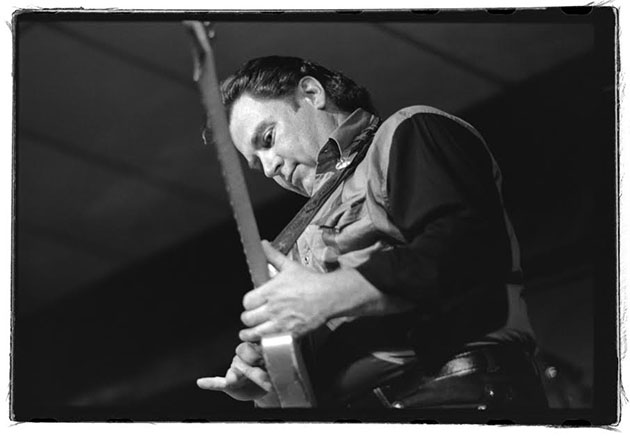
 Danny Gatton. Photo by Jeromie Stephens, courtesy of Bryan Reichhardt
The Post’s Richard Harrington opened a 1991 profile of Danny Gatton with a bold declaration: “The fastest guitar in the East, or the West, or the South—or anywhere on the planet, really.” Gatton was lauded by Guitar magazine and Rolling Stone, but I wouldn’t be surprised if you didn’t know his name. More than 20 years after the guitarist killed himself in his Charles County garage, Gatton is barely remembered outside the guitar world and the collective memory of local old-timers. And though I remember when the album came out, even I didn’t realize that 88 Elmira Street, the 1991 album that was Gatton’s major-label debut on Elektra, was named after the house where he grew up—in Anacostia.
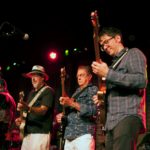
Gatton is old school in a way that few area families can boast, descended from Welshmen who settled in Southern Maryland before the Revolutionary War. He’s a legend, but he’s far from a household name, and local filmmakers and musicians are gathering this weekend to preserve his legacy and perhaps inspire a new generation of musicians. Anacostia Delta: Celebrating the Musical World of Danny Gatton is a tribute concert and a film project. The sold-out concert at the Birchmere is full of local legends like Frank Shegogue, the 80-year-old some consider as D.C.’s first rock guitarist, and Billy Hancock, a vestige of D.C.’s once-thriving rockabilly revival. But the program also bridges these old-school pickers with a younger generation of musicians like Anthony Pirog, whose dreamy work as part of Janelle and Anthony earned him the praise of Andy Summers.
The concert will be part of a film directed by Bryan Reichhardt. Unfortunately, an Indiegogo project to help fund the filming of the concert expires today, but I am told there will be more chances to support this project, and I hope you do.
I chatted with Reichhardt last week about Gatton and the upcoming concert. Here’s Reichhardt on seeing him in his prime:
“I used to go see Danny with my brother at Club Soda on Connecticut Avenue. We’d get a bucket of Rocks and listen to him play. I was just becoming a filmmaker. One night I got up the gumption to ask him if he’d want to do a documentary. He said sure — all I want is that it sounds good. I was pretty young. I met him a couple of other times. One of the things that struck me was that I just met him that once but six months later he’s out there smoking a cigarette and he rememebrs everything we talked about. He was jsut clearly one of those people who wanted to make you feel at ease, even a young kid like I was then. Life happened and then Gatton passed away and I never had the chance to make the film. But I became friends decades later with John Previti [Gatton’s longtime bassist] and we kept talking about doing something something beyond Danny but centered on Danny. Previti is the person who has guided us through this musical world. He is so full of stories and musical history that that’s the angle we went for.“
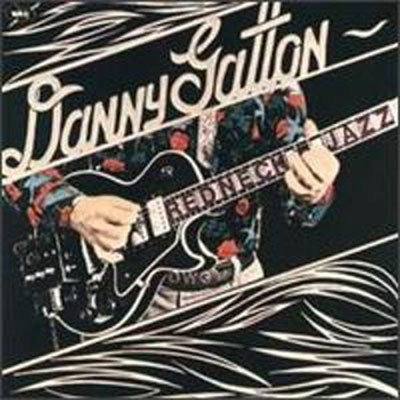 (Discogs)
Gatton released the album Redneck Jazz in 1978 on the NRG label, run by his mother-manager Norma Gatton. The album is a great example of both Gatton’s proficiency and of why he never made it big. The frenetic rockabilly/western swinger “Truck Drivin’ Romance,” with vocals by local rockabilly revivalist Evan Johns, opens the album with fantastic Gatton solos and fills on banjo, pedal steel, and a regular Les Paul guitar. The title track has more blistering solos, which doesn’t seem fair to be called either redneck or jazz, and that was part of the issue. Gatton could play anything, but what did you call what he played?
Musicians are often more open to genre-busting than their fans, and Gatton’s career was a case study in resisting labels—and opportunities. He told Harrington, “Whatever’s popular—I always run the other way. ”And run away he did. Big band leader Woody Herman invited Gatton to join his Thundering Herd, but Gatton explained, “I’ve always had problems joining a band with a bunch of people I didn’t know.” John Fogerty asked Gatton to join his band in the early ’80s, but according to Harrington, Gatton lost the number.
What do you call an artist whose major label debut included both a cover of The Beach Boys “In My Room” and The Simpsons theme? As devoted as his fanbase was, his eclectic and maybe stubborn nature worked against him. Maybe you’d just call him a great artist.
Watch Danny Gatton perform “Redneck Jazz Explosion” in this 1978 clip