 Rachel Sadon
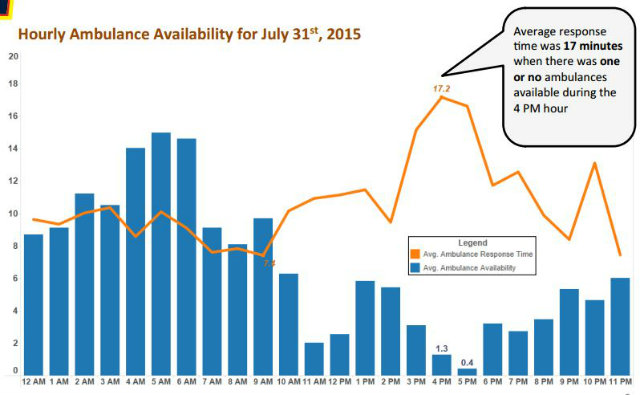 Hourly ambulance availability for July 31st, 2015 (Courtesy of D.C. FEMS.)
A chart showing a single day in the life of D.C.’s ambulance fleet paints a stark picture of the emergency response situation. On July 31, it shows, the average response time around 4 p.m. stretched beyond 17 minutes. By 5 p.m., the average number of ambulances on the road was fewer than 1.
The dismal numbers have been released to bolster Mayor Muriel Bowser’s argument that using private ambulances for some calls is a necessary step to remedying the problem.
“Once we have these EMS enhancements in place, FEMS can better train our providers, maintain our current fleet, and improve our dispatch and deployment. My team has looked at all the options, and this is the best way to improve quality of care,” Bowser said in a release.
Under her proposal, FEMS personnel would still evaluate all patients. When calls involve critical, time-sensitive issues, FEMS would transport the patients to the hospital. But in non life-or-death cases—like cold symptoms, ankle sprains, rashes, and minor cuts—technicians would request a private ambulance.
Part of the issue, Bowser’s office says, is that the $8 million budgeted for upgrades to the ambulance fleet in her first budget only maintains the status quo. But 911 calls have increased significantly; this August saw nearly 2,000 more calls than August of 2014.
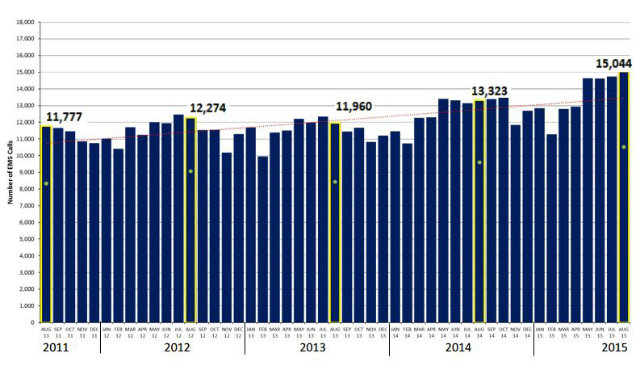 EMS call volume from 2011 to 2015. (Courtesy of FEMS)
With private ambulances on the street, it would give the agency an opportunity schedule much-needed maintenance on the fleet, according to FEMS Chief Gregory Dean. “This legislation will help FEMS ramp up our ambulance availability in a short period of time,” Dean said in a release.
If all goes according to the plan the administration laid out, private ambulances could be on the road as soon as November under an emergency procurement. They would then start a competitive bid process for a year-long contract, which could be renewed.
“We’re not totally opposed to the idea, given the circumstances we’re in and how we’re overloaded on a daily basis,” Edward Smith, president of the D.C. firefighters union Local 36, told The Washington Post. But the head of the smaller union that represents the department’s civilian paramedics and EMTs said that they are opposed. “We are the capital of the United States. We should have the best equipment, the best staff. In order to do that we should be hiring bodies,” Aretha Lyles told the Post.