 Rachel Sadon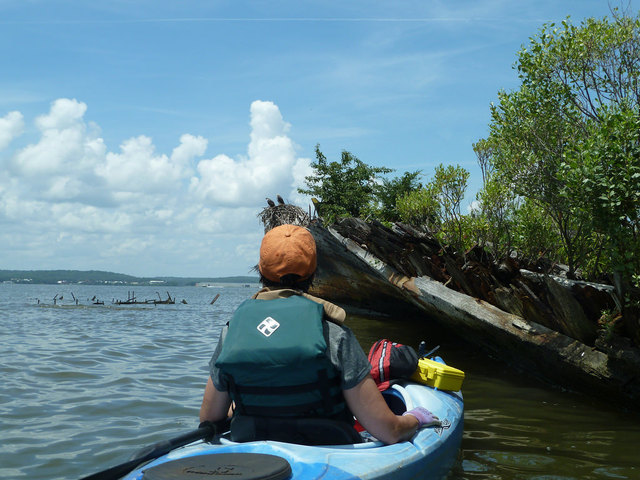
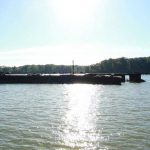
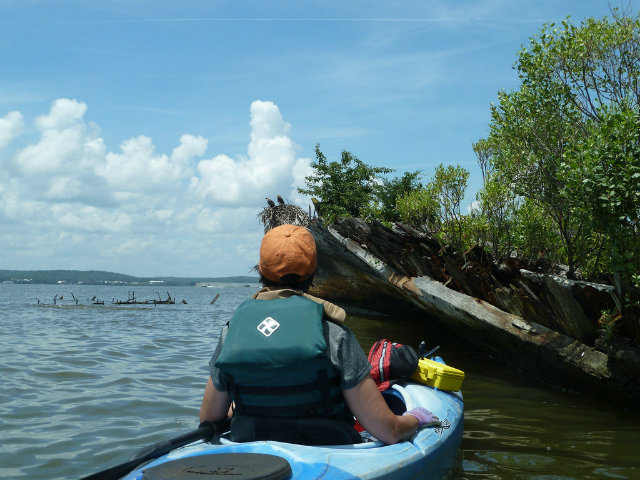 (Photo by Daryl Byrd, courtesy of Maryland’s Department of Natural Resources)
President Barack Obama proposed the first new national marine sanctuaries in 15 years today. Along with an 875-square mile portion of Lake Michigan, a local natural wonder made the cut: Mallows Bay.
Charles County, Md., and then-Gov. Martin O’Malley recommended the site be protected last year after the National Oceanic and Atmospheric Administration announced its intent to name new sanctuaries for the first time since 2000. The county and partner organizations submitted more than 60 letters in support of the first marine sanctuary ever in the Chesapeake Bay region.
The 14-square mile area on the Potomac River, about forty miles south of Washington, is home to the largest “ghost fleet” in the country. Some 200 decrepit, wooden ships lurk in the water—the product of a misguided attempt during WWI to build a string of inexpensive vessels and send them out across the Atlantic faster than German U-boats could sink them.
Each one cost between $700,000 and $1 million to build, according to historian Don Shomette’s fascinating “The Ghost Fleet of Mallows Bay.” The vessels were about as delayed and poorly constructed as the Silver Spring Transit Center—except in wartime. By the time they starting setting sail, well, the war was over. Writes Shomette:
“On December 1, 1917 the first wooden bottom was launched into the Pacific. Yet, by October 1918 only 134 wooden steamships had been completed; another 263 were less than half finished. When Germany surrendered on November 11, none had crossed the Atlantic.
Congressional charges of ineptitude within the program soon followed. A Senate probe revealed that of the 731 wooden steamships contracted for, only 98 had been delivered. Of these, only 76 had carried cargo in trade. Charges flared that the vessels were badly designed, weakly constructed, poorly caulked, leaked excessively and were too small and expensive for long-distance cargo hauling.”
So what to do with a bunch of basically unusable ships? The government, which had been paying $50,000 a month (in 1920!) simply to keep 285 of the vessels afloat in the James River, put them up for sale. Two years later, they finally found a buyer for most of them; Alexandria’s Western Marine and Salvage Company paid $750,000 to scrap the ships for parts. Years of setbacks and complaints at their location in Widewater, Va., prompted the move to Mallows Bay, where they remain to this day. But this, of course, is the short story. Read the long one here and here.
In addition to the WWI-era ships (and a bunch of others that were dumped at the site in the ensuing years) that have since sprouted wildlife, the area is home to archaeological artifacts that go back 12,000 years as well as bald eagles, heron, beaver, river otter, deer, and turtles. It is a popular area for fishing, especially bass. And now it may well be protected.