“We’re not a band who believes in nostalgia, at all,” Garbage front woman Shirley Manson exhaled definitively. “But we do mark moments in our life that are really special.”
But for the sincerity with which it was spoken, that remark from Manson two songs into last night’s sold out 9:30 Club set might have seemed slightly off. After all, this tour was set up in order to celebrate the 20th anniversary of Garbage’s game changing self-titled release. The only songs on their set list were recorded in 1995-1996 (with the possible exception of one cover). Before beginning their set, the band projected early candid footage and media coverage of the band from their nascent days onto a white sheet that obscured the stage. Indeed, the only album available at the merch booth was that celebrated first album.
What ended the nostalgia trip was the intense fire that Garbage still brings to the stage. Sometimes when bands reunite or come out of long periods of dormancy, they can seem like shells of their former selves—or at best, a tribute to themselves as they were several decades ago. But the selling point wasn’t just that Garbage was as tight as they’ve ever been. Bands can sound pitch perfect live to a point of sounding a little too perfect. The perfection here was in making 20-year-old songs that are very much a product of their time still sound potent.
A big component of Garbage’s signature sound was the fact that they combined their slinky guitar riffs with electronic samples and drum beats. It gave a dance floor feel to songs that were clearly constructed by a ROCK band. Alternately, that album was a much darker and sexier take on trip-hop (for it was surely no accident that Portishead was blaring on the speakers before Garbage’s set). As such, it was impressive to see how seamlessly and effortlessly Butch Vig switched between his drum kit and the drum machine that sat to his left. This was especially noticeable during “Milk,” a song during which the rest of the band was just slightly more subdued.
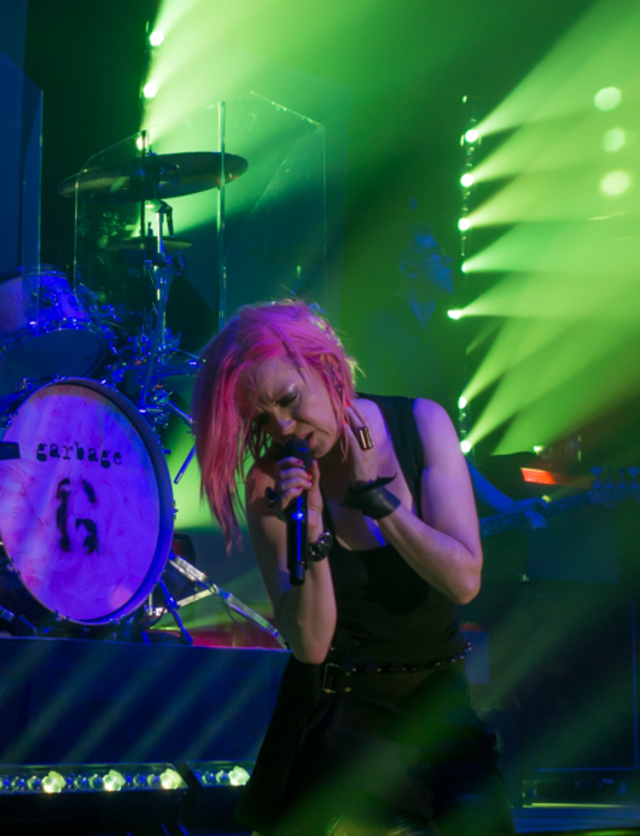
That moment of rest was perfectly timed because it seemed that Manson hardly took a break. Had she not admitted during the encore to have been taking cold medicine that day, the crowd may have never known. Her voice actually sounded better than it did on record as many of her hissed whispers were replaced by a clearer and stronger timbre. Furthermore, the front woman (who had dyed her hair pink for the occasion) simply owned the stage whether she was marching around the mic stand, sensually licking her under arm (as she did for “Queer”) or pulling power moves like moving into her bandmates’ personal bubbles and forcing them off the stage. She was the queen of the club.
That sense of royalty didn’t stop Manson from recognizing and relating with her subjects. She joked around with the roadies and her bandmates, at one point tossing a candy bar to one of the crew members. She came down into the crowd or else handed over vocal duties to the crowd on numerous occasions—and not just on hits like “Only Happy When It Rains.” Perhaps, most notably, she gave her leather wrist band to an audience member that had gifted her with a medal during an earlier meet and greet—a medal that the audience member had received for doing good works. It was a love fest that ended with a love note to the man with whom Manson first shared the stage in D.C., the late Vic Chestnutt.
“I love playing this club,” said Manson. “It’s a part of Garbage’s history at this point. And we get to do it all over again tomorrow night.”