Rachel Kurzius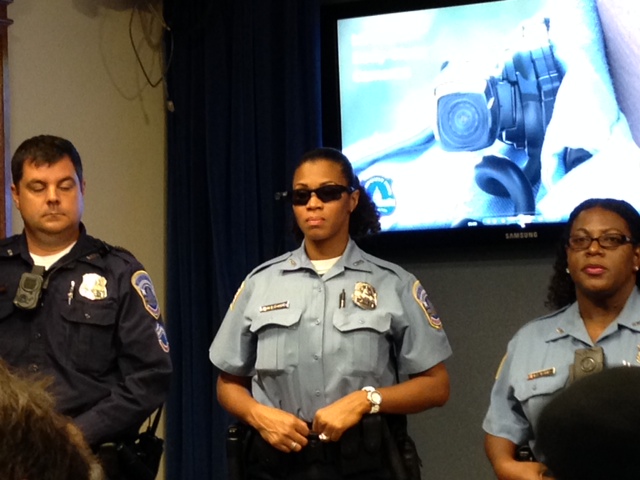
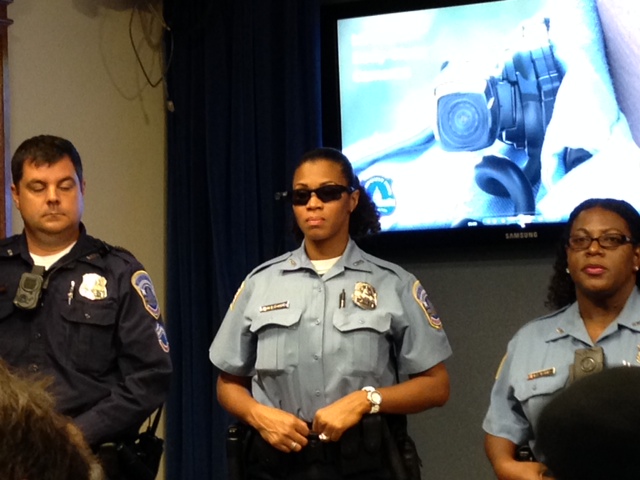 Photo by Matt Cohen.
(Post updated to reflect comments from the Bowser administration)
Police body cameras may well increase accountability, but the devil is in the details.
A new analysis of Metro Police Department’s written policy on the implementation of its body camera program gives it a withering grade or an incomplete in each evaluated category.
The categories are coverage, fairness, privacy, transparency, and accountability.
The analysis comes from Campaign Zero, an offshoot of the Black Lives Matter movement that seeks to end police violence in America. Body cameras and filming the police is one of the campaign’s 10 policy solutions.
The report evaluates the 30 largest cities and gives pass/fail grades in each of its categories other than coverage, which is determined by a percentage.
According to Campaign Zero, MPD’s coverage is at 13 percent, meaning 13 percent of the MPD force wears body cameras. Additionally, the policy is not “fair,” defined as whether officers are prohibited from viewing footage before making their statements or reports; private, because footage is not deleted after six months if it isn’t needed; or accountable, meaning no guidelines exist for disciplining officers who don’t follow the body camera policy.
D.C. tied with Fort Worth, Los Angeles, and San Diego for having three “no” responses and one “unclear.” Only Dallas and New York City had four “no” responses,
MPD declined to comment on the report.
The category of transparency, in which MPD got an “unclear,” has been an area of tension as city government looks to further its use of body cameras.
Currently MPD has 400 body cameras in two police districts, and the public cannot access the video as part of the pilot program.
Mayor Muriel Bowser wants to increase that amount. As part of her Safer, Stronger D.C. legislation, her plan would have the city purchase and employ 2,800 body cameras this coming year. The price tag for the cameras is around $5 million.
“The mayor is hopeful that the council will pass this legislation,” says LaToya Foster, spokesperson for the mayor, to DCist. The body cameras, says Foster, will increase accountability and transparency.
Members of the Council, like Ward 5 Councilmember Kenyan McDuffie, the chair of the Judiciary Committee, have been skeptical of the quick pace of implementation, particularly because Bowser initially sought to shield the footage from Freedom of Information Act requests.
“A blanket FOIA exemption is one more tool to surveil the residents of the District of Columbia,” the ACLU said at the time. McDuffie moved to halve funding for the full roll-out until the administration worked out a disclosure policy.
In August, Bowser reversed course with a plan that would release more police footage than any other jurisdiction in the country. The policy still granted a large exception for footage depicting assault, defined as “unwarranted invasion into personal privacy.”
Maintaining the privacy of people depicted in the footage while still allowing public access in a timely fashion is a tricky balancing act. An October 21 Judiciary Committee hearing did not reach any consensus on the mater.
McDuffie’s office did not return a call for comment.
Body-worn cameras first came to D.C. in last October. MPD Chief Cathy Lanier began a pilot program under then-Mayor Vincent Gray, wherein 165 officers tested out five different kinds of cameras for a six month period. The program came highly recommended from the Police Complaints Board.
At least MPD has a written policy. Philadelphia, Oklahoma City, Houston, and Nashville all deploy body cameras without a corresponding policy.