 Photo by Tim Lundin.
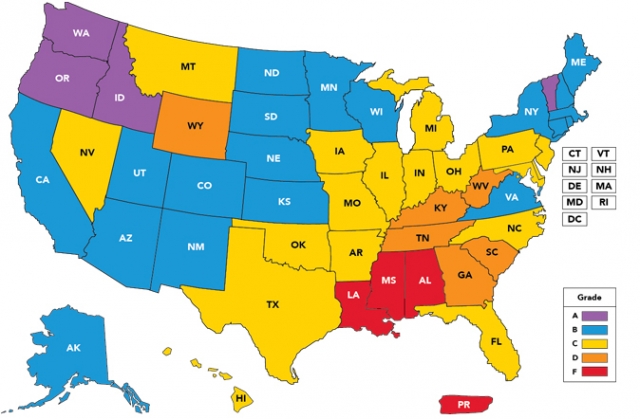
Premature birth is the leading cause of infant death and the number one killer of babies in the United States, according to the nonprofit March of Dimes. In a report released last week, the organization graded D.C.’s premature birth rate a “C” in comparison to the 50 states and Puerto Rico.
Grades for states were assigned by comparing the 2014 preterm birth rate in a state or locality to the March of Dimes’ goal of 8.1 percent by 2020. D.C.’s rate was 9.6 percent, placing it among 18 states with a mid-level score and matching the United States’ average.
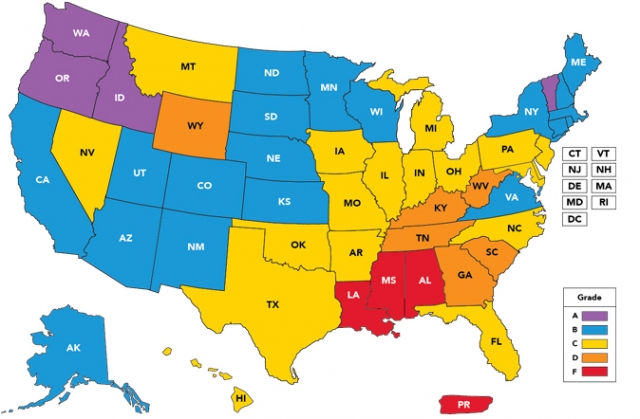 (Courtesy of March of Dimes)
This is the organization’s 9th annual Premature Birth Report Card and the first time the study also looked at U.S. cities and counties. Among the top 100 cities with the most births nationwide, Portland, Oregon came out on top at 7.2 percent, while Shreveport, Louisiana scraped the bottom at 18.8 percent. The city data recorded is from 2013—the most recent year statistics were available for large cities by the National Center for Health Statistics natality files.
In 2013, D.C.’s premature birth rate was 10.4 percent, ranking it a ‘D.’ But the District saw a sizable decrease, down to 9.6 percent in 2014. And after several years of marked improvements, the District’s infant mortality rate of 6.6 deaths per 1,000 live births in 2013 is the lowest it has ever been. Still, an infant born in 2012 in D.C.’s upper Northwest quadrant, Ward 3, was ten times less likely to die before its first birthday than one born east of the river in Ward 8, according to a report by the international nonprofit Save the Children.
The March of Dimes report also measured the disparity of preterm birth rates across racial and ethnic groups for each state. The District had the largest gap with an Asian preterm birth rate of 6.8 percent and black preterm birth rate of 12.6 percent. Whites and Hispanics were recorded at 7.5 and 9.4 respectively. Across the country, Asians and blacks also had the largest gap at 8.8 percent and 13.4 percent.
A normal pregnancy ranges from 38-42 weeks. A baby is premature when it’s delivered in less than 37 weeks. In the U.S., 380,000 babies are born too soon each year, according to the report. This makes the country’s 9.6 percent birth rate higher than most “high income countries.”