 (OMA + OLIN Design)
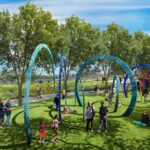
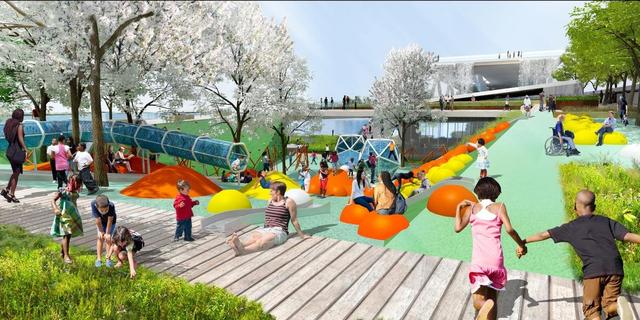
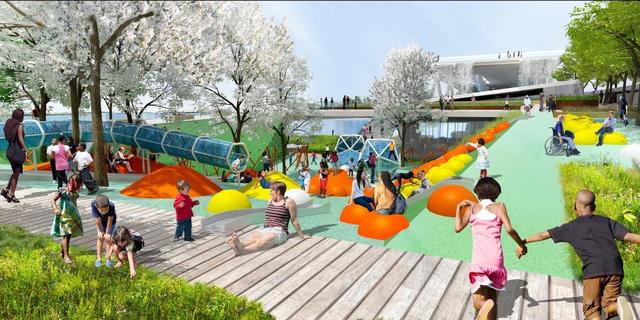
The design of the 11th Street Bridge Park was chosen last fall, and D.C.’s first elevated park will include waterfalls, an amphitheater, a hammock grove and more. Sounds lovely—just as long as everyone in the surrounding area can benefit.
Amid community concerns, the nonprofit behind the project has spent the past year thinking about how to make that possible. “By following a community-driven and vetted process, the Bridge Park can become a useful example of how the public and private sectors can invest in and create world-class public space in an equitable manner,” says Scott Kratz, director of the nonprofit behind the project.
The project’s Equitable Development Taskforce released a plan yesterday to make inclusivity possible. Its focus areas include workforce development, small business enterprises, and housing.
Among the short-term goals are hiring residents and contractors from Wards 6, 7, and 8 during the park’s construction phase and preserving affordable housing in the surrounding area. Once the park is complete, locally owned food services can operate by kiosk along the site and resources will be leveraged for additional affordable housing—both for those who want to own and rent.
The plan takes into account the fact that home values in areas with trendy new developments, like New York’s High Line Park, tend to skyrocket. It references an impact study, which found that property values in comparable park developments increased by 5 to 40 percent. This means, those who can’t afford to pay escalating rents are often priced out of their communities.
The park, which is slated to be completed in 2019, will rise above the Anacostia River. To the east of the river is historic Anacostia in Ward 8, a neighborhood known for its low home ownership, “as well as high poverty and unemployment,” according to the plan. To the west of the river is Capitol Hill in Ward 6, a neighborhood that provides a starkly different experience and quality of life for residents. Collectively, the two Southeast communities house more than 40,000 people.
The taskforce is made up of community members, government officials, business owners, and policy experts.
Check out the 11-page plan below.