 Photo courtesy of Union Market.
“The cost of rent in D.C. is incarcerating,” says Nathaniel Adams, owner of Goshen, an artisanal super food company at Union Market. It’s offensive actually, “arrogantly offensive,” he says.
Last month, Adams expanded the Goshen brand to include dormitory-style living accommodations for entrepreneurial millennials. Specifically, he wants tenants who are younger versions of himself: black and in the food industry.
As a successful entrepreneur, Adams can live anywhere in the city, but “I refuse to pay that insulting amount of money for basically nothing,” he says, referencing apartments, or “boxes,” costing $3-$4,000 per month.
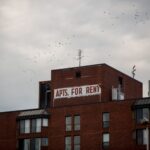
Goshen’s two-bedroom apartment in Brightwood rents for $300 per month, with no obligation to stay for a full-year. Currently, one tenant who works in the hospitality industry occupies the space. While residents will eventually shack up at least two to a room, the benefits are well worth it, Adams says. “Entrepreneurs are individualistic, which is to their detriment. They do things singularly as opposed to networking in a group and hunting in a group and that’s why they don’t make as much [money] or as much of an impact.”
The Goshen living community “will place entrepreneurs in a fertile environment, in which they can synergize and basically bring economic solutions to problems,” he continues. In addition to chefs and caterers, Adams also wants tenants with supporting skills to build a food startup, like those in the finance and tech industries. The goal isn’t to create one business, but for tenants to feed off one another’s expertise for individual enterprises.
Dormitory style living among like-minded individuals isn’t a new idea. Krash, a shared living space that operates in D.C., Boston, and New York, offers opportunities for mentoring through guest speakers and group outings—from ski trips to beach barbecues. Loftstel, which also operates in D.C., offers dormitory-style accommodations for international students and boasts with free wifi and spacious common areas.
While Krash offers occasional in-house dinners and Loftstel has gourmet kitchens, food is the fundamental amenity of Goshen’s living community. “When you are around a certain level of food, it can be inspiring. It can be intimidating as well, but if you approach it in an objective and passionate way, it can teach you how to live at a certain level,” Adams says.
At Union Market, Goshen is known for its vegan entrees and veggie-based cocktails. On a daily basis, the space’s fridge is stocked with food prepared by Goshen chefs. “It gives the entrepreneurs who are interested in preparing their own meals the tools by which to do so—if they’re pressed for time, they can grab and go and if they’re entertaining, they can use the ingredients that we use in our location at Union Market.”
Adams’ family owns the apartment building. “I thought it would be a great contribution to the [millennial] entrepreneurial community to make an investment in them and give them the opportunity by which to make a greater investment to the community at large,” Adams says.
Once the first unit is full, he plans to rent other units in the building. Depending on the group of entrepreneurs, the industry focus of the unit may shift.
“We’re just facilitating the inevitable. When you put problem solvers together, they’re going to make history and that’s what we’re hoping to do,” he says. “And it doesn’t matter how long it takes.”